
Unit Present continuous and present simple 1
1.1 Complete each pair of sentences using the same verb (in a question form or negative if necessary) from the box. Use the present continuous; if this is not possible, use the present simple. Use to add any words outside the gap and use contracted forms where appropriate. A & B attract consistof doubt feel fi t have like look measure sound
Download Unit Present continuous and present simple 1

Information
Domain:
Source:
Link to this page:
Documents from same domain
Wireless Communications: Networking and …
assets.cambridge.org1 Wireless Communications and Networking 1.1 Communications Networks Communications by voice and physical signaling are common means of interaction between human beings. In the simplest forms, there is an emitting entity of information
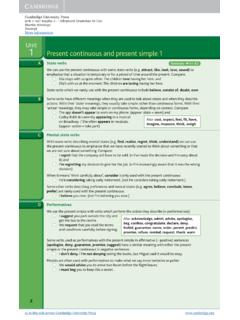
Unit Present continuous and present simple 1 - …
assets.cambridge.orgCambridge University Press 978-1-107-69989-2 – Advanced Grammar in Use Martin Hewings Excerpt More information, / / / / This /. (/
1 Introduction: What is language? - Cambridge …
assets.cambridge.org1 Introduction: What is language? Key terms Idiolect Language community Language Language conventions Arbitrary sign Iconic sign Fluency Communicative competence
Cambridge IELTS 4
assets.cambridge.orgCambridge IELTS 4 Examination papers from University of Cambridge ESOL Examinations: English for Speakers of Other Languages
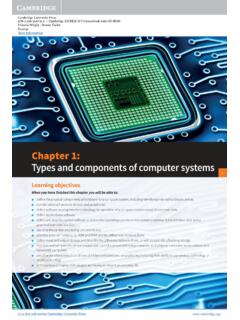
Types and components of computer systems Chapter 1
assets.cambridge.orgChapter 1: Types and components ... Information and communication technology (ICT) is used ... (CU), to manage the various components of the computer; the control ...
Cambridge Preliminary English Test 3
assets.cambridge.orgCambridge Preliminary English Test 3 TEACHER’S BOOK Examination papers from University of Cambridge ESOL Examinations: English for Speakers of Other Languages
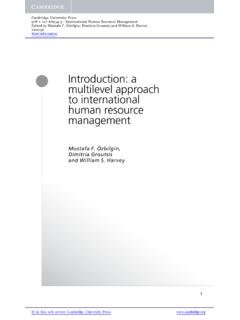
Introduction: a multilevel approach to international …
assets.cambridge.orgIntroduction: a multilevel approach to international human resource management Mustafa F. O¨zbilgin, Dimitria Groutsis and William S. Harvey 1 …
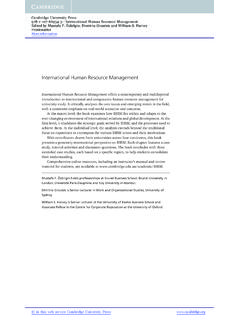
International Human Resource Management - Assets
assets.cambridge.orgInternational Human Resource Management International Human Resource Management offers a contemporary and multilayered introduction to international and comparative human resource management for
IntroductiontoConservationGenetics - Assets
assets.cambridge.orgIntroductiontoConservationGenetics The biological diversity of the planet is being rapidly depleted due to the direct and indirect consequences of human activity.
English Phrasal Verbs - Cambridge University Press
assets.cambridge.orgEnglish Phrasal Verbs 70 units of vocabulary reference and practice Self-study and classroom use Michael McCarthy Felici ty O'Dell
Related documents

Questions in the Simple Present Tense (Auxiliary Verbs Do ...
kropseniorhigh.orgOct 11, 2013 · Simple Present Tense vs. Present Progressive Tense (Always, Usually, Never, etc. vs. Now, Today, etc.) Complete the following sentences using the correct form of the verb. (Reminder: simple present is used for actions that are habitual or repeated; present progressive is used for actions that are happening right now.) get up 1. I usually ...

1.1 Simple Present: Affirmative and Negative Statements
myelt.heinle.com3. Some adverbs and time expressions commonly used with the present progressive are: now, at the moment, this year, and these days. It is raining at the moment. Susie is working hard these days. * The present progressive is sometimes called the present continuous. See page A1 for spelling rules for the -ing form of verbs.

Past simple and past continuous
outandabout.cambridge.esut About 1 PTCPABLE Cambridge niversity Press 2015 Grammar Past simple and past continuous 1 Write the past simple form of these regular and irregular verbs. 1 cry 2 travel 3 send 4 enjoy 5 stop 6 break 7 fall 8 chat 9 happen 10 say 11 know 12 try 13 cut 14 turn 2 Complete the sentences with the past simple form of the verbs in Exercise 1. 1 Last summer, …
How to form the Present Perfect - Espresso English
www.espressoenglish.netPresent Perfect Simple / Present Perfect Continuous How to form the present perfect continuous: Positive and negative statements: SUBJECT AUXILIARY VERB BEEN -ING FORM I have been working here since 1992. He hasn’t been sleeping well lately. Questions: QUESTION WORD AUXILIARY VERB SUBJECT BEEN -ING FORM
Indirect Questions - Perfect English Grammar
www.perfect-english-grammar.comPresent continuous Is the restaurant closing now? Can you tell me if the ... continuous What time will Lisa be meeting the boss? Can you tell me what time Lisa will be meeting the ... indirect question is in the present simple tense of 'be'. For example, we need to say: Could you tell me where the station is?

Simple Present Story 1, Page 1 Simple Present Story 1
www.really-learn-english.comSimple Present Story 1 By Really Learn English Visit the Simple Present Section for More Resources Who is he? Where is he? What does he do? Hank is a cowboy. He lives on a farm. He has a horse named Ginger. Hank loves Ginger. He rides Ginger every day. Sometimes they walk slowly, and sometimes they run fast. They always have a good time.
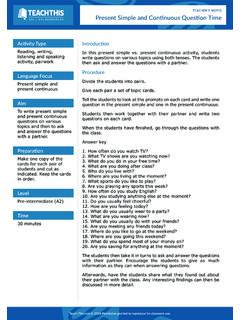
Present Simple and Continuous Question Time
www.teach-this.comquestion in the present simple and one in the present continuous. Students then work together with their partner and write two . questions on each card. When the students have finished, go through the questions with . the class. Answer key. 1. How often do you watch TV? 2. What TV shows are you watching now? 3. What do you do in your free time? 4.
Related search queries
Simple Present, Present, Simple Present: Affirmative and Negative Statements, Time, Present continuous, Past simple and past continuous, Simple, The Present Perfect, Present Perfect Simple, Present Perfect Continuous, The present perfect continuous, Question, Indirect Questions, Continuous, Present simple, Simple Present Story 1, Present Simple and Continuous Question Time