Transcription of CHCCCS003 Increase the safety of individuals at risk of ...
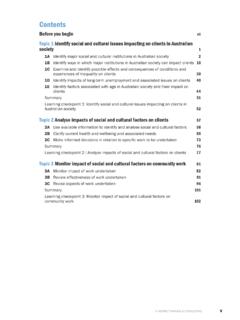
1 ASPIRE TRAINING & CONSULTING vContentsBefore you begin viiTopic 1 Identify and assess the person s current suicide risk 11A Recognise and respond to signs that a person may be considering suicide 21B Explore any indications that the person may be considering suicide 71C Ask specifically about thoughts of suicide when there are concerns 101D Inform and facilitate the intervention by seeking understanding 14 Summary 20 Learning checkpoint 1: Identify and assess the person s current suicide risk 21 Topic 2 Collaborate to Increase immediate safety 232A Build a collaborative empathetic relationship that acknowledges thoughts of suicide and the pain behind them 242B Listen to what lies behind any thoughts of suicide while affirming and strengthening life connections and safety support 282C Work with the person to develop and implement a safety plan that reduces immediate danger to the person and others 322D Mobilise access to emergency services when needed 362E Comply with all laws, ethical guidelines and policy requirements that affect duty of care and seek advice from supervisor 40 Summary 46 Learning checkpoint 2.
2 Collaborate to Increase immediate safety 47 Topic 3 Facilitate links to further support 513A Empower the person at risk to make informed choices about further help 523B Maintain rapport to encourage discussion of ongoing concerns 563C Help the person identify coping strategies to manage recurrence of suicidal thoughts 603D Determine whether mental health concerns or personal circumstances are present and facilitate appropriate help 643E Explore possible barriers to seeking or accepting help and develop responses 693F Explore what has helped the person survive any previous suicide attempts 723G Develop a plan that includes agreed first steps to access and use informal supports and professional help 743H Refer to appropriate professionals as required 78 Summary 81 Learning checkpoint 3: Facilitate links to further support 82 ASPIRE TRAINING & CONSULTING 1 Topic 1In this topic you will learn how to:1A Recognise and respond to signs that a person may be considering suicide1B Explore any indications that the person may be considering suicide1C Ask specifically about thoughts of suicide when there are concerns1D Inform and facilitate the intervention by seeking understandingIdentify and assess the person s current suicide riskAll community services workers must have an understanding of how to identify and provide effective help for people at risk of suicide .
3 Workers must be able to recognise the warning signs that someone may be considering suicide . It is also important that workers do not make assumptions and that they take all statements people make about suicide seriously. These steps can help save someone s life. 4 ASPIRE TRAINING & CONSULTINGCHCCCS003 Increase THE safety OF individuals AT RISK OF SUICIDEI ndicators of self-harmSelf-harm is most commonly understood as people causing injury to themselves without necessarily wanting to die. Self-harm does not always lead to suicide . Self-harming activity may be associated with increased suicide risk but is not always so. People often self-harm as a way of releasing pent-up feelings or dulling emotional pain. Self-harm may result in accidental suicide when a person causes lethal damage to themselves unintentionally; for example, they overdose on drugs as a way to block out emotional pain or stress.
4 Indicators of self-harming behaviour can begin after a crisis or recent difficult life event; for example, the death of a loved one, relationship breakdown, difficulties at home or school, recent abuse or violence. It may start as a result of depression, anxiety or another mental health concern or as a result of a trauma or abuse in childhood. Some people are known to begin self-harming as a result of a physical illness or forms of self-harm include:XXmaking cuts to the bodyXXburning oneselfXXoverdosing on medication or drugsXXinhaling harmful substancesXXhitting the body with fists or another objectXXpunching walls or other objectsXXscratching or picking the skin, resulting in bleeding or welts or pulling out to signs You can help someone who indicates that they are thinking about suicide by following these to respond to signs of suicideXXListen non-judgmentally and encourage them to talk about how they are whatever feelings they express by saying; for example, You seem really sad and despairing.
5 XXAsk them directly if they are considering giving advice such as, You re just feeling a bit down, cheer up and everything will be okay , or You just need to pull yourself together .XXMake sure that the person is not left alone; call family or friends if necessary to organise support for the reassuring and tell them about the type of help the person at risk does not have access to a means of suicide such as lethal weapons or showing frustration, panic, anger or fear. ASPIRE TRAINING & CONSULTING 11 TopiC 1 IDENTIFy AND ASSESS THE PERSON S CURRENT suicide RISkAwareness of personal values, beliefs and attitudesYou must be aware of your own values, beliefs and attitudes regarding people who are at risk of suicide , as these could affect the way you carry out your work. Workers who are critical may make people feel worse about themselves and even more determined to end their lives.
6 Consider the following , beliefs and attitudesXXOur values represent our personal standards and our ideas about what we think are important. Our beliefs are what we accept to be true. Sometimes beliefs are not based on fact and need to be challenged or carefully examined. Our attitudes are our usual ways of thinking that influence our making assumptionsXXIf you believe that people who talk about wanting to die are seeking attention or being melodramatic, you may not be able to respond to them as appropriately as someone who recognises that they are in deep distress and need help. Avoid being judgmentalXXIt is important that you adopt a non-judgmental attitude and try to be as empathetic as possible. This means trying to put yourself in the person s frame of reference and seeing things from their perspective. People may seem to you to be showing signs of one-sided or distorted thinking, but you should not be critical or tell them to snap out of it.
7 Avoid making the person feel guiltyXXIt is essential that you do not make the individual feel ashamed or guilty, or that they are being a burden. No matter what your personal values, beliefs or attitudes are about suicide , you must focus on letting the person know that you care about them and that you are not there to judge them. Common notions about suicideYou should be wary about believing many of the common myths about suicide that are outlined 1 Myth: People who frequently threaten suicide rarely carry out their : People who talk about suicide are often making a plea for help, and being ignored may push them over the 2 Myth: All people who think about suicide are unstable or mentally : It is estimated that up to 90 per cent of people who consider suicide or end their own life experience depression or other mental health disorder, but it is important to remember that many people are suicidal for other ASPIRE TRAINING & CONSULTINGCHCCCS003 Increase THE safety OF individuals AT RISK OF SUICIDEE xplore links to lifeWhen assessing suicide risk a worker needs to explore with the person what links them to life and focus on the individual s protective factors .
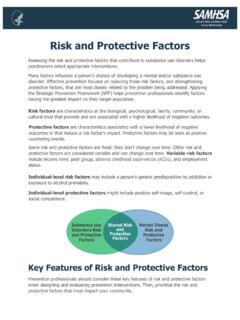
8 For example, a person may have children who need support, or they may have excellent problem-solving skills in other areas of their life. Such responsibilities and skills link them to life, although they may be unable to see this when they are in crisis. Sometimes people in crisis need to be reminded about how their death might impact others. Emphasising links to life and protective factors is a strengths-based approach that helps to re-establish the person s confidence in overcoming their problems. It is also a way of moving forward that can inform and facilitate further factors , actions and considerationsBelow is a summary of the risk factors , actions and considerations that community services workers should be able to apply when doing an assessment and providing support to a person who is considering suicide . These may serve as a useful thoughtsIf you suspect a person is considering suicide you need to ask them directly about the presence of suicidal thoughts.
9 If they answer yes to a question such as, Are you thinking of suicide ? , you need to find out:XXwhy the person is considering suicideXXthe extent of the person s distressXXthe main source of the considering suicide will usually express:XXfeelings of deep hopelessness, despair and lonelinessXXa desire to escape pain and distress that seems intolerableXXa feeling of being trapped that prevents them from seeing alternatives to can explore a person s degree of hopelessness by asking them how they feel about their ASPIRE TRAINING & CONSULTINGCHCCCS003 Increase THE safety OF individuals AT RISK OF three protective factors that may decrease the likelihood for suicide matter what area of community services you work in, you may encounter peoplewho are at risk of suicide . It is important that you know the signs that indicate anindividual may be considering suicide or of the most important things you can do is to take a person seriously if theysay they are thinking about suicide .
10 Never disregard or dismiss anything a personsays, and any mention of suicide should be viewed as a request for people who are planning suicide show at least some warning signs; othersshow none and many of those nearest them are taken completely by surprise whentheir friend or relative takes their own life. Community services workers need tobe vigilant in detecting the signs; sometimes this involves working on hunches working with someone who may be at risk of suicide it is important to askdirect questions about their a worker, you can assist people who are thinking of suicide by encouragingthem to reflect upon all the reasons they have to live and the links they have to life,which may include family, friends, pets, personal desires and is important to explore with the individual why they want to end their life. This willinvolve listening and asking questions in a caring and sensitive way.