Example: confidence
Assessing pain in children - Royal Children's Hospital
ABCs of Pain Management Recommended by the Agency for Health Care Policy and Research (AHCPR), USA A-Ask about pain regularly.Assess pain systematically. B-Believe the patient and family in their reports of pain and what relieves it. C-Choose pain control options appropriate for the patient, family, and setting. D-Deliver interventions in a timely, logical, coordinated fashion.
Tags:
Information
Domain:
Source:
Link to this page:
Documents from same domain
Allergy and Immunology - The Royal Children's …
www.rch.org.auAllergy and Immunology Gastrointestinal Food Allergies - 11/11/2016/1 Non IgE-mediated food allergy Food allergies may be divided into 2 …

PRIVACY, CONFIDENTIALITY & SECURITY …
www.rch.org.auPRIVACY, CONFIDENTIALITY & SECURITY AGREEMENT ... Peer Review Such as reports, presentations, ... These are listed with this agreement …

Buckle injuries of the wrist - The Royal Children's …
www.rch.org.auThis fact sheet has been developed by The Royal Children’s Hospital.The information contained in this fact sheet is intended to assist, not replace, discussion with your doctor
An integrated approach to early childhood development
www.rch.org.auPage 1 Background Paper An integrated approach to early childhood development September 2010 Major social, demographic and economic changes in Australia over the last 50 years

Annual Financial Report 2015–16 - Royal Children's Hospital
www.rch.org.auCEO’s report Annual Financial Report 2015–16 The Royal Children’s Hospital and Controlled Entities. 5 Great transformations, such as the transition to the EMR, require extraordinary energy from the …
Pervasive Developmental Disorders - Royal Children's Hospital
www.rch.org.auPervasive Developmental Disorders alk Ati S tlso known as Autism Spectrum Disorders Dr. Deborah Marks
Australian Standards of Care and Treatment Guidelines
www.rch.org.auThe Australian Standards of Care and Treatment Guidelines (ASOCTG) aim to maximise quality care provision to trans and gender diverse children and adolescents across Australia, whilst recognising the unique circumstances of providing such care to this population.

Guidelines - The Royal Children's Hospital
www.rch.org.auSeizure Management ... For further information refer to the Student Support Group Guidelines available at: ... with limited responsibility for complex medical care to undertake Schoolcare Program training, as infrequent practice of the medical procedures raises unacceptable risks of mismanagement. Education of whole staff should
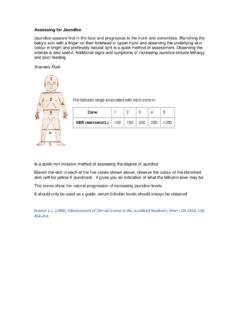
Assessing for Jaundice - The Royal Children's Hospital
www.rch.org.auThe fibreoptic pad phototherapy unit available on Butterfly is the GE Bilisoft LED Phototherapy System: this fibreoptic pad is designed to be placed within a disposable Bilisoft Cover and then positioned directly in contact with the baby’s skin,

Fact sheet - The Royal Children's Hospital
www.rch.org.aumedia chatter; data show that severe food allergy has many benefits for you and your child, but might also is on the rise in Australia and other developed nations, particularly in young children. However, ... Fact sheet Reducing the risk of developing food allergy ERC 121331 November 2012.
Related documents

Patient Controlled Analgesia - Anaesthesia
anaesthesia.org.aupatient assessment All criteria must be met before nursing staff can discuss ceasing the PCA with medical staff. The prescriber can then chart the appropriate step down analgesia. Discuss plan to change to step down analgesia with the patient. Inform them the PCA will be ceased and they will be prescribed oral analgesia for pain.
Postpartum Assessment and Common Postpartum …
bchsfoutreach.ucsf.eduApr 19, 2018 · Post Operative Pain: Multimodal Analgesia… Using analgesics that have different mechanisms of action to potentiate effect Multimodal analgesia impoves pain control and minimizes adverse side effects NSAIDs and opiates affect pain via different mechanisms • Opiates: work at dorsal horn, no effect on inflammation

RCN Pain Knowledge and Skills Framework for the …
www.britishpainsociety.orgpain assessment, functional performance and medicines management. The IDT can help patients understand their pain-related thoughts, emotions and behaviours. ... epidural analgesia and patient controlled analgesia (PCA). These were launched in June 2015 at RCN Congress. The second work stream was to develop this framework.

Sedation and Analgesia in the ICU
ess.nychhc.org•Allows for neurological/pain assessment •Minimize sedation accumulation •Has been shown to decrease duration of mechanical ventilation and LOS. Questions. Title: Sedation and Analgesia in the ICU Author: Andrew Straznitskas Created Date:
GUIDELINES FOR PATIENT-CONTROLLED ANALGESIA …
www.hqinstitute.orgassess and document BP, pulse, RR, pain score, sedation score and EtCO2 on the PCA/ Epidural flow sheet (Attachment A). Nursing will provide the same assessment and documentation for patients receiving continuous epidural infusions and/or PCEA plus an assessment of motor/sensory function per policy 125-2.
Neurovascular Assessment - Agency for Clinical Innovation
www.aci.health.nsw.gov.au• Pain is assessed by asking the patient to rate pain on a scale from zero to 10. • Assess the pain score at rest and on passive stretch. • Assess whether the pain is disproportionate to the injury. • Any compromise to neurovascular status will result in pain due to sensory nerve damage and diminished blood flow (Shreiber 2016).

Patient Controlled Analgesia (PCA)
www.dbth.nhs.ukPatient Controlled Analgesia (PCA) is a method of pain relief that allows a patient to self-administer small doses of analgesia as required, from a locked programmable pump. PCA is appropriate for patients’ who have acute pain which is likely to warrant repeated doses of parenteral opioid. 2. PURPOSE
Practice Guidelines for Chronic Pain Management
www.asahq.orgChronic Pain Management,” adopted by the ASA in 1996 and published in 1997.1 Methodology A. Definition of Chronic Pain For these Guidelines, chronic pain is defined as pain of any etiology not directly related to neoplastic involvement, asso-ciated with a chronic medical condition or extending in du-