Transcription of Stalking Safety Strategies
1 Stalking PREVENTION, AWARENESS, AND RESOURCE CENTER Stalking Safety Strategies Stalkers can be unpredictable and dangerous. Whether through in-person or through the use of technology, stalkers use a variety of Strategies to invade the lives of their victims . Most stalkers use multiple tactics and can escalate their behavior(s) at any time. You have no control over the stalker s behavior and are not responsible for what they do. However, it can be useful to think of steps you might take to keep yourself and loved ones safe. This process is called Safety planning. Though victims can make Safety plans on their own, it is often helpful to work with a trained professional such as an advocate, victim assistance provider, or even a law enforcement officer.
2 You can find these people in local domestic violence and rape crisis programs, victim assistance programs within state and county prosecutors offices, and in police departments. For help locating someone trained in Safety planning in your area, contact Victim Connect (855-4-VICTIM/855-484-2846). The guidance below is intended for general informational purposes only and is not designed to replace a personalized Safety plan created with the assistance of a professional. The suggestions below are also not exhaustive. You are the expert on your own life and you know best what options might be possible or feasible. Safety Planning: Basic Considerations Trust your instincts.
3 Many victims of Stalking feel pressured by friends or families to simply ignore the stalker s behavior or just tell them off. Stalkers are dangerous and your fear is justified. Your Safety plan should evolve, change, and adapt as the Stalking situation changes. As much as possible, don t only plan around what has already happened also think about what might happen next (for example, if X happens, I will do Y ) Consider or try to anticipate how the stalker may react to any changes you may make, so you can further plan for your Safety . Stalkers often escalate their behavior when the victim reacts (for example, if you block them on social media, they might start showing up at your home).
4 victims must balance their need to live normal lives with their concerns over Safety . Only you can decide what tradeoffs are realistic and appropriate for you. General Safety Strategies Consider: Working with a local domestic violence shelter or victim services program to develop a Safety plan. Notifying the police, especially if you feel you are in any immediate danger. You can explain to the police why some actions that might seem harmless (like the stalker driving by your house or leaving you a gift) are causing you fear. Stalking PREVENTION, AWARENESS, AND RESOURCE CENTER Ceasing any further communication with the stalker.
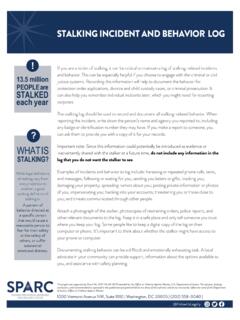
5 Many stalkers perceive any contact, even negative contact, to be a reinforcement (more information on this below). Keeping a log of every Stalking incident including the date, time, what happened, and the names and phone numbers of any witnesses. Documentation is key to understanding the scope of the situation, Safety planning, and/or holding the offender accountable. Access the log here. Varying your daily routine periodically routes to and from work/school, the grocery store, or other places you regularly go. Telling your family, friends, and neighbors that you are being stalked and instruct them on what they should do if the stalker contacts them.
6 Seeking a protective order (For more help, contact VictimConnect, National Domestic Violence Hotline or RAINN) Safety Planning: Stopping Communication with the Stalker Consider cutting off any and all communication with the stalker. Many stalkers misinterpret any contact (even negative contact) as encouragement. Some victims feel that they should ensure the stalker knows that the contact is unwanted. If that is true for your situation, you may consider telling the stalker once and only once that you do not want any contact. After that, it is important to consider cutting all ties with the stalker, including not answering messages or calls.
7 Some examples of how to express your desire for no contact include: I am not interested in having a relationship with you. Do not contact me ever again. Do not call, stop by, text, or contact me in any way whatsoever. I do not want you to contact me in any way. If you continue to do so or if you are on my property, or follow me I will call the police. I am ending this relationship. I am not going to change my mind. Do not contact me again. I do not want to have any communication with you, in any form. If you try to contact me, I will call the police/take legal action. While disengagement is advisable, it is not always possible or realistic to cease all communication.
8 Some victims feel safer by communicating with their stalkers to gain information on the stalker s mood and plans. Some victims must maintain contact with their stalker due to shared custody of their children. It is important to understand how continued contact can impact an order of protection or a criminal case, so please discuss this with the professional who is assisting you with your Safety planning. Stalking PREVENTION, AWARENESS, AND RESOURCE CENTER Additional Tips: Safety Planning for Workplace and School Stalkers may: Safety Planning Tips: Documentation Strategies : Follow you to, from or around the location Contact colleagues about you Show up Contact you by phone, text or e-mail while you are at work/ school Give a picture of the stalker to security and friends at work and school.
9 Consider changing routes to and from work/school Adjust hours (if possible) Have a colleague or security guard walk you to your car/ transportation Make sure your school/work knows not to provide your contact information If you have a protective order against the stalker, keep a copy of your protective order with you AND provide a copy to security and/or other officials at your work/school Save any voicemails, text messages and e-mails Work with building security to acquire any records/logs of the stalker being present on campus/at work Safety Planning for Home Stalkers may: Safety Planning Tips: Documentation Strategies : Follow you to, from or around your home Invade your home Damage your property Hack into wireless networks or home devices Disconnect power/cable/ internet service Send gifts or mail Install cameras to monitor you Inform neighbors and/ or apartment managers about the situation.
10 Provide a photo/description of the stalker as well as a photo of the stalker s vehicle. Pack a bag with important items in case you need to leave quickly. Identify escape routes out of your house. Teach them to your children. Change locks and upgrade home security system, if possible Consider installing your own camera (depending on your state law) to capture evidence of the stalker s behaviors. Photograph evidence of property damage Stalking PREVENTION, AWARENESS, AND RESOURCE CENTER Safety Planning Around Technology Stalkers may: Safety Planning Tips: Documentation Strategies : Constantly contact their victim.