Example: marketing
Opioid Risk Tool - National Institute on Drug Abuse
Opioid Risk Tool Introduction he Opioid Risk Tool (ORT) is a brief, self-report screening tool designed for use with adult patients in primary care settings to assess risk for opioid abuse among individuals prescribed opioids for treatment of chronic pain. Patients categorized as high-risk are at increased likelihood of future
Tags:
Information
Domain:
Source:
Link to this page:
Documents from same domain
Alcohol Use Disorders Identification Test (AUDIT)
nida.nih.govscreening tool developed by the World Health Organization (WHO) to assess alcohol consumption, drinking behaviors, and alcohol-related problems. Both a clinician-administered version (page 1) and a self-report version of the AUDIT (page 2) are provided. Patients should be encouraged to answer the AUDIT questions in terms of standard drinks. A chart

Clinical Opiate Withdrawl Scale
nida.nih.govClinical Opiate Withdrawal Scale Introduction The Clinical Opiate Withdrawal Scale (COWS) is an 11-item scale designed to be administered by a clinician. This tool can be used in both inpatient and outpatient settings to reproducibly rate common signs and symptoms of opiate withdrawal and monitor these symptoms over time. The summed
Understanding Drug Abuse and Addiction
nida.nih.govdisruptive effects. Research shows that combining addiction treatment medications with behavioral therapy is the best way to ensure success for most patients. Treatment ... influences the reward circuit and the ability to learn. When the optimal concentration of glutamate is altered by drug abuse, the
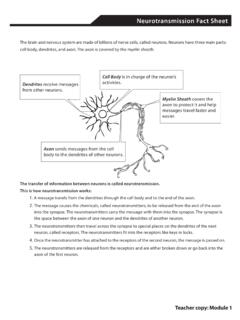
Neurotransmission Fact Sheet
nida.nih.govCorpus callosum connects the two hemispheres Hemispheres of the cerebral cortex: Lobes of the cerebral cortex: Module 1 Located below the crown of the head Processes sensory information from the whole body (information about pain, touch, and pressure) Located behind the temples and just above the ears In charge of making sense of the
Sample Patient Agreement Forms - nida.nih.gov
nida.nih.govPatient Agreement Form. Patient Name: Medical Record Number: Addressograph Stamp: AGREEMENT FOR LONG TERM CONTROLLED SUBSTANCE PRESCRIPTIONS The use of (print names . of medication(s)) may cause addiction and is only one part of the treatment . for: (print name of condition—e.g., pain, anxiety, etc.). The goals of this medicine are:

Commonly Abused Drugs Chart
nida.nih.govencourage and support HIV screening and inform patients that highly active antiretroviral therapy (HAART) has proven effective in combating HIV, including among drug-abusing Prescription Medications This chart may be reprinted. Citation of the source is appreciated.

Drugs, Brains, and Behavior The Science of Addiction
nida.nih.govdrug abuse takes on individuals, families, and communities. Despite these advances, many people today do not understand why people become addicted to drugs or how drugs change the brain to foster compulsive drug use. This booklet aims to fill that knowledge gap by providing scientific information about the disease of drug

Preventing Drug Use Among Children and Adolescents …
nida.nih.govincluding the underage use of legal drugs (e.g., tobacco or alcohol); the use of illegal drugs (e.g., marijuana or heroin); and the inappropriate use of legally obtained substances (e.g., inhalants), prescription medications, or over-the-counter drugs (Johnston et al. 2002). Prevention programs should address the type of drug abuse problem in the
Instituto Nacional sobre el Abuso de Drogas Cómo Prevenir ...
nida.nih.govInstituto Nacional sobre el Abuso de Drogas 3 tales como la edad, el sexo, y la cultura, para mejorar la eficacia del programa.21 Planificación de la Prevención Programas para la familia Los programas de prevención para las familias deben

National Institute on Drug Abuse Principles of Drug Abuse ...
nida.nih.govTreatment for Criminal Justice Populations | A Research-Based Guide National Institute on Drug Abuse. 3. 1 1. Drug addiction is a brain disease that affects behavior. Drug addiction has well-recognized cognitive, behavioral, and physiological characteristics that contribute to …
Related documents

DX80 Performance Configuration Software Instruction Manual
info.bannerengineering.comMinimize Data Traffic—Allows the configuration tool to only write data to a Node that has changed. For example, if parameter contents are read from the Node and then the user changes one field, the tool only writes one field back to the Node. Default is ON—the configuration tool minimizes the data traffic.
2018 Guideline on the Management of Blood Cholesterol
www.acc.orgBack to Table of Contents This tool provides a broad overview of the 2018 Cholesterol Guideline. Please refer to the full guideline document for specific recommendations. Overview of Primary and Secondary ASCVD Prevention The ACC Cholesterol Guideline Clinical Tool Work Group decided to remove the Overview of Primary and Secondary
Care Coordination Toolkit - Centers for Medicare ...
innovation.cms.govto safely transition back to their home. Embedded care managers also help to close information gaps if an ACO’s clinicians and hospitals use EHRs that lack interoperability. To further maximize the investment in embedded staff, some ACOs encourage care managers to support other quality improvement efforts when they are not engaging

6.24 Low back pain - World Health Organization
www.who.int6.24 Low back pain See Background Paper 6.24 (BP6_24LBP.pdf) Background Low back pain is a very common health problem worldwide and a major cause of disability - affecting performance at work and general well-being. Low back pain can be acute, sub-acute, or chronic. Though several risk factors have been identified

Anxiety Common Unhelpful Thoughts Tool
depts.washington.eduAnxiety Common Unhelpful And Helpful Thoughts Tool CBT+ 20161 Anxiety Common Unhelpful and Helpful Thoughts Tool Feeling nervous, anxious or frightened has a lot to do with how we think. Please check the box next to the Anxious and Helpful/Brave thoughts you sometimes have, to talk about with your counselor.
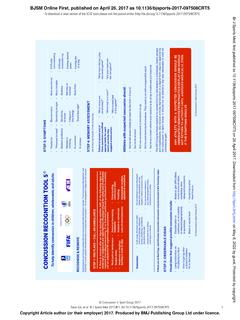
Concussion recognition tool 5© - British Journal of ...
bjsm.bmj.comApr 26, 2017 · The Concussion Recognition Tool 5 (CRT5) is to be used for the identification of suspected concussion. It is not designed to diagnose concussion. STEP 1: RED FLAGS — CALL AN AMBULANCE If there is concern after an injury including whether ANY of the following signs are observed or complaints are reported then the player should be safely and ...

Back to Back Drawing Handout - McGill Student Leaders
www.mcgill.caBack-to-Back Drawing: Divide your team into pairs. Have each pair sit with their backs to one another. Give one person from each partnership an image (shape or collection of shapes depending on difficulty level wanted) to describe to their partner who is given a …

The Minute Paper - Office of the Provost and Senior Vice ...
provost.tufts.eduThe Minute Paper is a very commonly used classroom assessment technique. It really does take about a minute and, while usually used at the end of class, it can be used at the end of any topic discussion. Its major advantage is that it provides rapid