Transcription of SIZING WATER SYSTEMS PUMPS AND TANKS
1 SIZING WATER SYSTEMSPUMPS AND TANKSP roper SIZING of residential WATER PUMPS and TANKS is important for two reasons: 1) Thesystem will run more efficiently and therefore use less electricity. 2) The system will lastlonger. Put simply, a properly sized domestic WATER system costs less over the long VS FLOWAs a homeowner, there are two rules about pressure and flow that are worth remembering: 1)For a given pipe size the greater the flow in GPM (gallons per minute), the greater thepressure required. 2) As the output of a pump in GPM increases, the pressure it most cases a small, single story residence with adequate plumbing will require a pump thatcan deliver WATER at a pressure of 35 - 40 PSI (pounds per square inch). Some homeownerswill want a higher pressure, but 35 - 40 PSI is adequate for most fixtures.
2 If the plumbing issubstandard (ie long runs of 1/2" or 3/4" pipe or lots of 90 degree bends) a pressure of 40 -50 PSI may be required to produce an adequate flow. As a residence increases in size it islikely that the demand for WATER will increase proportionally. Based on rule number one, ahigher pressure will be required to effect the increase in volume or , most pump manufacturers have designed their PUMPS to provide plenty ofpressure at a given flow. Therefore if we size the pump correctly for flow, the pressure willusually be more than adequate. As a rule of thumb always select a pump that will produce atleast 40 PSI at the desired flow THE FLOW REQUIREDT here are several methods used to compute the flow rate required to meet the WATER demand ofa given residence.
3 One of the simplest and most accurate measures the amount of WATER usedduring a seven minute peak demand period. These peak demand periods can occur several timesduring the morning and evening hours. Any residential WATER system should be sized to meetor slightly exceed the demand of the seven minute peak table on page two allows us to determine the average seven minute peak demand forresidences of various sizes. As you can see the table takes into account the number ofbathrooms, bathroom fixtures, the kitchen, and the laundry. For example, a typical one bathresidence requires 45 gallons during the seven minute peak period. In this case the pumpmust be able to provide a minimum of 7 GPM at the desired pressure. A home with three tofour baths will require 122 gallons or a pump that will supply at least 17 GPM.
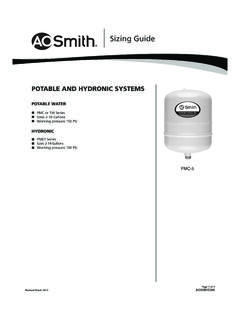
4 If you are planning an addition to your residence, be sure to include the additional requirements in THE HYDROPNEUMATIC TANKNow that flow and pressure have been determined, the tank can be sized. Minimally, the tankdrawdown, at the desired operating pressure, must be equal to the design flow rate of thepump. This will allow the pump to run for at least one full minute. Short run cycles reducepump life and use more electricity. A drawdown table for various tank sizes is available fromyour pump dealer. For example the 7 GPM pump used in the one bath house will require a 20gallon tank when operating at an average pressure of 30 PSI. At 40 PSI a 36 gallon tank isrequired. In the case of the 17 GPM pump a 52 gallon tank is needed for 30 PSI operation. An86 gallon tank is required at 40 have probably noticed from the examples above that drawdown capacity diminishes withincreased pressure.
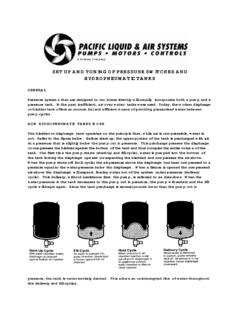
5 Therefore, selecting the lowest operating pressure that meets yourrequirements will increase the efficiency of the tank. If you would like to learn more abouthydropneumatic TANKS and how they operate, ask for the HLS publication: SET UP AND TUNINGOF PRESSURE SWITCHES AND DIAPHRAGM , you should select the largest tank you can afford. More drawdown means longer pumplife and lower electrical costs. In cases where space is at a premium, several smaller tankscan be installed in place of a single larger one. Finally, always have a pump professionalreview your selection before you Ahua Honolulu, HI 96819 Phone Fax