Transcription of Abbreviations Change Windows and the Change Calendar
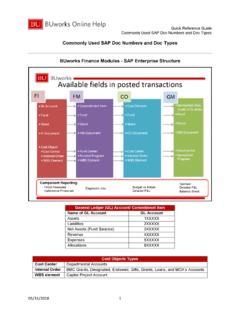
1 Version reFerenCe GUiDeChange ManagementAUGUsT 2011serViCe exCellenCe sUiTeThe Request for Change ProcessFor more info: Change management ?The benefits attained from an effective and efficient Change management process are both external to the customer and internal to IS&T. These include the following: Costs are reduced by saving time and money associated with Change The impact and disruption to services caused by unplanned Change is reduced Errors associated with Change are resolved or minimized The ability to adapt to changing conditions is enhanced External and internal communication is improved The ease and effectiveness of IS&T support is increased Staff intervention, investigation, and resolution actions are reduced Risk exposure is optimized.
2 Resulting in better assessment and coordination of changes The success rate of changes increases A stable and dependable infrastructure is fostered Overall customer service is improved Positive customer relationships are developed and refined Internal and external support for the process grows as the benefits increase and are realizedAbbreviationsCAB: Change Advisory BoardeCAB: Emergency Change Advisory BoardPir: Post Implementation ReviewrFC: Request for ChangeChange Windows and the Change CalendarBoth the IS&T Change Windows and Change Calendar are available at or Comments? Write to more info: management is the process of requesting and managing changes in a way that improves communication, decreases downtime, and provides high quality Assessment involves evaluating the key factors of type, impact, and risk related to the Change to determine the level of approval required before the Change can be l ead Time for submitting and the Approval Authority required for Normal Changes are determined by comparing the scope of the Change (Campus, Significant, Departmen-tal, and Minor) with the derived risk assessment value (Very High, High, Moderate, or Low).
3 When should I make a Request for Change ?If a planned Change has an impact on the University/Campus or is significant (based on the scope of the Change ) then you must create a Request for Change (RFC) in ServiceNow, the service management to make a Request for Change1. Open a new Change request in ServiceNow at Identify the persons requesting and implementing the change3. Determine the type and scope of the change4. Identify the affected services and service components5. Provide a short description, business reason for, and summary of the change6. Provide risk assessment by answering associated questions7.
4 Schedule the change8. Attach implementation, back-out, testing, and communica-tion plans9. Request Approval to submit the change10. Implement the change11. Complete Post Implementation Review (PIR)Type assessment categorizes changes based on the required workflow and approval procedures. normal: A Change that follows normal approval flow standard Pre-Authorized: Pre-approved based on Change model Urgent: A Change that must occur prior to prescribed lead time for approval emergency: Immediate incident-related Change ; may be documented after the factScope assessment is based on the impact of the Change .
5 University/Campus: One or both campuses (CRC & BUMC) significant: A school or two or more departments Department: A single department Minor: Five or fewer clientsRisk assessment is based on the following yes or no questions: Is the Change service-impacting? Does the Change require more than one support group? Is there a single point of failure (SPOF)? Is this a new or high-risk routine activity?Each yes answer increases the risk profile of the Change . The risk value assigned to the Change is based on the number of yes responses: Four equals Very High Three equals High Two or One equals Moderate Zero equals lowScopeCampusRiskVery High, HighsTAnDArD changes may be of any scope and must be of low risk; they will be considered pre-approved except during Change freeze changes of any scope or risk will be documented retroactively.
6 The manager in charge of the incident is respon-sible for approving the Time for Approval: Three CAB meetings Approval: CAB (ECAB for urgent changes) and AVP or CIOS copeCampus SignificantRiskModerate Very High, Highlead Time for Approval: Two CAB meetings Approval: CAB (ECAB for urgent changes)ScopeCampus Significant Departmental MinorRiskLow Moderate, Low, All Alllead Time for Approval: Two Days Approval: Change Manager