Transcription of Motivational Interviewing Stages of Change - Masspartnership
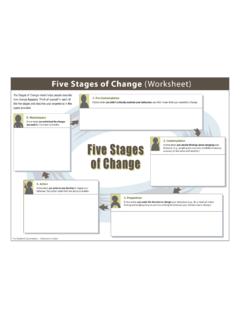
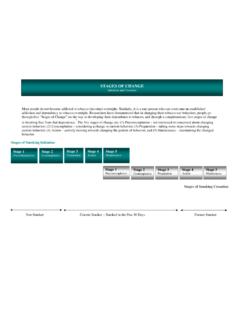
1 Motivational Interviewing Stages of Change Motivational Interviewing is based on the understanding that we encounter MBHP Members in varying Stages of readiness for Change . The following is a brief synopsis of stage -appropriate strategies for engaging Members in making healthy lifestyle changes. An important concept is that stage -appropriate interventions minimize the risk that patients will push back and lose ground by resorting to an earlier stage of Change . Pre-contemplation Members in this stage are not even thinking about making a Change . Gather history and listen for any discrepancies between the Member s stated goals and his or her lifestyle choices Educate Members about health risks related to lifestyle choices Instill hope by providing information about the possible mitigation of health risks through lifestyle Change Contemplation Members are beginning to consider making a Change , but are not yet ready to make a commitment.
2 Explore both the positive and negative aspects of the lifestyle choice under consideration Help Members appreciate the disconnect between stated goals or concerns and lifestyle choices, using reflective listening Gently nudge the balance in the direction of Change by reflecting back what patients have told you Preparation Members in this stage are preparing for action to Change in the foreseeable future. Assess the Member s commitment to Change Offer a menu of choices ( , self-help groups, medications, online resources, referrals) and strategies Identify supports and barriers to Change Action Members in this stage are actively implementing a plan for Change . Identify any unexpected hurdles and help Members define coping strategies Help Members to identify new sources of support Track progress with Members Maintenance Members in this stage are maintaining healthy lifestyle changes they have made.
3 Continue to track gains associated with healthy Change Identify people, places, and things which could pose triggers to relapse and continue to help Members build skills to prevent relapse Assist Members in actively maintaining the changes they have made