Example: bankruptcy

Karpman Drama Triangle - pastormattrichard.webs.com

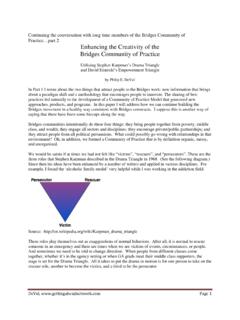
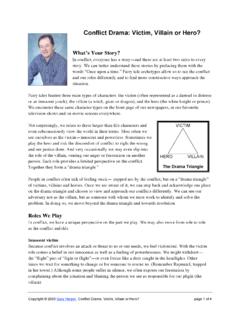
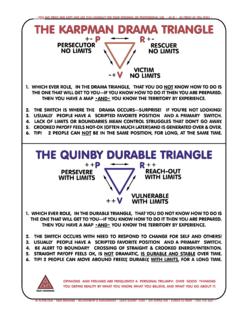
Karpman Drama TrianglePersecutor It s all your fault You re no good, stupid,inadequate, useless, worthless I do everything around here If it s you: what do you really want? If it s at you: disengage!Victim Poor me Save me I m not responsible I can t do anything about it If it s you: beginproblem solving If it s at you: affirm theirability to solve the problemRescuer Let me help you I ll make it OK Let s not fight ( I feel guilty ) If it s you: take no actionuntil requested If it s at you: step out of victim roleSome thingsto think about Based on Transactional Analysis You re always playing one of theseroles There s one role in which you re mostcomfortable - and a second role whichyou most commonly switch to Being aware is half the battleSome questionsto ask What role do you most commonly playwith your clients? How do youbehave? What do you think? What role do you most commonly playwith your prospects? How do youbehave? What do you think?

Karpman Drama Triangle Persecutor • “It’s all your fault” •“You’re no good, stupid, inadequate, useless, worthless” • “I do everything around here”

Tags:

  Relating, Drama, Karpman drama triangle, Karpman

Information

Domain:

Source:

Link to this page:

Please notify us if you found a problem with this document:

Other abuse

Advertisement

Transcription of Karpman Drama Triangle - pastormattrichard.webs.com

1 Karpman Drama TrianglePersecutor It s all your fault You re no good, stupid,inadequate, useless, worthless I do everything around here If it s you: what do you really want? If it s at you: disengage!Victim Poor me Save me I m not responsible I can t do anything about it If it s you: beginproblem solving If it s at you: affirm theirability to solve the problemRescuer Let me help you I ll make it OK Let s not fight ( I feel guilty ) If it s you: take no actionuntil requested If it s at you: step out of victim roleSome thingsto think about Based on Transactional Analysis You re always playing one of theseroles There s one role in which you re mostcomfortable - and a second role whichyou most commonly switch to Being aware is half the battleSome questionsto ask What role do you most commonly playwith your clients? How do youbehave? What do you think? What role do you most commonly playwith your prospects? How do youbehave? What do you think?

2 What s the cost of behaving like that?What do you gain? What do you lose? What would you like to be different?What will you stop doing? What willyou start doing? Maida CC. Michael Bungay Stanier, personal coach.

Related search queries