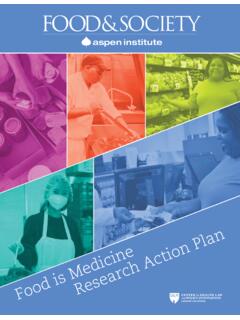
Transcription of an TWO GENERATIONS,ascend at the aspen institute report ...
1 An ascend at the aspen institute reportTWO GENERATIONS,ONE FUTURE moving parents and children beyond poverty together1An ascend at the aspen institute ReportAscend at the aspen institute thanks the following individuals, who provided helpful comments and recommendations on this publication: Cara Aley of American MoJo Inc.; Monica Barczak of Community Action Project s CareerAdvance program; Andrea Camp of Communications Consortium Media Center; Teresa Eckrich Sommer and P. Lindsay Chase-Lansdale of Northwestern University; Christopher King and Robert Glover of the University of Texas at Austin, Ray Marshall Center for Human Resources; Joan Lombardi; Gloria Perez of Jeremiah Program; Rachel Schumacher; and Richard Wylie of Endicott College.
2 In addition, ascend at the aspen institute would like to acknowledge the diverse experts and partners who contributed expertise at the: Two Generations, One Future Roundtable held in Washington, DC, in March 2011; Memphis learning trip, co-hosted with the Women s Foundation for a Greater Memphis in September 2011; and Two- generation Strategies in Education Roundtable held in Washington, DC, in October 2011, co-hosted with the Foundation for Child Development and the Ray Marshall Center at the University of of these forums provided invaluable insights and perspectives that informed the two- generation framework shared in this at The aspen institute is grateful to the following institutions and individuals for their ongoing philanthropic support and partnership.
3 Kellogg Foundation, Bill & Melinda Gates Foundation, Open Society Foundations/Special Fund for Poverty Alleviation, Chambers Family Fund, The Kresge Foundation, Patrice King Brickman, Charlotte Perret, and Siobhan Davenport/Rocksprings at the aspen institute is solely responsible for the content of this publication. This report was prepared by Anne Mosle and Nisha Patel with support from Sarah Generations, One FutureAscend at the aspen institute was launched with catalytic support from a core circle of investors with the mission to serve as a hub for breakthrough ideas and proven strategies that move parents, especially women, and their children beyond poverty toward educational success and economic security.
4 ascend takes a two- generation approach to its work and brings a gender and racial equity lens to analysis. Two- generation approaches focus on creating opportunities for and addressing needs of both vulnerable parents and children together. Two- generation approaches can be applied to programs, policies, systems, and paper outlines the emerging case for and shares a framework for two- generation approaches. Key economic and demographic trends are driving the need for these unemployment has remained stubbornly high over the past several years, pushing many parents and their children into a state of economic vulnerability and exacerbating conditions for families who were already poor or low-income prior to the 2008 recession.
5 Men s labor force participation decreased by nearly 10 percent between 1970 and Women comprise half of the workforce, up from one-third in One-third of working mothers are their families sole More than one in five children live in poverty, while more than two in five are A higher percentage of children live in single-parent households than do children in all other industrialized countries studied in a recent report from the Organization for Economic Cooperation and Women and children in single-mother families have disproportionally high rates of poverty. Nearly three-fourths of children living in single-mother families are low-income, compared to just under one-third of children living in married-couple Low levels of educational attainment and poverty are strongly correlated.
6 Only 10 percent of those with a bachelor s degree are poor. Over 30 percent of those with a high school diploma or less are A body of research demonstrates the connection between maternal education and child the past year, ascend : Convened leaders in policy development, research, program design, evaluation, and community engagement to share knowledge, identify promising programs, and expand the conversation around new approaches to move families beyond poverty. Commissioned new data analysis from Child Trends, a nonpartisan nonprofit research center, to examine poverty and income data through a two- generation lens. Commissioned a series of focus groups by the bipartisan team of Lake Research Partners and American Viewpoint to capture the often-missing voices, aspirations, and perspectives of low-income Executive Summary3An ascend at the aspen institute ReportThe resulting findings support the core components that ascend has identified in its equation for two- generation approaches: Education + Economic Supports + Social Capital.
7 Education: Parents level of educational attainment particularly postsecondary education is a strong predictor of economic mobility. Education that includes skill development linked to high-demand jobs with opportunities for advancement is key. At the same time, the return on investment for early childhood education for at-risk children is significant over a lifetime. economic supports: These include housing, transportation, financial education and asset-building, tax credits, child care subsidies, student financial aid, health insurance, and food assistance. They provide an important scaffold for families as they work to build the skills that lead to better jobs and longer-term financial stability.
8 Social Capital: This manifests itself as peer support; contact with family, friends, and neighbors; participation in community and faith-based organizations; school and workplace contacts; leadership and empowerment programs; use of case managers or career coaches; and other social networks such as cohort models and learning communities. Such support appears to be a powerful success factor in programs that help move families beyond poverty. Social Capital builds on the strength and resilience of families, bolstering the aspirations parents have for their children. ascend s blueprint for action centers on helping parents pursue skills and complete education to improve their own economic security and stability, while simultaneously ensuring their children are on a path from the earliest age to engage in lifelong learning.
9 As a hub for the emerging two- generation field, ascend will: Spark a new conversation; Develop an economic case with solid metrics; Build and expand a network of leaders; and Elevate promising practices and policy ideas to build political United States in 2012 is at a crossroads about ways to ensure that all its people fuel progress in the 21st century. By creating partnerships across programs, policies, and systems now focused separately on children and parents, we can create an America in which a legacy of economic security and educational success passes from one generation to the next. We believe this vision shows a way forward.
10 New two- generation strategies can help parents and children achieve their dreams together. 4 Two Generations, One FutureThe United States remains in an economically tumultuous period, and many American families are anxious and deeply concerned about their future and that of their children. The Great Recession has shifted the terrain of the nation s economy in unprecedented ways. Unemployment has remained stubbornly high, pushing many parents and their children into economic vulnerability and exacerbating conditions for families who were already poor or low-income prior to the recession. In 2010, some 30 percent of working-age adults (ages 18-64) were low-income, up from 24 percent in 2000.