Transcription of SDP Codec Selection and QoS Signaling - EventHelix.com
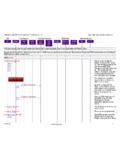
1 SDP Use in an IMS-to-IMS Call (SDP Codec Selection and QoS Signaling )Calling UECore NetworkCalled UECaller UserEquipmentGGSNC alled UserEquipmentCallerGGSNC alledEventStudio System Designer 22:30 (Page 1)Session Description Protocol (SDP) specifies a format for exchanging streaming related parameters between SIP subscribers. The followingsequence diagram focuses on the SDP interactions between two IMS subscribers. The flow covers two phases of the SDP negotiation: (1) Codec Selection between the calling and call IMS subscribers. (2) SDP Signaling involved in exchanging quality of service information.
2 This sequence diagram was generated with EventStudio System Designer ( ). Copyright Inc. All Rights Reserved. Codec Selection Initiate user initiates a call to a list of supported voiceand video codecsThe calling includes all supported codecs. This information is included as the first SDPoffer in the initial ,o=- <session-id> <version> IN IPV6 <caller-ipaddr>,c=IN IPV6 <caller-ipaddr>,s=-,t=<start-time> 0,m=audio <caller-port> RTP/AVP 96 97 98,a=rtpmap:96 H263,a=rtpmap:97 AMR,a=rtpmap:98 telephone-event,a=curr:qos local none,a=curr:qos remote none,a=des:qos mandatory local sendrecv,a=des:qos none remote sendrecvThe user terminal sends the initial INVITE with three voice codecs.
3 The terminal alsoinidicates that it will need to allocate resources to meet the quality of service (QoS)requirements for codecs. The "m=" line specifies the <caller-port>, the transport type(RTP/AVP) and the supported codecs ids(96, 97 and 98). The "a=rtpmap" lines map thecodec ids 96, 97 and 98 to H263, AMR and telephone-event (DTMF) respectively. The"a=curr" lines specify the the QoS for the caller (local) and the called (remote) ends are notcurrently met. The second last line indicates that the caller (local) needs to allocateresources in send and receive directions to meet the quality of service requirements for thecodec.
4 The last line indicates that the caller end has no specific requirements for the called(remote) a list of Codecs commonbetween the Caller and the CalledsubscriberThe Called subscriber examines the SDP list of available Codec . It prunes the list byexcluding codecs that are not supported by the called subscriber. This list will be includedin the 183 message sent to the Session Progressv=0,o=- <session-id> <version> IN IPV6 <called-ipaddr>,c=IN IPV6 <called-ipaddr>,s=-,t=<start-time> 0,m=audio <called-port> RTP/AVP 96 97,a=rtpmap:96 H263,a=rtpmap:97 AMR,a=curr:qos local none,a=curr:qos remote none,a=des:qos mandatory local sendrecv,a=des:qos mandatory remote sendrecv,a=conf:qos remote sendrecvThe UE replies back with 96 and 97 in the "m=" line.
5 98 is removed as telephone-event(DTMF handling) is not supported. The called UE also uses the "a=curr" lines to specify thatQoS for the session is currently not met. Note that the "a=des" lines now signify that called(local) also needs to allocate resources for meeting the QoS. This message also instructsthe caller (remote) to inform the called subscriber when the caller acquires the resourcesfor meeting the QoS. This QoS confirmation is being requested in the last line ("a=conf").PDP Contect Activation QoS Signaling Select one Codec from thecommon Codec listThe Caller examines the received common Codec list and selects the Codec to ,o=- <session-id> <version> IN IPV6 <caller-ipaddr>,c=IN IPV6 <caller-ipaddr>,s=-,t=<start-time> 0,m=audio <caller-port> RTP/AVP 97,a=rtpmap:97 AMR,a=curr:qos local none,a=curr:qos remote none,a=des:qos mandatory local sendrecv,a=des:qos mandatory remote sendrecvThe Caller now sends a PRACK to inform the called subscriber about the selected caller has selected the AMR Codec .
6 This is signaled by the "m=" and "a=" PDP ContextNow that the Codec to be used has been selected, the PDP context activation is initiated forallocating resources for meeting the Quality of Service (QoS) requirements for the OKv=0,o=- <session-id> <version> IN IPV6 <called-ipaddr>,c=IN IPV6 <called-ipaddr>,s=-,t=<start-time> 0,m=audio <called-port> RTP/AVP 97,a=rtpmap:97 AMR,a=curr:qos local none,a=curr:qos remote none,a=des:qos mandatory local sendrecv,a=des:qos mandatory remote sendrecvThe called subscriber acknowledges the PRACK. The message also indicates that quality ofservice for the session is not met for the called PDP ContextThe final Codec at the called side is decided.
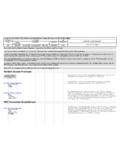
7 So initiate the PDP context activation toallocate resources for meeting the QoS of the terminating leg of the Use in an IMS-to-IMS Call (SDP Codec Selection and QoS Signaling )Calling UECore NetworkCalled UECaller UserEquipmentGGSNC alled UserEquipmentCallerGGSNC alledEventStudio System Designer 22:30 (Page 2)Activate PDP Context AcceptThe called PDP context activation has been completed. At this point, the caller and thecalled PDP contexts are both active. The QoS for the call can now be PDP Context AcceptThe caller PDP context activation has been ,o=- <session-id> <version> IN IPV6 <caller-ipaddr>,c=IN IPV6 <caller-ipaddr>,s=-,t=<start-time> 0,m=audio <caller-port> RTP/AVP 97,a=rtpmap:97 AMR,a=curr:qos local sendrecv,a=curr:qos remote none,a=des:qos mandatory local sendrecv,a=des:qos mandatory remote sendrecvSince the caller PDP context has been activated, notify the called end that the caller cannow meet the quality of service in the send and receive direction.
8 The "a=curr:qos localsendrecv" signals that the caller (local) PDP context has been established. Note that theUPDATE is being sent in response to the QOS confirmation request received in "183 Session Progress" message from the OKv=0,o=- <session-id> <version> IN IPV6 <called-ipaddr>,c=IN IPV6 <called-ipaddr>,s=-,t=<start-time> 0,m=audio <called-port> RTP/AVP 97,a=rtpmap:97 AMR,a=curr:qos local sendrecv,a=curr:qos remote sendrecv,a=des:qos mandatory local sendrecv,a=des:qos mandatory remote sendrecvThe caller replies back to the called user. Note that the "a=cur" line for the called (local) hasbeen updated to indicate that called end QoS is also all the resources for the call are in place.
9 Ring the called subscriber to notify the userabout the incoming RingingInform the caller that the called subscriber is being rung. This serves as an implicitindication to the caller that the QoS at the called side has also been caller acknowledges the ringing OKThe called subscriber acknowledges the called subscriber answers the OKNotify the caller that that the call has been caller acknowledges the "200 OK" message. The call is now ready to enter on a direct RTP/RTCP connection between the caller andcalled subscriber SIP phones.