Example: barber
BSBMGT615 Contribute to organisation development
Topic 1: Develop an organisation development plan 1 1Analyse a strategic plan to determine organisation development needs and objectives A 2 1Brofile the organisation’s culture through consultations and identify P techniques for changing the culture where necessary 17 1Cetermine who will take key roles and confirm their commitment D 21
Tags:
Information
Domain:
Source:
Link to this page:
Documents from same domain
Contents
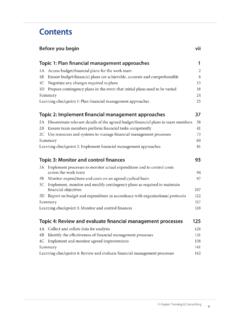
aspire-solidus-production.s3-ap-southeast-2.amazonaws.comTopic 1: Plan financial management approaches 1 1A Access budget/financial plans for the work team 2 1B Ensure budget/financial plans are achievable, accurate and comprehensible 8
CHCLEG003 Manage legal and ethical compliance
aspire-solidus-production.s3-ap-southeast-2.amazonaws.comand safety principles. The Work Health and Safety Act 2011 (Cth) is a national law that sets out responsibilities for health and safety in the workplace. This Act replaces the existing Occupational Health and Safety Act 1991 (Cth) and the individual state and territory Acts for health and safety.
BSBSUS501 Develop workplace policy and procedures for ...
aspire-solidus-production.s3-ap-southeast-2.amazonaws.comEcological sustainability is based on our planet having a limited amount: of non-renewable resources and ensuring we do not use these up. Financial (or economic) sustainability
Contents
aspire-solidus-production.s3-ap-southeast-2.amazonaws.comAustralia has a very culturally and linguistically diverse (CALD) population. This is reflected in Australian Bureau of Statistics data, which estimates that 40 per cent of the Australian population is made up of immigrants and their children. You will encounter this diversity in the people you work with. Legislation and associated
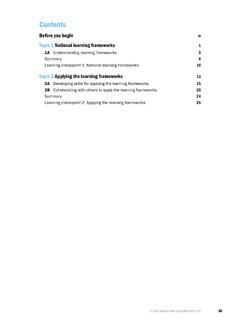
CHCECE009 Use an approved learning framework to guide …
aspire-solidus-production.s3-ap-southeast-2.amazonaws.comfoundations: principles, practice and learning outcomes. All three of these foundations are important to curriculum decision-making and pedagogy. Pedagogy refers to your professional practice, including how you develop relationships, make decisions, teach and learn. You can read more about pedagogy in the EYLF and MTOP.
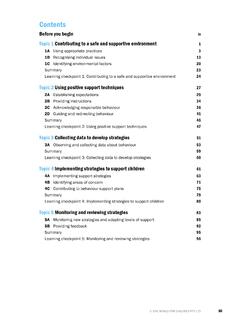
CHCECE006 Support behaviour of children and young people ...
aspire-solidus-production.s3-ap-southeast-2.amazonaws.comDisruptive behaviour is when a child is uncooperative and prevents themselves and/ or others from focusing on what they are doing. A disruptive child might also grab the . educator’s attention, distracting them from the other children and the task at hand. It is normal for children to exhibit disruptive behaviour as they struggle to learn self-
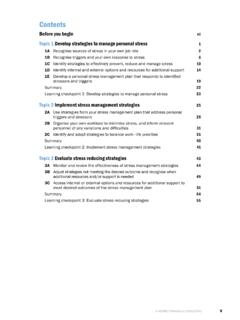
HLTWHS006 Manage personal stressors in the work …
aspire-solidus-production.s3-ap-southeast-2.amazonaws.comIt can drain us, cause illness, absenteeism, accidents, industrial disputes and staff turnover. What may be a good stress for one person may be a threatening stimulus to another; what one person finds stressful, another may not. Whether or not you react with
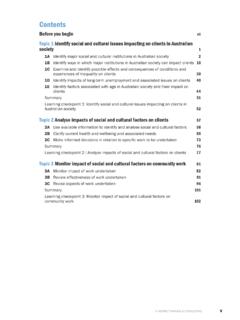
CHCDEV002 Analyse impacts of sociological factors on ...
aspire-solidus-production.s3-ap-southeast-2.amazonaws.comsociety . 1 1A Identify major social and cultural institutions in Australian society 2 ... From a sociological point of view, a healthcare system contributes to the stability ... In this approach, the media plays a role in social policy development by identifying and raising public concerns. Australian political system: Australia is a ...

CHCDIV002 Promote Aboriginal and/or Torres Strait Islander ...
aspire-solidus-production.s3-ap-southeast-2.amazonaws.comare caring for. Your main focus should always be ... Each area has a number of language groups, each with unique ancient cultural . ... here is a brief overview of some other aspects of cultural life in an Aboriginal and/or Torres Strait Islander community.
BSBHRM512 Develop and manage performance …
aspire-solidus-production.s3-ap-southeast-2.amazonaws.com5. Formal performance management sessions provide a means through which the five primary performance management elements of planning, monitoring, developing, assessing and rewarding can be utilised effectively. 6. Performance management processes must be flexible enough to provide measurable and
Related documents

UNDERSTANDING ORGANISATIONAL CULTURE.
www.managers.org.ukThe culture of an organisation is its personality and character. Organisational culture is made up of shared values, beliefs and assumptions about how people should behave and interact, how decisions should be ... › Employee-oriented vs work-oriented – the extent to which the employee’s well-being is prioritised at the expense of the task ...
BSBHRM512 Develop and manage performance …
aspire-solidus-production.s3-ap-southeast-2.amazonaws.comthe organisation 20 ... Culture Determine the overall culture of the organisation; for example, an organisation with many levels of reporting will tend to be more bureaucratic and require much more ... employee performance and the industry the organisation operates within.

The Profession Map
peopleprofession.cipd.orgorganisation culture . That an organisation is a whole system, and that your work and actions have an impact elsewhere ; How people practices impact ... culture . How employee engagement impacts the way people feel at work ; Basic theories of motivation, and the factors that affect employee engagement .
Making Employee Recognition a Tool for Achieving …
files.eric.ed.gov(Herzberg, 1996 as cited in Luthans, 2000). It also affords the organisation opportunity to highlight desired actions and behavior thereby creating role models for other employees (Silverman, 2004). According to Nelson (1995 as cited in Luthans, 2000) an effective employee recognition culture is achieved where the recognition programs

FUNDAMENTALS OF CULTURAL TRANSFORMATION
valuescentre.comIt is important that every employee, manager, and leader has a clear line of sight between the work they do each day and the mission or vision of the organisation, so they know how they make a difference. Every culture change or transformation initiative must aim at satisfying all four of these conditions if it is

ORGANIZATIONAL CULTURE AND CHANGE PROCESS: THE …
www.icidr.orgorganisation's culture. Since they are unfamiliar with the organisation's culture, they are potentially likely to disturb the belief and customs that are in place. The organization through socialization will attempt to help them adapt to its culture. This is a way culture is sustained in the organisation (Wanous, 1992).

CREATING AN ETHICAL CULTURE IN YOUR ORGANISATION
ethicsmonitor.co.zaneed the culture change would fulfil or what benefit it would deliver. Secondly, changing an organisation’s culture - in this case to be more ethical - is widely recognised as a very dif-ficult leadership task. Unpacking these issues is important to ensure that the pursuit of an ethical culture is not under-mined.
The Nestlé Employee Relations Policy
www.nestle.comTo foster this culture as a competitive advantage, the Nestlé Employee Relations Policy provides a frame of reference for the collective relationships with trade unions and other employee representatives based on the “human rights and labour practices” chapter of the Nestlé Corporate Business Principles and on the Human Resources Policy.

Employee Engagement: A review of current thinking
www.employment-studies.co.uk1. Engagement is consistently shown as something given by the employee which can benefit the organisation through commitment and dedication, advocacy, discretionary effort, using talents to the fullest and being supportive of the organisation’s goals and values.