Transcription of 0 3 JAN 2017 - NCOsupport.com
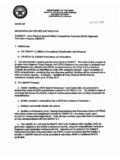
1 SECRETARY OF THE ARMY WASHINGTON MEMORANDUM FOR SEE DISTRIBUTION 0 3 jan 2017 SUBJECT: Army Directive 2017 -03 (Policy for Brigade-Level Approval of Certain Requests for Religious Accommodation) 1 . References: a. Title 42, United States Code 2000bb-f (Religious Freedom Restoration Act). b. Title 10, United States Code 774 (Religious apparel: wearing while in uniform). c. Department of Defense Instruction (Accommodation of Religious Practices Within the Military Services), February 10, 2009, Incorporating Change 1, Effective January 22, 2014. d. Army Directive (AD) 2016-34 (Processing Religious Accommodation Requests Requiring a Waiver to Army Uniform or Grooming Policies), 6 Oct 2016. e. Army Regulation (AR) 600-20 (Army Command Policy), 6 November 2014. f. AR 670-1 (Wear and Appearance of Army Uniforms and Insignia), 10 April 2015. 2. Purpose and Scope. This directive revises Army uniform and grooming policy to provide wear and appearance standards for the most commonly requested religious accommodations and revises the approval authority for future requests for religious accommodation consistent with these standards.
2 AD 2016-34 (reference 1 d) remains in effect and continues to provide the policy for requests for religious accommodation involving uniform wear and grooming, except as modified by this directive. 3. Brigade-Level Accommodation Approval. Since 2009, religious accommodation requests requiring a waiver for uniform wear and grooming have largely fallen into one of three faith practices: the wear of a hijab; the wear of a beard; and the wear of a turban or under-turban/patka, with uncut beard and uncut hair. Based on the successful examples of Soldiers currently serving with these accommodations, I have determined that brigade-level commanders may approve requests for these accommodations, and I direct that the wear and appearance standards established in paragraph 4 of the enclosure to this directive be incorporated into AR 670-1. a. Individuals will continue to submit all requests for religious accommodation involving uniform wear and grooming pursuant to the process established in AD 2016-34.
3 The Office of the Deputy Chief of Staff (DCS), G-1 Command Policy SUBJECT: Army Directive 2017 -03 (Policy for Brigade-Level Approval of Certain Requests for Religious Accommodation) Division will make sure the requests are acted upon within the timelines established in AD 2016-34. b. Commanders receiving an initial request for an accommodation involving uniform wear and grooming will immediately notify the Office of the DCS, G-1 Command Policy Division and prepare a religious accommodation packet consistent with paragraph Sc of AD 2016-34. Notification will be sent to and will include the requestor's name; grade (if applicable); Unit; military occupational specialty (MOS) (or prospective MOS, if known); and a copy of the request documents. c. The Soldier's brigade-level commander will approve a request for a religious accommodation consistent with the standards described in paragraph 4 of the enclosure unless the commander: (1) determines the request is not based on a sincerely held religious belief, or (2) identifies a specific, concrete hazard that is not specifically addressed in this directive and that cannot be mitigated by reasonable measures after coordinating with the branch or MOS proponent.
4 D. When evaluating the sincerity of a Soldier's articulated belief, commanders may consider the credibility and demeanor of the applicant and the circumstances of the request. A religious practice may be an action, behavior, or course of conduct constituting an individual expression of religious beliefs, regardless of whether the practice is compelled by, or central to, the religion concerned. e. If the brigade-level commander approves a request for accommodation involving grooming and appearance, the commander will notify the Soldier and forward a copy of the approval memorandum through the General Court-Martial Convening Authority (GCMCA) to the DCS, G-1 and Army Human Resources Command for filing in the Soldier's Army Military Human Resources Record. The accommodation will continue throughout the Soldier's career and may not be permanently revoked or modified unless authorized by me or my designee. f.
5 If the brigade-level commander does not approve the request, the commander will forward the request to the GCMCA with a recommendation for denial and the reason(s) for the denial. The GCMCA may approve an accommodation request to adhere to the standards described in paragraph 4 of the enclosure or forward it to the DCS, G-1 with a recommendation for denial pursuant to AD 2016-34. Only I or my designee may take final action to deny a request for religious accommodation described in the enclosure. 2 r SUBJECT: Army Directive 2017 -03 (Policy for Brigade-Level Approval of Certain Requests for Religious Accommodation) g. Accession agencies and commands may identify an officer in the grade of colonel/0-6 or higher who is not a commander to serve as the brigade-level approval authority for purposes of evaluating and approving pre-accession requests for religious accommodations described in this paragraph. 4.
6 Wear and Appearance Standards a. The wear and appearance standards in paragraph 4 of the enclosure will apply to all Soldiers with an accommodation permitting the following faith practices: the wear of a hijab; the wear of a beard; and the wear of a turban or under-turban/patka, with uncut beard and uncut hair. Previously accommodated Soldiers will be issued new approval memoranda no later than 1 O January 2017 that include these standards and state that, subject to the provisions of this directive, the accommodations will continue throughout the Soldiers' careers. Such accommodations may not be permanently revoked or modified unless authorized by me or my designee. b. All Soldiers must wear the Advanced Combat Helmet and other protective headgear in accordance with the applicable technical manuals. As necessary, Soldiers will modify the placement and style of their hair to achieve a proper fit. Removal of pads from helmets for fit or comfort is not permitted except as authorized by the applicable technical manual.
7 5. Duty Considerations a. A religious accommodation consistent with the uniform wear and grooming standards in the enclosure will not affect a Soldier's assignment of MOS or branch, duty location, or attendance at military schools, except as described in paragraph Sb for Soldiers with a beard. If a GCMCA, a higher level commander, or an MOS proponent identifies additional specific hazards created by an accommodation that cannot be reasonably mitigated, they must immediately inform the Office of the DCS, G-1 Command Policy Division at b. Study results show that beard growth consistently degrades the protection factor provided by the protective masks currently in the Army inventory to an unacceptable degree. Although the addition of a powered air-purifying respirator and/or a protective mask with a loose-fitting facepiece has demonstrated potential to provide adequate protection for bearded individuals operating in hazardous environments, further research, development, testing, and evaluation are necessary to identify masks that are capable of operational use and can be adequately maintained in field conditions.
8 The Assistant Secretary of the Army (Acquisition, Logistics and Technology) will conduct additional testing of existing equipment, ascertain whether product alternatives exist, and provide a plan to acquire protective masks for bearded individuals. This effort will 3 r SUBJECT: Army Directive 2017 -03 (Policy for Brigade-Level Approval of Certain Requests for Religious Accommodation) include an assessment of the feasibility of fielding the current equipment or any alternative product. Until the Army can field such protective gear, these restrictions apply: (1) Soldiers with a religious accommodation allowing a beard may not attend military schools requiring toxic chemical agent training and may not be assigned to positions requiring compliance with biological, chemical, or nuclear surety requirements in accordance with AR 50-1 (Biological Surety), AR 50-5 (Nuclear Surety), and AR 50-6 (Nuclear and Chemical Weapons and Materiel Chemical Surety).
9 For example, they may not serve as 74A, Chemical, Biological, Radiological, Nuclear (CBRN) Officers; 740A, CBRN Technicians; or 74D, CBRN Specialists. (2) An accommodation for a beard may be temporarily suspended when a specific and concrete threat of exposure to toxic CBRN agents exists that requires all Soldiers to be clean-shaven, including those with medical profiles. Following the procedures in paragraph 6, commanders may require a Soldier to shave if the unit is in, or about to enter, a real tactical situation where use of a protective mask is actually required and where the inability to safely use the mask could endanger the Soldier and the unit. A Soldier may wear a beard while participating in training or tactical simulations designed to ensure that the Soldier is fully familiar with use of the protective mask. 6. Suspension Procedures a. When an accommodated Soldier's GCMCA identifies a specific and concrete threat to health and safety based on the accommodation (such as threat of exposure to toxic CBRN agents that may merit a heightened protective posture), the GCMCA, after consultation with the Staff Judge Advocate, will notify the Soldier of the need to suspend the religious accommodation, the basis for the suspension, the date the suspension will likely go into effect, and the Soldier's right to appeal.
10 If the Soldier requests an appeal, the Soldier will have 10 days to submit matters to the Office of the DCS, G-1 Command Policy Division at The accommodation will not be suspended before I or my designee take action on the appeal. b. In exigent circumstances involving an imminent threat to health and safety, the GCMCA may shorten the time for appeal and, in urgent circumstances, may require immediate suspension of the accommodation. The GCMCA will notify the Office of the DCS, G-1 Command Policy Division of the decision and its basis as soon as possible at usarmy .pentagon. hqda-dcs-g-1 . @ mail. mil. c. The GCMCA will reinstate the suspended accommodation when the specific and concrete threat to health and safety as a result of the accommodation no longer exists. 4 r SUBJECT: Army Directive 2017 -03 (Policy for Brigade-Level Approval of Certain Requests for Religious Accommodation) 7. Additional Changes to AR 670-1.