Example: marketing
10 Steps to Approach Memory Concerns
TAKE ACTION THROUGH CONVERSATION 5. Who should have the conversation to discuss concerns? It could be you, a trusted family member or friend, or a combination. It’s usually best to speak one-on-one so that the person doesn’t feel threatened by a group, but use your best judgment to determine what will likely be most comfortable for the ...
Tags:
Information
Domain:
Source:
Link to this page:
Documents from same domain
Communication and Alzheimer's Disease
alz.orgThe Alzheimer’s Association is the leading voluntary health organization in Alzheimer’s care, support and research. Our mission is to eliminate Alzheimer’s disease through
2018 ALZHEIMER’S DISEASE FACTS AND FIGURES
alz.orgAlzheimer’s Association. 2018 Alzheimer’s Disease Facts and Figures. Alzheimers Dement 2018;14(3):367-429. About this report 2018 Alzheimer’s Disease Facts and Figures is a statistical resource for U.S. data related to Alzheimer’s disease,

Understanding Alzheimer's and Dementia - alz.org
alz.orgTHE IMPACT OF ALZHEIMER’S AND DEMENTIA Currently, an estimated 50 million people worldwide are living with dementia, including more than 5 million Americans.

Behaviors - Alzheimer's Association
alz.orgtheir causes. 1. Examine the behavior ... Turn the action or behavior into an activity If the person is rubbing a hand across the table, provide a cloth and ask for help with dusting. 8 Stay calm and be patient Reassure the person with a calm voice and gentle touch. Provide an answer

BASICS OF ALZHEIMER’S DISEASE
alz.org» Parkinson’s disease dementia is an impairment in thinking and reasoning that many people with Parkinson’s disease eventually develop. As brain changes gradually spread, they often begin to affect . 3 mental functions, including memory and the ability to pay attention, make sound
Korsakoff Syndrome - Alzheimer's Disease & Dementia Help
alz.orgAbout dementia Dementia is a general term for a decline in mental ability severe enough to interfere with daily life. Dementia is not a single disease; it’s the umbrella term for an individual’s changes in memory, thinking or reasoning. There are many possible causes of dementia, including Alzheimer’s. Disorders grouped under the general term

10 WARNING SIGNS OF ALZHEIMER’S - Alzheimer's Association
alz.orgOR SOLVING PROBLEMS Some people living with dementia may experience changes in their ability to develop and follow a plan or work with numbers. They may have trouble following a familiar recipe or keeping track of monthly bills. They may have difficulty concentrating and take much longer to do things than they did before.

FDA-Approved Treatments for Alzheimer's
alz.orgAlzheimer’s affects more than just memory and thinking. A person’s quality of life may be impacted by a variety of behavioral and psychological symptoms that accompany dementia, such as sleep disturbances, agitation, hallucinations and delusions. Some medications focus on treating these non-cognitive symptoms for a
Communication and Alzheimer's Disease
alz.org» Approach the person from the front and identify yourself. » Encourage nonverbal communication. If you don’t understand what the person is trying to ... of dementia through the promotion of brain health. Our vision is a world without Alzheimer’s disease ...
Alzheimer’s Dementia Care Practice Recommendations
alz.orgscription price may be subject to UK VAT. Subscribers in Canada, please add GST to the prices quoted. Personal rate subscriptions are ... and education by publishing worldwide. Typeset by TNQ Books and Journals Pvt Ltd, Chennai, India; Printed ... to Advertising and Special Sales, Oxford Journals, Oxford University Press, Great Clarendon Street ...
Related documents

Business English and Conversation
www.bookpump.comBusiness English and Conversation - Armando Aceituno M. English, like most structured languages, has a strong foun-dation: the parts of speech. The main parts of speech are: Nouns Pronouns Adjectives Adverbs Prepositions Conjunctions Interjections Verbs Look at this example: For Christmas, my sister gave me a computer and some very nice ...

Your Conversation Starter Guide
theconversationproject.orgThe Conversation Project theconversationproject.org Institute for Healthcare Improvement IHI.org 11 Keep Talking STEP 4 Now that you’ve started the conversation, keep going! Talk to more people who may have a say in your health care. The more you talk, the more people you are close to will know what matters to you. ...

Dialogs for Everyday Use - American English
americanenglish.state.govShortSituational Dialogs for Students of English as a Foreign Language. Julia M. Dobson. Dean Curry, Editor. Language Notes by Anne Covell Newton. First published in 1980. Second printing 1994. by the English Language Programs Division. of the United States Information Agency, Washington, DC. This printing published in 2003

Practise English on Your Own - immigratemanitoba
www.immigratemanitoba.comMake sure you speak English most of the time, or if you can, all of the time! Challenge yourself at the first meeting to speak only English for 30 minutes, then 60 minutes the next time, then 2 hours the next time. 6. Volunteer. Go to a community centre or your children’s school. Ask if you can volunteer. You can be helpful and practise ...
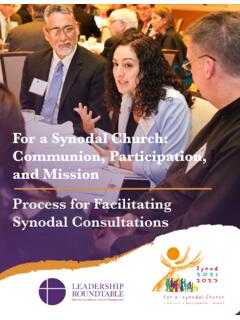
For a Synodal Church: Communion, Participation, and Mission
leadershiproundtable.org4. We will be stopping the conversation at certain intervals to reflect and pray 5. Our primary mode is dialogue: When we speak our purpose is to advance the conversation. Please avoid arguing or comments that seek to advance a personal agenda. 6. We limit how long we speak so that everyone has time to share. 7.

The Heart of Conversation: To Understand & Be Understood
americanenglish.state.govThe many levels of STRESS •Words with two or more syllables will always have one primary stress. •photograph, photographer, photographic •Phrases have stress. •an excellent photographer (unstressed, stressed, focus stress) •Sentences have stress patterns.

Useful phrases for discussions - UPJ
www.ocw.upj.ac.id2 . 5. Agreeing with an opinion . I (quite) agree. I agree completely/entirely. I couldn’t agree (with you) more. I entirely/completely agree with you on that.