Transcription of 2021 ACCOMPLISHMENTS OVERVIEW
1 2021 ACCOMPLISHMENTS OVERVIEWT hroughout 2021, the Department of Natural Resources made important progress toward the mission, goals, and priorities outlined in our strategic plan. We are proud to offer this high-level OVERVIEW of key ACCOMPLISHMENTS in several priority areas. This is not a comprehensive list of DNR achievements in 2021, but rather a representative OVERVIEW . As with any such list, there is much equally important work that is not included. We hope these examples illustrate some of the many ways in which the DNR works on behalf of all Minnesotans to fulfill the Department s mission to conserve and manage the state s natural resources, to provide outdoor recreation opportunities, and to provide for commercial uses of natural resources in a way that creates a sustainable quality of life.
2 You can stay up-to-date on the DNR s work by signing up for one of our topic-specific emails lists, exploring opportunities on our public engagement platform, or by following us on Facebook, Twitter, or Instagram. 2 ACCOMPLISHMENTS OVERVIEWCONNECT PEOPLE TO THE OUTDOORSCONNECT PEOPLE TO THE OUTDOORSM innesota s great outdoor spaces have been invaluable for children and families during the COVID-19 pandemic. More people have been spending more time in and on our lakes, state parks, forests, trails, wildlife areas, and scientific and natural areas, a welcome and exciting development on which we will seek to build. The DNR connects Minnesotans to the outdoors in meaningful ways that contribute to human health, prosperity and quality of life, and build stewardship for our special places and shared natural OUTDOORS SKILLS AND STEWARDSHIP SERIESThe DNR s outdoor programming has evolved in many ways to take advantage of new technology and meet the various challenges presented by COVID-19 restrictions.
3 One example is the ongoing Minnesota Outdoors Skills and Stewardship Series (MOSSS), which offers free, weekly webinars so people can engage in real-time with DNR staff and guest speakers on topics such as fly fishing, foraging for spring edibles, deer hunting, health benefits of being outdoors, and more. Participants range from those who are new to hunting or fishing, to long-time outdoor enthusiasts who want to expand their interest areas, to experienced participants who also share their knowledge with viewers. STATE PARK VEHICLE PERMITS FOR TRIBAL MEMBERS The DNR successfully worked to change state law so that members of the 11 federally recognized tribes within Minnesota s borders will have free access to each of Minnesota s 75 state parks and recreation areas.
4 The DNR coordinated with all tribes to ensure a welcoming and effective approach to implementing this change. This collaborative approach ensures open access for tribal members to their ancestral lands and strengthens the DNR s relationship with our tribal PARKS LIBRARY PASS PROGRAMThe DNR worked with more than 70 libraries located in lower income communities throughout the state to offer a program through which library patrons can check out a state parks pass, allowing free access to state parks and recreation areas for families and individuals who could not otherwise afford a permit. In the first six months of this program, more than 1,500 people checked out the free OVERVIEWENHANCE PUBLIC ENGAGEMENTENHANCE PUBLIC ENGAGEMENTThe DNR engages with the public to ensure we consider all Minnesotans in providing services and making decisions by better understanding their interests and building WITH DNRThe DNR officially launched its new digital public engagement platform to give Minnesotans another way to participate in discussions, offer feedback, and make comments on agency projects and decisions that are meaningful to them.
5 This platform builds on the many other public engagement opportunities the DNR offers throughout the S OFFICE HOURSLive, online Commissioner s Office Hours events have provided a new way for Minnesotans to meet with and hear from the DNR s senior leadership during a year when in-person meetings remained less common. Each monthly event focuses on a timely and relevant natural resource, conservation, or outdoor recreation topic. The sessions begin with a brief statement by the Commissioner; the rest of the hour is then used as an open forum for participants to ask questions and engage in dialogue with DNR leadership. We are excited to continue and build on this new AND HUNTING OPENERSWe have reimagined our hunting and fishing openers, partly of necessity in response to COVID-19 protocols but also in a quest to keep the events fresh and relevant.
6 The redesigned events have created more intimate engagement opportunities. The 2021 Governor s Fishing Opener was hosted by Otter Tail County, which highlighted its more than 1,100 lakes, offering plenty of space and plenty of fish. The Pheasant Opener weekend in Kandiyohi County started with a conservation tour and a roundtable conversation, including more than three dozen people from 14 agencies and organizations participating. In November, Governor Walz joined a Pine County landowner for the deer opener and then visited one of DNR s 87 CWD sampling OVERVIEWEXPAND DIVERSITY, EQUITY, AND INCLUSIONEXPAND DIVERSITY, EQUITY, AND INCLUSIONDNR enhances our ability to serve all Minnesotans by cultivating a workforce that reflects and embraces the diversity of Minnesota s population, and ensures our programs, resources, and decision-making processes serve Minnesota s diverse DEVELOPMENTIn 2021, the Increasing Diversity in Environmental Careers program served three cohorts for a combined total of 45 participants.
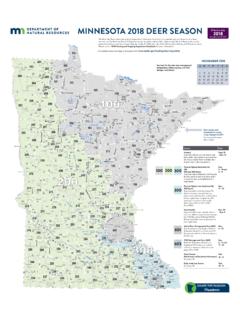
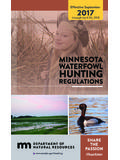
7 IDEC is a unique college-to-careers pathway program for underrepresented college students majoring in science, technology , engineering and math. Among the benefits of the IDEC program are opportunities for paid experience, hands-on work to build skills and knowledge in the environmental field, and professional connections and development. The IDEC program assists fellows in becoming more competitive job applicants after AND FISHING REGULATIONS TRANSLATEDP eople who speak Hmong, Karen, Somali or Spanish can now access Minnesota s hunting and fishing regulations in their language. The DNR translated the Minnesota Fishing and Hunting and Trapping regulations booklets, the deer permit area map, and the Minnesota Waterfowl Hunting Regulations booklets, into the four languages, other than English, that are most commonly spoken in Minnesota households.
8 The translated booklets are available in digital format on the DNR website and in print at locations where they are likely to be in demand, including some DNR offices, license vendors, and Minnesota state parks.#MYMNOUTDOORADVENTURE CAMPAIGNThe DNR launched #MyMNOutdoorAdventure, a unique social media campaign to encourage more representation of diversity, equity, and inclusion on Minnesota s public lands and waters. The campaign invites Minnesotans of diverse backgrounds to share their stories and pictures about the outdoor activities they love. The DNR features these stories, and accompanying photos, on our Facebook, Instagram, and Twitter channels and also on our OVERVIEWADDRESS CRITICAL NATURAL RESOURCE ISSUES PROACTIVELYADDRESS CRITICAL NATURAL RESOURCE ISSUES PROACTIVELYDNR seeks to sustain our lands and waters by preparing for coming challenges and addressing ongoing and emerging critical natural resource issues facing Minnesotans and our ecological experienced severe drought in 2021, affecting communities, natural resources, agriculture, industry, public utilities, and tourism.
9 As the drought intensified in July, DNR implemented a number of measures laid out in the Statewide Drought Plan, including convening the multi-agency State Drought Task Force directing public water suppliers to reduce water use, and temporarily suspending or modifying some lower priority water appropriations in response to low stream flow conditions. The DNR also worked with homeowners to evaluate and assist in resolving out of water situations. The DNR s climatologists collaborated with national experts, including the National Oceanic and Atmospheric Administration, to monitor trends and ensure the information needed to manage the RESPONSE 2021 was one of the most challenging and significant wildfire years in decades, with five times more summer wildfires than average.
10 The DNR and our Minnesota Incident Command System (MNICS) partners worked hard to keep people safe and minimize structure damage and loss. The largest fire of the season, the Greenwood Fire in northeast Minnesota, required 529 personnel, burned for 48 days, and burned more than 26,700 acres. Working with our federal, tribal, and local government partners, we implemented burning restrictions and aggressive wildfire prevention outreach and social media efforts to prevent even more wildfire starts. Minnesota ended the season without serious injuries or loss of life. This is due in large part to the dedicated staff who worked tirelessly and the wildfire response preparedness offered through our MNICS OVERVIEWADDRESS CRITICAL NATURAL RESOURCE ISSUES PROACTIVELYCHRONIC WASTING DISEASEThe DNR continued its aggressive approach to monitoring and managing chronic wasting disease in the state s wild deer population.