Transcription of A Logical Basis for Measuring Critical Thinking …
1 ROBERT H. ENNIS^= i ~ =_~ = =j ~ =` ~ =q =p We must go beyond Bloom's taxonomy to consider specific dispositions and abilities characteristic of Critical recent explosion of interest in Critical Thinking has occa sioned an accompanying inter est in assessing it on a large scale This assessment requires an expanded defi nition of Critical Thinking ` ~ =q =a Although there are narrower concepts of Critical Thinking in some peoples minds. I think that the one that is most generally employed is expressed in this definition: Critical Thinking is re flectii v and reasonahle Thinking that is focused on deciding ivhtit to helierc or do N ote that there are creative activi ties covered by this definition, includ ing formulating hypotheses, questions, alternatives, and plans for experi ments Note also that, so defined, criti cal Thinking is a practical activity be cause deciding what to believe or do is a practical activitye Jl =q =p =~ =_ D =q~ How does Critical Thinking compare with higher-order Thinking and Bloom's taxonomy5 If these latter two approach es could do the job for us.
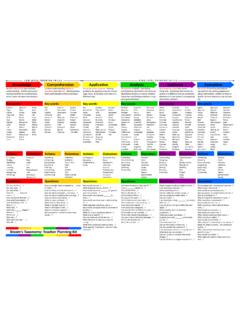
2 There would be less reason to be interested in Critical thinkingAs I have defined it and will be conceptuali/.ing it. Critical Thinking is a much clearer concept than the cur rently popular higher-order Thinking skills I n fact, higher-order Thinking skills i s so vague a term that it appears useless as a guide for the development of teaching, curriculums, and evalua tion procedures It has. however, had'one significant persuasive function to remind us that there is much more cognitive stuff to he acquired in school than elementary reading, writing, and arithmetic and hanks of memorized and soon-to-be-forgotten factsOne possible conceptualization of higher-order Thinking skills . Bloom's taxonomy, has served a similar func tion: reminding us that there is much more that schools could be doing than promoting memorization Actually. I suspect that in the minds of many educators the top three levels of Bloom's taxonomy (.)
3 Analysis. synthesis, and evaluation), and perhaps also the next two lower levels (comprehension and application), are t he higher-order Thinking skills So if it could provide useful guidance. Bloom's taxonomy could serve as a conceptualization of higher-order Thinking skillsI'nfortunately. Blooms taxonomy does not provide the guidance that we need First of all. the concepts in the taxonomy are uxi vague as thev stand Take a nalysis, tor instance Analysis of a chemical compound, analysis of an argument, analysis ol a word, analysis of an opponent's weaknesses in a bas ketball game, and analysis of the politi- cal situation in South Africa seem like such different activities that we might verv well wonder just what we are supposed t o t each under the label "analysisSecond, as we might expect from the first difficulty, the taxonomy is not accompanied by criteria for judging the outcome of the activity To teachOCTOBER 19 HSc =NK=d ~g = =~= C ~ =q Lo ~ =` Ntlohfkd=abcfkfqflkW=` ntxal Thinking i = ~ ~ = =q = ~ = = = = = ~ = = = = = D` ~ = = = = = = =~ =~ ^K=afpmlpfqflkpN=p =~= ~ = ~ = = = = = O=p = ~ N=q = = = J Q=r = = =~ = = RK=c~ = =~ = = ~ = ~ =q = = ~ = ~ = = = ~ = T=h = = = = ~ =~ = = ~ = U= = =~ ~ V=_ = ~=` = = = = = = ~ = = = = = ~ ~ = ?
4 =[= =o ~ = = = = = = ~ = = = = = =~ = = = = = ~ = = ~ = =[=( W = = = = =~ = ~ =~ = NM=q~ =~= = ~ = ~ =~= D= = = =Y = ~ =~ = = = = NN=p =~ = = =~ = = = =NIX=a ~ = =~ = = ~ = = = ~ =MN=~= = =NN=_ = = = = I= = = I=~ = = = ~ = = D_=^_fifqfbp=E` ~ = = = ~ =b ~ =` ~ ~ K=_~ =p = K=f =^ ~ =` ~ ~ I=~ =p ~ =~ =q~ GEg ~ =`L~ L ~ Y N=c = =~= a I = = ~ =~= = =f = = ~ = = = =h = = ~ = = 2 A ~ L =~ a I = =f = ~ = ~ = =f = ~ = ~ =p = ~ =~ = =f =~ = ~ = ~ f=p = = = =~ =~ = =~ = = = ~ = =|| =r = = ~ = c=h = = = ~ =^ = = = ~ =`~ = ~ =^ =~ =~ =~=t D= =t ~ = = = =t ~ = = = =t ~ = = =~ = ~ D =t ~ = = = =~ = ~ =E = = = = [D= K=e = = ~ =~ = = = ~ = = ~ = = = =~ ~ = = ~= ~ DD= K=t ~ = = = = ~ D= =t ~ =~ = = ~ D =f = = ~ = =~ = ~ =||||||||||||||D=f=t = = ~ = = =~ = ~ D_~ =p upportQ= = = = =~= =~=b =i~ = = = = = =^ =~ = = =o ~ R=l =~ = [ = ~ = I= ~=~=j ~ =)]]]]
5 = =p = = ~ = = ~ =~ = = =o = = = ~ = ~ = = = K =K= = ~ ~ F= =o =~ = ~ = ~ =f = = = ~ = =~= I= = = ~ =E ~ NF=q = = ~ = = = = = = ~ O =q = = ~ = ~ = y= = =q = = ~ = ~ = = = Q =q = ~ = ~ = = = = I= = ~ = =~= = = = = = = ~ = =~= = ~ = = = ~ = ~ ~ =` K=` ~ = =m = = ~ = K=` = = =~ =` = = = = = = = = =p~ ~ = = =K~ = = =~= = >= = ~= = @Q=~ FInferemeh D I=~ = = =~=` ~ = b = = =` ~ = = =f ~ = = ~ =NF=a = ~ =O =k ~ =~ = = =P =l = ~ = = K= =~ = = = = K?
6 = K =?= = =?= =7 I I=~ = = =~=d ~ =q ~ = = ~ ~= ~ = = ~ O =p~ =q~ =~ = ~ =f = ~ ~ = =~ = =NG=q = = ~ ~ = =~ = J = =`= ~ ~ =Y= E~ = =` ~ JI=~ = = J=~ = K =Y[ =f ..Je J [=o = O[=f ~ ~[=a = = = = ~ =f = = = =p = =~ =E= = = = = p = = = ~ ~ N[=` ~=d = ~ ~ = ~[=q = = = = ~ = = y =` =~ ~ = = o Y=f= = = =E ~ NU=j~ =~ = = ~ = =~=_~ = ~ = =`= = `=m ~=L~ =~ ~ =Y[ =~Y= = ~ = = =` =~ ~ J= =_~ ~ = =~ = ^ ~ =` tjnticatmng =` ~ K ~ K = =o~ NN=l ~ ~ = =b ~ ~ = =a ~ = ~ =NF=^ ~[=o =~= ~ = = = N =p ~ = = ~ = = = j J =b =~= = =~ = D= K = = Y~ = ~ = G=g =f = = ~ = =K =~F=^ = = =]]]]]]]]
7 = [=m = = = =q = = = = = =JK = ~ = = =` =~ ~ = ~ =l ~ = = = = = =`=` NM=f =~ ~=r =k =_r Strategy and T~ ~=a K = =p = ~= = = = = ~ =~ ~ = =q ~ = = ~ = = =o I= ~ = =~ = = ~ = NO=f ~ = = ~=b =~ = ~ = = ~ ~ = ~ GN=e=` ~ =2> A ~ = =~ =g =_~ ~ =Q =d = =R =k~ ~ o=SN=p = =7] P = =U =k = =GF =^ = =NM =^ = = =e =a = =~ =gO[= I = =i ~ = ~ = =o ~ = ~ =m =~= = ~ = = =D~ ~ = =ff=^ =~ =~= ~ ~ =~ =~ = = = = =ON=l ~ =E = = ~ = I= = ~ =~ = = ~ JI=~ = = = = ~ I= ~ = = = = ~ = F~ = D imgieD=_ = j =b J ?]
8 F =s~ =b ~ fT =p ~ = fo =^ ~ = =fj J =^ =f Ok =e ~ I I = = ~ =ENotesD= q b ~ ~ =m ~ =[ n e =f ~ =c=p = L =~ nd i(iutat">n > = =k~ ~ =p =fmDJI= = =p = =b Y=~ K =m K= ` ~h?=k pp =D Q N=l =o~ ~ =f = = = E =`= r K =mh:!nv,phy ,ii lD= f ~ = = ~ = = ~ = Y46bar`^qflk^ihigher order Thinking . skills , \ve need criteria for making such judgments Both students and teachers need such criteriaAlthough there are numerous other objections to the taxonomy ( , 1981a; Hurst. 19H1. Nelson. 1981; Sed don. 19~"H). the reservations I have expressed are enough to give us pause In any case the taxonomy was not intended to he a statement of educational objectives It was intended to he a system tor classify ing educa tional objectivesI do not claim that Critical Thinking exhausts the idea of higher-order Thinking skills , at least in part becausethat idea is so vague But I believe that Critical Thinking incorporates a good deal of the directly practical side of higher order Thinking Deciding what to believe or do is a practical higher order Thinking enterprise, and most practical higher order Thinking activity is focused on deciding what to believe or doEven if you disagree about this.)]
9 I hope you will accept Critical Thinking as comprising at least a significant portion of higher order Thinking and worthy of our extended attention in the schools So I shall proceed with some details of a conception of Critical Thinking that I have developed over a number of =OK=q =m = =a =t ~ = =_ = =a ab`fpflk=^_lrq=_bifbc=lo=^`qflkBasisf ~ = = ~ ^ ~ = =E = ~ Fq= = =q=q=q=q= =q=qfkqbo^`qflk=tfqe=lqebo=mblmibm =p ?a = ~ = = = = = =~= J = = I=~ = = ~ ~ = J = =~ = = = = = ~ = = = = K?OCTOBER 198"Sa =~ =^ A first step in an analysis for purposes of curriculum decisions, teaching, and evaluation is to break up Critical think ing into dispositions and abilities I have tried to give a comprehensive specification of Critical Thinking dispo sitions and abilities in Figure 1, Goals for a Critical Thinking /Reasoning Cur riculum.
10 Which I have elaborated elsewhere (Ennis. 1962, 1980, 19 Hlb, 1985).' Although the Critical Thinking dispositions and abilities are listed separately for purposes of planning and discussion, they are integrated in the actual process of deciding what to believe or doThe outline in Figure 1 is only an overall content outline It does not incorporate or imply suggestions for level, repetition in greater depth, em phasis, or infusion in subject matterarea (which might be either exclusive or overlapping) These complex topics must be addressed in application of the outline to curriculum, teaching, and evaluation decisionsThe list of dispositions includes such things as being open-minded, paying attention to the total situation, seeking reasons, and trying to be well- informed These are self-explanatory and, I trust, obviously desirableThe four general sets of abilities that are constitutive of Critical Thinking are clarity-related abilities (l(x>sely divid ed into elementary and advanced sets), inference-related abilities, abili ties related to establishing a sound Basis for inference, and abilities in volved in going about decision making in an orderly and useful way, often called problem solving When com bined with the Critical Thinking dispo sitions.)