Transcription of Actilax - Medicines
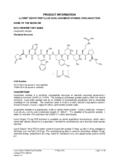
1 Actilax Lactulose PRODUCT INFORMATION NAME OF THE MEDICINE Active ingredient: Lactulose Structural formula: Molecular formula: C12H22O11 Mol. Wt. CAS Registry no.: 4618-18-2 DESCRIPTION Lactulose solution is an aqueous solution of lactulose (4-O- -D-galacto-pyranosyl-D-fructose) and other sugars including lactose, galactose, tagatose and epilactose. Each 5 mL contains lactulose g, and lesser amounts of other sugars including lactose, galactose, tagatose and epilactose. Actilax solution is a sweet, colourless to slightly brownish-yellow, clear or slightly opalescent solution. PHARMACOLOGY Therapeutic category. Laxative Experimental data on lactulose given orally to man indicate that lactulose is poorly absorbed from the gastrointestinal tract and no enzymes capable of hydrolysis of lactulose into its component monosaccharides are known to be present in human gastrointestinal tissue.
2 Lactulose reaches the colon virtually unchanged. Actilax Product Information 2 There it is metabolised by colonic bacteria to low molecular weight acids ie. lactic acid and other short chain carboxylic acids. Metabolism is complete at doses up to 25-50 g or 40-75 mL; at higher dosages, a proportion may be excreted unchanged. Lactulose given orally to human results in only small amounts reaching the blood by absorption through the small intestine probably by a non-mediated diffusion mechanism. Otherwise small increases in blood sugar levels are probably attributable to the small amounts of galactose and lactose also present in Actilax . Urinary excretion has been determined to be 3% or less and is essentially complete within 24 hours. A small quantity of lactulose is probably hydrolysed in the colon into its constituent monosaccharides, galactose and fructose.
3 The end result is a change in osmotic pressure and acidification of the colonic contents resulting in an increase in stool water-content with resultant distention and softening of the stools, which in turn promotes increased peristalsis and bowel evacuation. In patients with chronic constipation, lactulose increases the number of bowel movements per day and the number of days when bowel movements occur. Lactulose strengthens the growth of the health-promoting bacteria of the genus Bifidobacterium and may suppress potentially pathogenic bacteria like Clostridium and Escherichia coli. Consequently, it is often described as a prebiotic substance. Its effects on the balance of the intestinal flora may contribute to its action in hepatic encephalopathy (see Portal-Systemic Encephalopathy, below).
4 Metabolism In Infants Administration of lactulose to infants fed with cow s milk produces a predominance of lactobacilli in the stools, thus simulating the intestinal flora following maternal milk feeding. Lactulose also appears to increase the production of lysosome in infants receiving cow s milk. Portal-Systemic Encephalopathy (hepatic encephalopathy; "hepatic coma"). Portal-Systemic Encephalopathy (PSE) is a neuropsychiatric syndrome from a disorder of cerebral function, which can complicate all forms of liver disease. The major sites of cerebral involvement are the cortex, extra-pyramidal system and cerebellum. Clinical features include intellectual deterioration, disturbances of consciousness and neurological abnormalities.
5 It is generally accepted that PSE involves exposure of the brain to nitrogenous substances arising from the gut from bacterial metabolism of protein, with ammonia being implicated most commonly, together with an alteration of the pattern of amino acids entering the central nervous system. The basic action of lactulose in PSE is aimed at reducing "nitrogenous intoxication" by decreasing blood ammonia concentration. Lactulose is degraded in the large bowel by bacterial flora, mainly to acetic and lactic acids, thus reducing the intraluminal pH to below 5. This acidification of colonic contents results in the retention of ammonia as the ammonium ion [NH4]+. In effect, ammonia, amines and various amides, and other basic nitrogenous substances are thus trapped, reducing their absorption into the blood.
6 Since the colonic contents are more acid than the blood, ammonia can be expected to migrate from the blood into the colon to form the ammonium ion. Lowering of faecal pH is also thought to suppress urease producing organisms, and to foster the growth of saccharolytic bacteria (Lactobacillus acidophilus) rather than E. coli, a more efficient ammonia producing bacterium. The diarrhoeal action of lactulose is synergistic in expelling the trapped ammonium ion from the colon. Thus, of several proposals, the therapeutic action of lactulose in ameliorating the symptoms of PSE is considered to be the result of the following: Actilax Product Information 3 1. Reduction of faecal pH leading to a reduced ammonia absorption via non-ionic diffusion and/or diffusion of ammonia from the blood into the gut.
7 The trapped ammonia is then excreted in the stools. 2. Suppression of urease producing organisms. 3. Induction of an osmotic type of diarrhoea which diminishes faecal stasis with reduction of nitrogenous substances for ammonia production. Decreased absorption of ammonia from the gut also results from shortening intestinal transit time. The actual mechanism may be a combination of these effects. In the treatment of chronic portal-systemic encephalopathy, controlled studies have shown that lactulose therapy reduces the blood ammonia levels by 25 to 50%; this is generally paralleled by an improvement in the patients' mental state and by an improvement in EEG patterns. The clinical response has been observed in about 75% of patients, which is at least as satisfactory as that resulting from neomycin therapy, with the added benefit that an increase in patients' protein tolerance is frequently observed with lactulose therapy.
8 Lactulose is an effective alternative to neomycin, particularly in patients with hearing problems or renal disease, and when long-term use is anticipated. INDICATIONS 1. Treatment of acute, and prevention and treatment of chronic Portal-Systemic Encephalopathy (PSE), including the stages of hepatic precoma and coma. 2. Treatment of chronic and habitual constipation. Controlled clinical studies in patients with a history of chronic constipation have shown that lactulose therapy causes a significant increase in the number of bowel movements per day and the number of days on which bowel movements occur. CONTRAINDICATIONS Since Actilax contains galactose (not more than g/5 mL) and lactose (not more than g/5 mL), it is contraindicated in patients who require a low galactose diet, and in patients with galactosaemia or disaccharidase deficiency or who are on a galactose and/or lactose free diet.
9 Contraindicated in patients with gastrointestinal obstruction, digestive perforation, or risk of digestive perforation. Contraindicated in patients with hypersensitivity to the active substance or to any of the excipients. PRECAUTIONS Painful abdominal symptoms of undetermined cause should be evaluated to exclude undiagnosed perforation or obstruction or undiagnosed disease/condition that predisposes to either before the treatment is started. In case of insufficient therapeutic effect after several days, consultation of a physician is recommended since the dose and/or additional measures should be reconsidered. Actilax Product Information 4 A theoretical hazard may exist for patients treated with lactulose solution who may be required to undergo electrocautery procedures during proctoscopy or colonoscopy.
10 If sugars reach the colon and bacterial breakdown causes hydrogen production, accumulation of hydrogen gas in significant concentration in the presence of an electrical spark may result in an explosive reaction. Although this complication has not been reported with lactulose, patients on lactulose therapy undergoing such procedures should have a thorough bowel cleansing with non-fermentable solution. Actilax solution contains galactose and lactose and it should be used with caution in diabetics as blood glucose levels may be elevated, usually after extended use. Patients with rare hereditary problems of galactose intolerance, the Lapp lactase deficiency or glucose-galactose malabsorption should not take this medicine. If used by lactose intolerant patients, the lactose content in the recommended dose should be taken into consideration.