Example: tourism industry
Adversarial Examples and Adversarial Training
May 30, 2017 · (Goodfellow 2016) Adversarial Training of other Models • Linear models: SVM / linear regression cannot learn a step function, so adversarial training is less useful, very similar to weight decay • k-NN: adversarial training is prone to overfitting. • Takeway: neural nets can actually become more secure than other models.
Tags:
Information
Domain:
Source:
Link to this page:
Documents from same domain
NaveenAppiah SagarVare - Stanford University
cs231n.stanford.eduNaveenAppiah Mechanical Engineering nappiahb@stanford.edu SagarVare Stanford ICME svare@stanford.edu ... the popular mobile game - Flappy Bird. It involves navi-gating a bird through a bunch of obstacles. Though, this ... the game emulator and learns to make good decisions over time. It is this simple learning framework and their
Fei-Fei Li & Justin Johnson & Serena Yeung Lecture 2 ...
cs231n.stanford.eduFei-Fei Li & Justin Johnson & Serena Yeung Lecture 2 - April 6, 2017 Administrative: Piazza For questions about midterm, poster session, projects,

Lecture 9: CNN Architectures
cs231n.stanford.eduLecture 9 - 22 May 2, 2017 ImageNet Large Scale Visual Recognition Challenge (ILSVRC) winners First CNN-based winner. Fei-Fei Li & Justin Johnson & Serena Yeung Lecture 9 - 23 May 2, 2017 ImageNet Large Scale Visual Recognition Challenge (ILSVRC) winners ZFNet: Improved hyperparameters over AlexNet. Fei-Fei Li & Justin Johnson & Serena Yeung ...

Attention and Transformers Lecture 11
cs231n.stanford.edugraph with shared weights h 0 f W h 1 f W h 2 f W h 3 x 3 y T ... Extract spatial features from a pretrained CNN Image Captioning using spatial features 11 CNN Features: H x W x D h 0 [START] Xu et al, “Show, Attend and Tell: Neural Image Caption Generation with Visual Attention”, ICML 2015 z 0,0 z 0,1 z 0,2 z 1,0 z 1,1 z 1,2 z 2,0 z 2,1 z ...

CNNs for Face Detection and Recognition
cs231n.stanford.edudevelopment of object classification, localization and detec-tion techniques. 2.1. Sliding Window In the early development of face detection, researchers tended to treat it as a repetitive task of object classifica-tion, by imposing sliding windows and performing object classification with the neural networks on the window re-gion.
Vector, Matrix, and Tensor Derivatives
cs231n.stanford.eduErik Learned-Miller The purpose of this document is to help you learn to take derivatives of vectors, matrices, and higher order tensors (arrays with three dimensions or more), and to help you take ... At this point, we have reduced the original matrix equation (Equation 1) …
Lecture 14: Reinforcement Learning
cs231n.stanford.eduFei-Fei Li & Justin Johnson & Serena Yeung Lecture 14 - May 23, 2017 Markov Decision Process 19 - Mathematical formulation of the RL problem - Markov property: Current state completely characterises the state of the

Convolutional Neural Networks for Visual Recognition
cs231n.stanford.eduProgressive GAN, Karras 2018. Models from Single RGB Images”, ECCV 2018 Beyond recognition: Segmentation, 2D/3D Generation. Fei-Fei Li, Ranjay Krishna, Danfei Xu Lecture 1 - 15 March 30, 2021 Scene Graphs Krishna et al., Visual Genome: Connecting Vision and Language using Crowdsourced Image Annotations, IJCV 2017
Lecture 11: Detection and Segmentation
cs231n.stanford.eduFei-Fei Li & Justin Johnson & Serena Yeung Lecture 11 - 1 May 10, 2017 Lecture 11: Detection and Segmentation

Lecture 13: Generative Models
cs231n.stanford.eduFei-Fei Li & Justin Johnson & Serena Yeung Lecture 13 - May 18, 2017 Generative Models 17 Training data ~ p data (x) Generated samples ~ p model (x) Want to learn p
Related documents

CHAPTER 2B. REGULATORY SIGNS, BARRICADES, AND GATES …
mutcd.fhwa.dot.govadequate visibility and legibility in order to obtain compliance. 03 Regulatory signs shall be retroreflective or illuminated (see Section 2A.07) to show the same shape and similar color by both day and night, unless specifically stated otherwise in the text discussion in this Manual for a particular sign or group of signs.
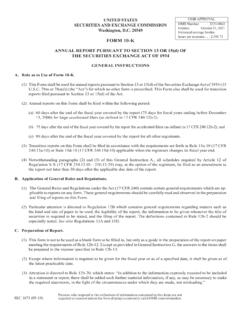
UNITED STATES OMB APPROVAL SECURITIES AND …
www.sec.govthe kind and size of paper to be used, the legibility of the report, the information to be given whenever the title of securities is required to be stated, and the fi ling of the report. The defi nitions contained in Rule 12b-2 should be especially noted. See also Regulations 13A and 15D. C. Preparation of Report.

FORM 20-F - SEC
www.sec.govabout matters such as the kind and size of paper to be used, the legibility of the registration statement or report, the information to give in response to a requirement to state the title of securities, the language to be used and the fi ling of the registration statement or report.
Checking/Debit Card Agreement - TD Ameritrade
www.tdameritrade.comlegibility of any copy you provide. All Checks presented for payment must be in a form supplied by or previously approved by you. You may refuse to accept any Check that does not meet this requirement or which is incompletely or defectively drawn. Once an outstanding Check is six (6) months old, you may elect not to pay it.
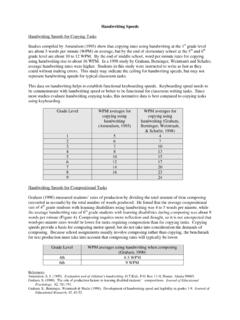
Handwriting Speeds - Montgomery County Public Schools
www.montgomeryschoolsmd.orgHandwriting Speeds Handwriting Speeds for Copying Tasks Studies compiled by Amundson (1995) show that copying rates using handwriting at the 1st grade level are about 5 words per minute (WPM) on average, but by the end of elementary school at the 5th and 6th grade level are about 10 to 12 WPM.

YOUR KNOWLEDGE AT www.nato.int/ multi/mapgame/
www.nato.intT ha nk s fo r p l ay i ng, s ee you soon! ww w.n a t o.i n t T HE MAP! NATO has developed bilateral relations with a number of countries which are not part of NATO’s other