Example: quiz answers

AHA ACLS Adult Tachycardia Algorithm

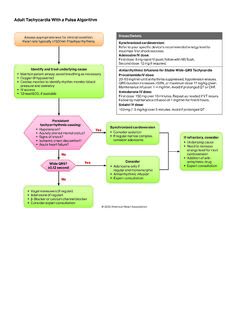
AHA acls Adult Tachycardia Algorithm (With A pulse )Tachyarrhythmia typically seen when the heart rate is 150/minIs the tachyarrhythmia causing the symptoms?The priority should be to identify and treat the underlying causeIs the Tachyarrhythmia causing: Hypotension? Altered mental status? Signs of shock? Ischemic chest discomfort? Acute heart failure? Maintain patent airway; assist breathing if necessary Apply oxygen (if hypoxemic); monitor pulse oximetry Apply cardiac monitor; monitor blood pressure Start IV and obtain 12-lead ECG if possibleIs the QRS Wide secondSynchronized Cardioversion Consider sedation May use adenosinefor regular narrow complex tachyarrhythmiaNoYe sJeffery Media Productions 2021 NoYe s May use adenosineonly if regular and monomorphic Consider antiarrhythmicinfusion Consider expert consultation Vagal Maneuvers (if rate is regular) Adenosine (if rate is regular) -Blocker or calcium channel blocker Consider expert consultationSynchronized Cardioversion DosesNEW: AHA recommends referring to your specific device s recommended energy level to maximize first shock recommended doses: Narrow regular: 50-100 J Narrow irregular: 120-200 biphasicor 200 J Monophasic Wide regular: 100J Wide irregular: defibrillation dose (not synchronized)Adenosine IV Dose:First dose 6mg rapid IV push and NS flushSecond dose: 12 mg if neededAntiarrhythmics that may be consideredAmio

AHA ACLS Adult Tachycardia Algorithm (With A Pulse) Tachyarrhythmia typically seen when the heart rate is . ≥ . 150/min. Is the tachyarrhythmia causing the symptoms? The priority should be to . identify and treat the underlying cause. Is the Tachyarrhythmia causing: • Hypotension? • Altered mental status? • Signs of shock? • Ischemic ...

Tags:

  Pulse, Adults, Acls, Algorithm, Tachycardia, Aha acls adult tachycardia algorithm

Information

Domain:

Source:

Link to this page:

Please notify us if you found a problem with this document:

Other abuse

Advertisement

Transcription of AHA ACLS Adult Tachycardia Algorithm

1 AHA acls Adult Tachycardia Algorithm (With A pulse )Tachyarrhythmia typically seen when the heart rate is 150/minIs the tachyarrhythmia causing the symptoms?The priority should be to identify and treat the underlying causeIs the Tachyarrhythmia causing: Hypotension? Altered mental status? Signs of shock? Ischemic chest discomfort? Acute heart failure? Maintain patent airway; assist breathing if necessary Apply oxygen (if hypoxemic); monitor pulse oximetry Apply cardiac monitor; monitor blood pressure Start IV and obtain 12-lead ECG if possibleIs the QRS Wide secondSynchronized Cardioversion Consider sedation May use adenosinefor regular narrow complex tachyarrhythmiaNoYe sJeffery Media Productions 2021 NoYe s May use adenosineonly if regular and monomorphic Consider antiarrhythmicinfusion Consider expert consultation Vagal Maneuvers (if rate is regular) Adenosine (if rate is regular) -Blocker or calcium channel blocker Consider expert consultationSynchronized Cardioversion DosesNEW: AHA recommends referring to your specific device s recommended energy level to maximize first shock recommended doses: Narrow regular: 50-100 J Narrow irregular: 120-200 biphasicor 200 J Monophasic Wide regular: 100J Wide irregular: defibrillation dose (not synchronized)Adenosine IV Dose:First dose 6mg rapid IV push and NS flushSecond dose.

2 12 mg if neededAntiarrhythmics that may be consideredAmiodaroneProcainamideSotalolI f refractory, consider Underlying cause Need to increase energy level for next cardioversion Addition of antiarrhythmic Expert Consultatio
Related search queries