Transcription of Alepam - Medicines
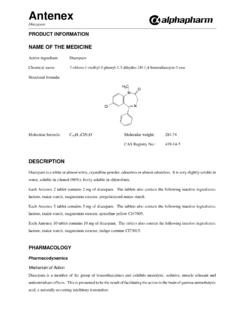
1 Alepam Oxazepam PRODUCT INFORMATION NAME OF THE MEDICINE Active ingredient: Oxazepam Chemical name: (3RS)-7-chloro-3-hydroxy-5-phenyl-1,3-di hydro-2H-1,4-benzodiazepin-2-one Structural formula: Molecular formula: C15H11 ClN2O2 Molecular weight: CAS Registry No.: 604-75-1 DESCRIPTION A white or almost white, crystalline powder, practically insoluble in water, slightly soluble in alcohol and in methylene chloride. Each Alepam 15 and Alepam 30 tablet contains 15 mg and 30 mg of oxazepam, respectively. The tablets also contain the following inactive ingredients: lactose monohydrate, starch maize, quinoline yellow CI47005, erythrosine CI45430, magnesium stearate.
2 PHARMACOLOGY Oxazepam is an anti-anxiety agent which belongs to the benzodiazepine class of drugs. The exact mechanism of action of benzodiazepines has not yet been elucidated; however, benzodiazepines appear to work through several mechanisms. Benzodiazepines presumably exert their effects by binding to specific receptors at several sites within the central nervous system, either by potentiating the effects of synaptic or pre-synaptic inhibition mediated by gamma-aminobutyric acid or by directly affecting the action potential generating mechanisms. Pharmacokinetics Oxazepam is readily absorbed when given orally.
3 Peak concentrations in plasma occur approximately 2 to 3 hours following administration of 30 mg. The half-life of oxazepam in human plasma ranges from 4 to 15 hours. At clinically relevant concentrations, oxazepam is 95% to 98% bound to plasma protein. Oxazepam is conjugated at its 3-hydroxy substituent to its glucuronide which accounts for at least 95% of the urinary excretion products. There are no active metabolites of oxazepam. Multiple-dose therapy leads to no excessive drug accumulation. There is no indication of induction of drug-metabolising enzymes with oxazepam. Oxazepam is not a substrate for N-dealkylating enzymes of the cytochrome P450 system, nor is it hydroxylated to any significant extent.
4 Alepam Product Information 2 The pharmacokinetics of oxazepam remain unaltered in older patients, however the elderly generally show increased central nervous system sensitivity to benzodiazepines, and may require a reduced dosage. Hepatic diseases (hepatitis, alcoholic cirrhosis) have a minimal influence on oxazepam kinetics, however these patients have increased cerebral sensitivity to benzodiazepines and dosage reduction may be advisable. As with other benzodiazepines, the pharmacokinetics of oxazepam may change in patients with impaired renal function and the medication should be used with caution.
5 INDICATIONS Alepam is indicated for: Management of anxiety disorders or for the short-term relief of the symptoms of anxiety. Anxiety associated with depression is also responsive to oxazepam therapy. Anxiety or tension associated with the stress of everyday life usually does not require treatment with an anxiolytic. The physician should periodically reassess the usefulness of the drug for the individual patient. Alcoholics with acute tremulousness, confusional state or anxiety associated with alcohol withdrawal are responsive to therapy. CONTRAINDICATIONS Alepam is contraindicated in: Patients with known hypersensitivity to benzodiazepines.
6 Patients with chronic obstructive airways disease with incipient respiratory failure. Patients with sleep apnoea. PRECAUTIONS As with all patients taking CNS-depressant medications, patients receiving Alepam should be warned not to operate dangerous machinery or motor vehicles until it is known that they do not become drowsy or dizzy from Alepam therapy. Abilities may be impaired on the day following use. Patients should be advised that their tolerance for alcohol and other CNS depressants will be diminished and that these medications should either be eliminated or given in reduced dosage in the presence of Alepam .
7 Following the prolonged use of Alepam at therapeutic doses, withdrawal from the medication should be gradual. An individualised withdrawal timetable needs to be planned for each patient in whom dependence is known or suspected. Periods from four weeks to four months have been suggested. As with other benzodiazepines, when treatment is suddenly withdrawn, a temporary increase of sleep disturbance can occur after use of Alepam (see Dependence). In general, benzodiazepines should be prescribed for short periods only ( 2 to 4 weeks). Continuous long-term use of Alepam is not recommended.
8 There is evidence that tolerance develops to the sedative effects of benzodiazepines. After as little as one week of therapy withdrawal symptoms can appear following the cessation of recommended doses ( rebound insomnia following cessation of a hypnotic benzodiazepine). Although hypotension has occurred only rarely, Alepam should be administered with caution to patients in whom a drop in blood pressure might lead to cardiac or cerebral complications. This is particularly important in elderly patients. Alepam Product Information 3 Transient amnesia or memory impairment has been reported in association with the use of benzodiazepines.
9 Oxazepam could increase the muscle weakness in myasthenia gravis and should be used with caution in this condition. Caution should be used in the treatment of patients with acute narrow-angle glaucoma (because of atropine-like side effects). Impaired Renal/Liver Function and Blood Dyscrasias Patients with impaired renal or hepatic function should use benzodiazepine medication with caution and dosage reduction may be advisable. In rare instances some patients taking benzodiazepines have developed blood dyscrasias, and some have had elevations of liver enzymes.
10 As with other benzodiazepines, periodic blood counts and liver function tests are recommended. Depression, Psychosis and Schizophrenia Alepam is not recommended as primary therapy in patients with depression and psychosis. In such conditions, psychiatric assessment and supervision are necessary if benzodiazepines are indicated. Benzodiazepines may increase depression in some patients, and may contribute to deterioration in severely disturbed schizophrenics with confusion and withdrawal. Suicidal tendencies may be present or uncovered and protective measures may be required.