Transcription of AUSTRALIAN PRODUCT INFORMATION APO …
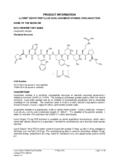
1 PRODUCT INFORMATION Australia APO-Rosuvastatin 5 mg, 10 mg, 20 mg & 40 mg Tablets Page 1 APO-ROSUVASTATIN 5 MG, 10 MG, 20 MG & 40 MG TABLETS NAME OF THE MEDICINE Rosuvastatin calcium. Chemical Name: bis [(3R, 5S, 6E)-7-{4-(4-fluorophenyl)-2-[N-methyl(me thanesulfonyl)amino]-6-isopropyl-2-pyrim idin-5-yl}-3,5-dihydroxyhept-6-enoic acid] calcium salt Structural Formula: Molecular Formula: (C22H27FN3O6S)2Ca Molecular Weight: CAS Registry No: 147098-20-2 DESCRIPTION Rosuvastatin calcium is a 3-hydroxy-3-methylglutaryl coenzyme A (HMG-CoA) reductase inhibitor for the treatment of dyslipidaemia. Rosuvastatin calcium is an amorphous solid, which is slightly soluble in water ( mg/mL at 37 C) and has a pKa of Rosuvastatin calcium is the (3R, 5S, 6E) enantiomer. Each tablet contains 5 mg, 10 mg, 20 mg or 40 mg rosuvastatin calcium, as the active ingredient. In addition, each tablet contains the following inactive ingredients: lactose, cellulose-microcrystalline, crospovidone, magnesium stearate, colloidal anhydrous silica, hypromellose, hydroxypropylcellulose, macrogol 8000.
2 PHARMACOLOGY Rosuvastatin is a fully synthetic competitive inhibitor of HMG-CoA reductase, the rate-limiting enzyme that converts 3-hydroxy-3-methylglutaryl coenzyme A to mevalonate, a precursor of cholesterol. Triglycerides (TG) and cholesterol in the liver are incorporated, with apolipoprotein B (ApoB), into very low density lipoprotein (VLDL) and released into the plasma for delivery to peripheral tissues. VLDL particles are TG-rich. Cholesterol-rich low density lipoprotein (LDL) is formed from VLDL and is cleared primarily through the high affinity LDL receptor in the liver. Rosuvastatin produces its lipid-modifying effects in two ways; it increases the number of hepatic LDL receptors on the cell-surface, enhancing uptake and catabolism of LDL and it inhibits the hepatic synthesis of VLDL, thereby reducing the total number of VLDL and LDL particles. High density lipoprotein (HDL), which contains ApoA-I, is involved, amongst other functions, in transport of cholesterol from tissues back to the liver (reverse cholesterol transport).
3 The involvement of LDL-C in atherogenesis has been well documented. Epidemiological studies have established that high LDL-C and TG and low HDL-C and ApoA-I have been linked to a higher risk of PRODUCT INFORMATION Australia APO-Rosuvastatin 5 mg, 10 mg, 20 mg & 40 mg Tablets Page 2 cardiovascular disease. Intervention studies have shown the benefits on mortality and CV event rates of lowering LDL-C and TG or raising HDL-C. More recent data has linked the beneficial effects of HMG-CoA reductase inhibitors to the lowering of non-HDL-C ( all circulating cholesterol not in HDL) and ApoB or reducing the ApoB/ApoA-I ratio. Pharmacokinetics A study was conducted which compared this PRODUCT with the reference PRODUCT and the two products were shown to be bioequivalent. In this study, the 90% confidence intervals for the ratio of AUC0-t and Cmax were both found to be between 80% and 125%. Absorption Peak plasma levels occur 5 hours after dosing. Absorption increases linearly over the dose range.
4 Absolute bioavailability is 20%. The half-life is 19 hours and does not increase with increasing dose. There is minimal accumulation on repeated once daily dosing. Distribution Volume of distribution of rosuvastatin at steady state is approximately 134 litres. Rosuvastatin is approximately 90% bound to plasma proteins, mostly albumin. Metabolism Rosuvastatin is not extensively metabolized; approximately 10% of a radio-labelled dose is recovered as metabolite. The major metabolite is N-desmethyl rosuvastatin, which is formed principally by cytochrome P450 2C9 and in vitro studies have demonstrated that N-desmethyl rosuvastatin has approximately one-sixth to one-half the HMG-CoA reductase inhibitory activity of rosuvastatin. Overall, greater than 90% of active plasma HMG-CoA reductase inhibitory activity is accounted for by rosuvastatin. Excretion Rosuvastatin undergoes limited metabolism (approximately 10%), mainly to the N-desmethyl form, and 90% is eliminated as unchanged drug in the faeces, with the remainder being excreted in the urine.
5 Clinical Efficacy A therapeutic response (reduction in LDL-C) to rosuvastatin is evident within 1 week of commencing therapy and 90% of maximum response is usually achieved in 2 weeks. The maximum response is usually achieved by 4 weeks and is maintained after that. Special Populations Race A population pharmacokinetic analysis revealed no clinically relevant differences in pharmacokinetics among Caucasian, Hispanic and Black or Afro-Caribbean groups. However, pharmacokinetic studies, including one conducted in the US, have demonstrated an approximate 2-fold elevation in median exposure (AUC and Cmax) in Asian subjects when compared with a Caucasian control group (see PRECAUTIONS and DOSAGE AND ADMINISTRATION). CLINICAL TRIALS Hypercholesterolaemia and Mixed Dyslipidaemia (Fredrickson Type IIa and IIb) Rosuvastatin reduces total-C, LDL-C, ApoB, non-HDL-C and TG, and increases HDL-C, in patients with hypercholesterolaemia and mixed dyslipidaemia.
6 The clinical trial program showed that rosuvastatin was effective in a wide variety of patient populations regardless of race, age or sex and in special populations, such as diabetics or patients with familial hypercholesterolaemia. PRODUCT INFORMATION Australia APO-Rosuvastatin 5 mg, 10 mg, 20 mg & 40 mg Tablets Page 3 Active-Controlled Study: Rosuvastatin was compared with the HMG-CoA reductase inhibitors atorvastatin, simvastatin and pravastatin in a multicentre, open-label, dose-ranging study of 2,239 patients with Type IIa and IIb hypercholesterolaemia. After randomization, patients were treated for 6 weeks with a single daily dose of either rosuvastatin, atorvastatin, simvastatin, or pravastatin (Figure 1 and Table 1). The primary endpoint for this study was the percent change from baseline in LDL-C at week 6. Figure 1 Percent LDL-C Change by Dose of Rosuvastatin, Atorvastatin, Simvastatin and Pravastatin at Week 6 in Patients with Type IIa / IIb Dyslipidaemia Table 1 Least Squares Mean* % Change in LDL-C from Baseline to Week 6 for Each Statin Treatment Group n = Number of Patients at Each Dose of Each Statin Treatment Daily Dose Treatment 10 mg 20 mg 40 mg 80 mg n Mean n Mean n Mean n Mean (95% CI) (95% CI) (95% CI) (95% CI) Rosuvastatin 156 -46a 160 -52b 157 -55c - - (-48, -44) (-54, -50) (-57, -53) Atorvastatin 158 -37 154 -43 156 -48 165 -51 (-39, -35) (-45, -41) (-50, -46) (-53, -49) Pravastatin 160 -20 164 -24 161 -30 - - (-22, -18) (-26, -22) (-32, -28) Simvastatin 165 -28 162 -35 158 -39 163 -46 (-30, -26) (-37, -33) (-41, -37) (-48, -44) * Corresponding standard errors are approximately a Rosuvastatin 10 mg reduced LDL-C significantly more than atorvastatin 10 mg; pravastatin 10 mg, 20 mg and 40 mg.
7 Simvastatin 10 mg, 20 mg and 40 mg (p < ) b Rosuvastatin 20 mg reduced LDL-C significantly more than atorvastatin 20 mg and 40 mg; pravastatin 20 mg and 40 mg; simvastatin 20 mg, 40 mg and 80 mg (p < ) c Rosuvastatin 40 mg reduced LDL-C significantly more than atorvastatin 40 mg; pravastatin 40 mg; simvastatin 40 mg and 80 mg (p < ) PRODUCT INFORMATION Australia APO-Rosuvastatin 5 mg, 10 mg, 20 mg & 40 mg Tablets Page 4 The percentage change from baseline in HDL-C at week 6 is shown in Figure 2 below: Figure 2 Mean (Least Squares) Percent Change from Baseline in HDL-C to Week 6 p < Rosuvastatin 10 mg vs. Pravastatin 10 mg p < Rosuvastatin 20 mg vs. Atorvastatin 20 mg, 40 mg, 80 mg; Pravastatin 20 mg, 40 mg; Simvastatin 40 mg p < Rosuvastatin 40 mg vs. Atorvastatin 40 mg, 80 mg; Pravastatin 40 mg; Simvastatin 40 mg Data presented as LS means SE The mean percent change in HDL-C from baseline to Week 6 for each statin treatment group represented in Figure 2 is summarized with 95% CI in Table 2.
8 Table 2 Least Squares Mean % change in HDL-C from Baseline to Week 6 for Each Statin Treatment Group n = Number of Patients at Each Dose of Each Statin Treatment Daily Dose Treatment 10 mg 20 mg 40 mg 80 mg n Mean n Mean n Mean n Mean (95% CI) (95% CI) (95% CI) (95% CI) Rosuvastatin 156 8 160 9 157 10 - - (6, 9) (8, 11) (8, 11) Atorvastatin 158 6 154 5 156 4 165 2 (4, 7) (3, 7) (3, 6) (0, 4) Pravastatin 160 3 164 4 161 6 - - (2, 5) (3, 6) (4, 7) Simvastatin 165 5 162 6 158 5 163 7 (4, 7) (4, 8) (4, 6) (5, 8) PRODUCT INFORMATION Australia APO-Rosuvastatin 5 mg, 10 mg, 20 mg & 40 mg Tablets Page 5 Table 3 below summarizes the pooled lipid variable data for rosuvastatin 5 and 10 mg from 5 Phase III efficacy trials (Trials 24-28). Table 3 Pooled Lipid Variable Data for Rosuvastatin at 12 Weeks from Trials 24-28. The data presented as both the mean % and mean absolute change (mg/dL) from baseline with 95% CI for each lipid variable. n = Number of Patients at Each Dose of Rosuvastatin Dose Rosuvastatin 5 mg Rosuvastatin 10 mg n = 630 n = 615 % change Absolute change mg/dL % change Absolute change mg/dL (95% CI) (95% CI) (95% CI) (95% CI) LDL-C -41 -78 -47 -88 (-42, -40) (-80, -76) (-48, -46) (-90, -86) TC -29 -81 -33 -91 (-30, -29) (-83, -76) (-34, -32) (-93, -88) HDL-C 8 4 9 4 (7, 9) (3, 4) (8, 10) (4, 5) TG -16 -33 -20 -37 (-18, -14) (-37, -29) (-21, -18) (-41, -34) Non HDL-C -38 -85 -43 -95 (-39, -37) (-87, -82) (-44, -42) (-98, -93) ApoB -33 -59 -37 -66 (-33, -32) (-61, -57) (-38, -36) (-68, -93) ApoA-I 6 8 7 9 (5, 7) (6, 9) (6, 8) (7, 10) Heterozygous Familial Hypercholesterolaemia In a study of patients with heterozygous familial hypercholesterolaemia, 435 subjects were given rosuvastatin 20 mg to 80 mg in a force-titration design.
9 All doses of rosuvastatin showed a beneficial effect on lipid parameters and treatment to target goals. Following titration to 40 mg (12 weeks of treatment), LDL-C was reduced by 53%. Hypertriglyceridaemia (Fredrickson Type IIb & IV) In a double-blind, placebo-controlled, dose-response study in patients with baseline TG levels from 273 to 817 mg/dL, rosuvastatin given as a single daily dose (5 to 40 mg) over 6 weeks significantly reduced serum TG levels (Table 4). Table 4 Dose-Response in Patients With Primary Hypertriglyceridaemia Over 6 Weeks Dosing Median (Min, Max) Percent Change From Baseline Dose Placebo Rosuvastatin Rosuvastatin Rosuvastatin Rosuvastatin 5 mg 10 mg 20 mg 40 mg n = 26 n = 25 n = 23 n = 27 n = 25 TG 1 (-40, 72) -21 (-58, 38) -37 (-65, 5) -37 (-72, 11) -43 (-80, -7) Non HDL-C 2 (-13, 19) -29 (-43, -8) -49 (-59, -20) -43 (-74, -12) -51 (-62, -6) VLDL-C 2 (-36, 53) -25 (-62, 49) -48 (-72, 14) -49 (-83, 20) -56 (-83, 10) Total-C 1 (-13, 17) -24 (-40, -4) -40 (-51, -14) -34 (-61, -11) -40 (-51, -4) LDL-C 5 (-30, 52) -28 (-71, 2) -45 (-59, 7) -31 (-66, 34) -43 (-61, 3) HDL-C -3 (-25, 18) 3 (-38, 33) 8 (-8, 24) 22 (-5, 50) 17 (-14, 63)
10 PRODUCT INFORMATION Australia APO-Rosuvastatin 5 mg, 10 mg, 20 mg & 40 mg Tablets Page 6 Homozygous Familial Hypercholesterolaemia In a force-titration open label study, 42 patients with homozygous familial hypercholesterolaemia were evaluated for their response to rosuvastatin 20 40 mg titrated at a 6-week interval. In the overall population, the mean LDL-C reduction was 22%. In the 27 patients with at least a 15% reduction by week 12 (considered to be the responder population), the mean LDL-C reduction was 26% at the 20 mg dose and 30% at the 40 mg dose. Of the 13 patients with an LDL-C reduction of less than 15%, 3 had no response or an increase in LDL-C. High Risk Hypercholesterolaemic Patients In a 26-week double-blind, forced-titration study, 871 high risk hypercholesterolaemic patients with established coronary heart disease (CHD) or multiple risk factors for CHD, were randomized to receive either rosuvastatin or atorvastatin.