Transcription of BACTERIAL VAGINOSIS (WITH LACTOBACILLUS PROFILING) …
1 MEDICAL DIAGNOSTIC LABORATORIES, vaginal microflora is a dynamic ecosystem normally inhabited by lactobacilli. These bacteria support healthy vaginal conditions by maintaining an acidic environment that is inhospitable to other pathogenic microorganisms. L. crispatus, L. gasseri, L. jensenii, and L. iners are considered to be the four major vaginal LACTOBACILLUS species (1, 2, 3). Usually, the vaginal flora is dominated by one of these bacteria accompanied by less abundant and less frequently detected minor LACTOBACILLUS species including L. acidophilus, L. johnsoni, L. vaginalis, L. fermentum, and L. reuteri (4). The numerical prevalence of lactobacilli in the vagina prevents its colonization by other pathogens.
2 Many important aspects of women s sexual and reproductive health rely on the protective role of lactobacilli in the vaginal composition of the vaginal microflora is not static but changes over time in response to various endogenous and exogenous influences. The most common alteration in vaginal microflora is a condition named BACTERIAL VAGINOSIS (BV) (1, 4)). BV is a disorder characterized by an overgrowth of anaerobic bacteria in the vagina leading to a replacement of healthy lactobacilli. BACTERIAL species including Gardnerella vaginalis, Atopobium vaginae, Megasphaera Type 1 and Type 2, BVAB2, Bacteroides spp., Mobiluncus spp., Mycoplasma spp., and Ureaplasma urealyticum are described as indicative diagnostic markers of BV (5-8).
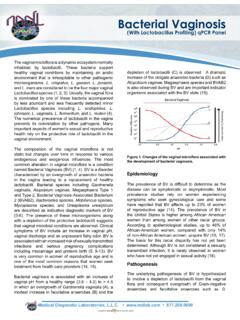
3 The presence of these microorganisms along with a depletion of the protective lactobacilli suggests that vaginal microbial conditions are abnormal. Clinical symptoms of BV include an increase in vaginal pH, vaginal discharge and an unpleasant fishy odor. BV is associated with an increased risk of sexually transmitted infections and serious pregnancy complications including miscarriage and preterm birth (5, 9-13). BV is very common in women of reproductive age and is one of the most common reasons that women seek treatment from health care providers (14, 15).Figure 1. Changes of the vaginal microflora associated with the development of BACTERIAL VAGINOSIS . BACTERIAL VAGINOSIS is associated with an increase of vaginal pH from a healthy range ( ) to > in which an overgrowth of Gardnerella vaginalis (A), a modest increase in facultative anaerobes (B) and the depletion of lactobacilli (C) is observed.
4 A dramatic increase of the obligate anaerobic bacteria (D) such as Atopobium vaginae, Megasphaera spp. and BVAB2 is also observed during BV and are important indicator organisms associated with the BV state (15).EpidemiologyThe prevalence of BV is difficult to determine as the disease can be symptomatic or asymptomatic. Most prevalence studies rely on women experiencing symptoms who seek gynecological care and some have reported that BV affects up to 23% of women of reproductive age (14). The prevalence of BV in the United States is higher among African American women than among women of other racial groups. According to epidemiological studies, up to 46% of African-American women, compared with only 14% of non-African American women, acquire BV (16, 17).
5 The basis for this racial disparity has not yet been determined. Although BV is not considered a sexually transmitted infection, it is rarely observed in women who have not yet engaged in sexual activity (18).PathogenesisThe underlying pathogenesis of BV is hypothesized to involve a depletion of lactobacilli from the vaginal flora and consequent overgrowth of Gram-negative anaerobes and facultative anaerobes such as G. vaginalis and Mobiluncus The development of culture-independent molecular diagnostics has greatly increased the number of BACTERIAL species associated with BV to include A. vaginae, Eggerthella spp., Leptotrichia amnionii, Megasphaera spp., Mycoplasma. spp., U. urealyticum, and BVAB2 (6, 8, 19).
6 The particular ways a woman acquires an infection remain unknown. Since microorganisms associated with BV are shown to have their natural habitat in the gastrointestinal tract, BV might be an endogenous infection (4). Nevertheless, the prevalence of BV is higher in sexually active women having sexual contacts with new and/or multiple partners. Decreasing the number of unprotected sexual encounters may reduce the overall incidence rate as well as the rate of re-infection (18).The precise mechanism of how lactobacilli are depleted and replaced by BV-associated bacteria during BV is also still unknown. One possibility is that a change in vaginal pH is the underlying cause of BV. Lactic acid is produced by LACTOBACILLUS which maintains the vaginal pH between and This environment favors the growth of LACTOBACILLUS and inhibits the growth of pathogenic bacteria.
7 Risk factors for BV include douching, menstruation, and unprotected sexual contact, all of which raise the vaginal pH above the optimum for LACTOBACILLUS growth (2).Gynecological ComplicationsWomen with BV have a three- to four-fold higher risk for acquisition of Chlamydia trachomatis and Neisseria gonorrhoeae (13) and are also at higher risk for HIV infection (10). Women with BV who undergo invasive surgery such as a hysterectomy or abortion suffer from post-operative infections two- to three- times more often than women without BV (11). BV is also associated with pelvic inflammatory disease (12) and endometritis (9). Accurate diagnosis and appropriate treatment of BV is especially critical for pregnant women, as the disease is associated with a five-fold increased risk for late miscarriage and pre-term birth (5, 11).
8 Rel: 7/2011 BACTERIAL VAGINOSIS (WITH LACTOBACILLUS PROFILING) qPCR PANELB acterial VaginosisNumber of BacteriaDecreasing O 10 10 10 10 10 10 10 There are two major approaches in conventional BV diagnostics: clinical and laboratory. Clinical BV diagnosis is based on the fulfillment of at least 3 out of 4 criteria described by Amsel (20): Increased vaginal pH > The presence of clue cells (exfoliated vaginal epithelial cells with attached bacteria) by wet-mount microscopy Positive whiff test or amine test (fishy odor after addition of 10% KOH) The presence of a thin, non-clumping gray-white adherent vaginal dischargeLaboratory BV testing involves Gram staining of vaginal smears, microscopic evaluation and scoring numbers of BACTERIAL morphotypes and clue cells according to Nugent (21) or Ison and Hay (22).
9 Since the majority of BACTERIAL species associated with BV are fastidious anaerobic microorganisms that are either difficult to culture or, in some cases, have yet to be cultured, the use of conventional microbiological techniques other than Gram staining is not appropriate for BV diagnostic purposes (23).Both the Amsel criteria and Nugent scoring approaches suffer from subjective interpretation and, as it has been shown in multiple studies, do not perfectly agree with one another (23-25). Up to half of all women who meet the diagnostic criteria for BV might not exhibit clinical symptoms (26).Recently, the utility of molecular techniques, such as quantitative PCR (qPCR), for the quantitation of major BACTERIAL species inhabiting the vaginal environment of healthy women and BV carriers has been demonstrated (1, 8, 19, 27, 28).
10 QPCR assessment of BV-related bacteria correlates significantly with a high sensitivity and specificity to the Nugent score and to a lesser extent with Amsel criteria in the diagnosis of BV (19, 23, 25). Application of molecular methods for characterization of vaginal microflora in BV patients has become an accepted practice and a major trend in laboratory diagnostics (1).Table 1. The Sensitivity and Specificity of PCR detection of vaginal bacteria in association with BV (19). PCR assays detecting vaginal microflora were performed on 216 subjects also characterized using Nugent criteria to define BV status. The BV associated organisms included in the BV panel (A. vaginae, Megasphaera Type 1 and 2, and BVAB2) demonstrated high sensitivity and specificity for BV.