Transcription of BASIC AGRICULTURE - CBSE
1 BASIC . AGRICULTURE . Student Handbook NSQF Level-2. Class X. BASIC . AGRICULTURE . Student Handbook NSQF Level 2. Class x BASIC AGRICULTURE Student Handbook, Class X. Price: `. First Edition: Copies: Paper Used: 80 Gsm CBSE Water Mark White Maplitho This book or part thereof may not be reproduced by any person or agency in any manner.. Published By : The Secretary, Central Board of Secondary Education, Shiksha Kendra, 2, Community Centre, Preet Vihar, Delhi - 110092. Designed & Layout by : India Offset Press, A-1, Mayapuri Indl. Area, Ph-I, - 110064. Printed By : M/s. Preface AGRICULTURE is the backbone of Indian economy, as we are growing hundreds of cereals, pulses, oil seeds, fruits and vegetables.
2 In addition, rearing of milch animals, fishes, honeybees and silk worms has become an integral part of our economy. By virtue of hard work of the Agricultural Scientists and farmers, we have attained green revolution, white revolution, brown revolution and golden revolution. Now, we are talking of rainbow revolution and it is hoped that we are approaching towards it with great sincerity and the day is not far when we will achieve it. Now, mushroom growing, honeybee rearing (Apiculture), sericulture, aquaculture, dairying, piggery, ornamental fish culture, processing of fruits and vegetables are few important areas where our policy makers and planners are giving utmost attention.
3 Therefore, our students should have some preliminary knowledge on these aspects. Considering the importance of AGRICULTURE , CBSE has introduced some preliminary courses entitled BASIC AGRICULTURE ' for class X students under NSQF. So that students could understand something about AGRICULTURE at entry level. This course has been introduced with the following objectives: u To create awareness about cereals, pulses, oilseed crops, important fruits, vegetables and flowers. u To create awareness about various breeds of animals, poultry, fushes and their importance. u To impart knowledge about package of practices for growing various crops.
4 U To impart BASIC knowledge on major insect-pests and diseases of various crops, animals and measures to protect them by various means. u To create awareness about post-harvest management, value addition and its importance in our daily life. u To provide basis knowledge on entrepreneurship skill in different Agri-Business. I am fully confident that after getting BASIC knowledge, students will get several ideas and opportunities which AGRICULTURE can offer them in their future life. They can also think of joining this sector in their future life and can develop themselves as successful entrepreneurs in several such areas.
5 It is hoped that this book will be an asset for the students. Chairman, CBSE. Acknowledgements Advisors Sh. Chaturvedi, IAS, Chairman, CBSE. Sh. Choudhury, Controller of Examinations, CBSE. Convener r. Sharma, Principal Scientist (Hort.), Division of Food Science and D. Postharvest Technology, IARI, New Delhi Contributors Dr. Sharma, Principal Scientist, Division of (Hort.), Division of Food Science . and Postharvest Technology, IARI, New Delhi - 110012. Dr. Tomar, Principal Scientist, Seed Production Unit, IARI, New Delhi - 110012. Dr. Shruti Sethi, Senior Scientist, Division of Food Science and Postharvest Technology, IARI, New Delhi - 110012.
6 Dr. Anil Kumar Chaudhary, Senior Scientist, Division of Agronomy, IARI, New Delhi - 110012. Co-ordination Dr. Biswajit Saha, Additional Director, ( ), CBSE. Contents Chapter-1 1. Agricultural Production and Management . Chapter-2 61. Production and Management of Horticultural Crops . Chapter-3 120. Animal Husbandry and Dairying . Chapter-4 145. Post Production Handling, Packaging and . Processing of Animal Products Chapter-5 159. Seed Production and Nursery Management . Chapter-6 167. Entrepreneurial Skill Development . vii Learning Outcomes Unit Unit Title: Agricultural Production and Management Code: 01.
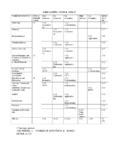
7 Location: Learning Knowledge Performance Teaching and Classroom, Outcome Evaluation Evaluation Training Methods laboratory and field l Understanding l What are major l Enlist the major Interactive lecture: about our agricultural crops states producing l Different crop major of India and their cereal, pulse, management foodgrain classification? oilseed and other practices of crops including l What are major commercial crops. agricultural crops. cereals, crop production Enlist soil oilseeds, l Activity: seasons in India? and climate pulses and requirements of l Visit some village commercial l What are major nearby to school Kharif season different crops.
8 Crops. premises. Also crops of India? l Demonstrate interact with What are their major crop farmers and soil and climate management learn about requirements? practices in field crop production l What are major crops. practices. Rabi season l Demonstrate crops of India? application of What are their various herbicides, soil and climate fungicides and requirements? pesticides in some l What are major selected crops. Zaid season l Enlist seed rates crops of India? and fertilizer What are their requirements soil and climate of various field requirements? crops. l Enlist major weeds, diseases, insect-pests of crops.
9 L Gain a l What are major l Enlist major Interactive lecture: science-based crops and crops and l Different cultural overview of cropping systems cropping systems requirements AGRICULTURE and of India? What in India and of cereal, pulse, food systems. are their major their important oilseed and other varieties and varieties. commercial crops soil and climate grown in India. requirements? viii BASIC AGRICULTURE . l What are major l Enlist major l Identification cereal crops pulses of India of major weeds, of India? What and their major diseases and are their major problems. pests. cultural practices?
10 L Enlist major Activity: l What are major oilseed crops of l Plan a visit to pulse crops of India and their some village India? What major cultural and interact are their major practices. with farmers for cultural practices? l Enlist major identification l What are major commercial crops of crops, weeds, oilseed crops? and their major pests, diseases What are their cultural practices. and disoders. major cultural l Enlist sugar Also learn about practices? producing crops. transplanting of l What are rice seedlings. commercial crops? What are their cultural hints? l Enrich l What is the l Enlist major crop Interactive lecture: themselves recommended management l Different crop about crop production practices management production technology for of various practices technology major crops of agricultural crops.