Transcription of BERKSHIRE HATHAWAY INC.
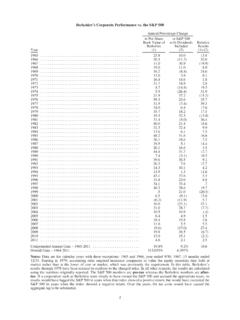
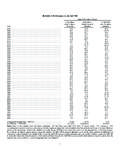
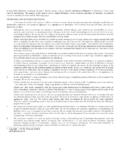
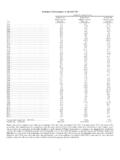
1 BERKSHIRE s Corporate Performance vs. the S&P 500 Annual Percentage ChangeYearin Per-ShareBook Value ofBerkshire(1)in S&P 500with DividendsIncluded(2)RelativeResults(1)-( 2) ( ) ( ) ( ) ( ) ( ) ( ) ( ) ( ) ( ) ( ) ( ) ( ) ( )( ) ( ) ( ) (.4) ( )( ) Annual Gain Gain ,319%4,276%Notes:Data are for calendar years with these exceptions: 1965 and 1966, year ended 9/30; 1967, 15 months ended12 in 1979, accounting rules required insurance companies to value the equity securities they hold at marketrather than at the lower of cost or market, which was previously the requirement. In this table, BERKSHIRE s resultsthrough 1978 have been restated to conform to the changed rules. In all other respects, the results are calculated usingthe numbers originally S&P 500 numbers arepre-taxwhereas the BERKSHIRE numbers areafter-tax. If a corporation such as Berkshirewere simply to have owned the S&P 500 and accrued the appropriate taxes, its results would have lagged the S&P 500in years when that index showed a positive return, but would have exceeded the S&P 500 in years when the indexshowed a negative return.
2 Over the years, the tax costs would have caused the aggregate lag to be HATHAWAY the Shareholders of BERKSHIRE HATHAWAY Inc.:Ourdecreasein net worth during 2008 was $ billion, which reduced the per-share book value ofboth our Class A and Class B stock by Over the last 44 years (that is, since present management took over)book value has grown from $19 to $70,530, a rate of compounded annually.*The table on the preceding page, recording both the 44-year performance of BERKSHIRE s book valueand the S&P 500 index, shows that 2008 was the worst year for each. The period was devastating as well forcorporate and municipal bonds, real estate and commodities. By yearend, investors of all stripes were bloodiedand confused, much as if they were small birds that had strayed into a badminton the year progressed, a series of life-threatening problems within many of the world s great financialinstitutions was unveiled. This led to a dysfunctional credit market that in important respects soon turnednon-functional.
3 The watchword throughout the country became the creed I saw on restaurant walls when I wasyoung: In God we trust; all others pay cash. By the fourth quarter, the credit crisis, coupled with tumbling home and stock prices, had produced aparalyzing fear that engulfed the country. A freefall in business activity ensued, accelerating at a pace that I havenever before witnessed. The and much of the world became trapped in a vicious negative-feedbackcycle. Fear led to business contraction, and that in turn led to even greater debilitating spiral has spurred our government to take massive action. In poker terms, the Treasuryand the Fed have gone all in. Economic medicine that was previously meted out by the cupful has recentlybeen dispensed by the barrel. These once-unthinkable dosages will almost certainly bring on unwelcomeaftereffects. Their precise nature is anyone s guess, though one likely consequence is an onslaught of , major industries have become dependent on Federal assistance, and they will be followed by citiesand states bearing mind-boggling requests.
4 Weaning these entities from the public teat will be a politicalchallenge. They won t leave the downsides may be, strong and immediate action by government was essential last year ifthe financial system was to avoid a total breakdown. Had one occurred, the consequences for every area of oureconomy would have been cataclysmic. Like it or not, the inhabitants of Wall Street, Main Street and the variousSide Streets of America were all in the same this bad news, however, never forget that our country has faced far worse travails in the past. Inthe 20thCentury alone, we dealt with two great wars (one of which we initially appeared to be losing); a dozen orso panics and recessions; virulent inflation that led to a 211 2% prime rate in 1980; and the Great Depression ofthe 1930s, when unemployment ranged between 15% and 25% for many years. America has had no shortage fail, however, we ve overcome them. In the face of those obstacles and many others thereal standard of living for Americans improved nearlyseven-fold during the 1900s, while the Dow JonesIndustrials rose from 66 to 11,497.
5 Compare the record of this period with the dozens of centuries during whichhumans secured only tiny gains, if any, in how they lived. Though the path has not been smooth, our economicsystem has worked extraordinarily well over time. It has unleashed human potential as no other system has, and itwill continue to do so. America s best days lie ahead.*All per-share figures used in this report apply to BERKSHIRE s A shares. Figures for the B shares are1/30thof those shown for a look again at the 44-year table on page 2. In 75% of those years, the S&P stocks recorded again. I would guess that a roughly similar percentage of years will be positive in the next 44. But neither CharlieMunger, my partner in running BERKSHIRE , nor I can predict the winning and losing years in advance. (In ourusual opinionated view, we don t think anyone else can either.) We re certain, for example, that the economy willbe in shambles throughout 2009 and, for that matter, probably well beyond but that conclusion does not tellus whether the stock market will rise or good years and bad, Charlie and I simply focus on four goals:(1)maintaining BERKSHIRE s Gibraltar-like financial position, which features huge amounts ofexcess liquidity, near-term obligations that are modest, and dozens of sources of earningsand cash;(2)widening the moats around our operating businesses that give them durable competitiveadvantages;(3)acquiring and developing new and varied streams of earnings;(4)expanding and nurturing the cadre of outstanding operating managers who, over the years,have delivered BERKSHIRE exceptional in 2008 Most of the BERKSHIRE businesses whose results are significantly affected by the economy earned belowtheir potential last year, and that will be true in 2009 as well.
6 Our retailers were hit particularly hard, as were ouroperations tied to residential construction. In aggregate, however, our manufacturing, service and retailbusinesses earned substantial sums and most of them particularly the larger ones continue to strengthen theircompetitive positions. Moreover, we are fortunate that BERKSHIRE s two most important businesses ourinsurance and utility groups produce earnings that are not correlated to those of the general economy. Bothbusinesses delivered outstanding results in 2008 and have excellent predicted in last year s report, the exceptional underwriting profits that our insurance businessesrealized in 2007 were not repeated in 2008. Nevertheless, the insurance group delivered an underwriting gain forthe sixth consecutive year. This means that our $ billion of insurance float money that doesn t belong tous but that we hold and invest for our own benefit cost us less than zero. In fact, we werepaid$ billion tohold our float during 2008.
7 Charlie and I find this time, most insurers experience a substantial underwriting loss, which makes their economics fardifferent from ours. Of course, we too will experience underwriting losses in some years. But we have the bestgroup of managers in the insurance business, and in most cases they oversee entrenched and valuable these strengths, I believe that we will earn an underwriting profit over the years and that our floatwill therefore cost us nothing. Our insurance operation, the core business of BERKSHIRE , is an and I are equally enthusiastic about our utility business, which had record earnings last yearand is poised for future gains. Dave Sokol and Greg Abel, the managers of this operation, have achieved resultsunmatched elsewhere in the utility industry. I love it when they come up with new projects because in thiscapital-intensive business these ventures are often large. Such projects offer BERKSHIRE the opportunity to put outsubstantial sums at decent also went well on the capital-allocation front last year.
8 BERKSHIRE is always a buyer of bothbusinesses and securities, and the disarray in markets gave us a tailwind in our purchases. When investing,pessimism is your friend, euphoria the our insurance portfolios, we made three large investments on terms that would be unavailable innormal markets. These should add about $11 2billion pre-tax to BERKSHIRE s annual earnings and offerpossibilities for capital gains as well. We also closed on our Marmon acquisition (we own 64% of the companynow and will purchase its remaining stock over the next six years). Additionally, certain of our subsidiaries made tuck-in acquisitions that will strengthen their competitive positions and s the good news. But there s another less pleasant reality: During 2008 I did some dumb things ininvestments. I made at least one major mistake of commission and several lesser ones that also hurt. I will tellyou more about these later. Furthermore, I made some errors of omission, sucking my thumb when new factscame in that should have caused me to re-examine my thinking and promptly take , the market value of the bonds and stocks that we continue to hold suffered a significantdecline along with the general market.
9 This does not bother Charlie and me. Indeed, we enjoy such price declinesif we have funds available to increase our positions. Long ago, Ben Graham taught me that Price is what youpay; value is what you get. Whether we re talking about socks or stocks, I like buying quality merchandisewhen it is marked has two major areas of value. The first is our investments: stocks, bonds and cashequivalents. At yearend those totaled $122 billion (not counting the investments held by our finance and utilityoperations, which we assign to our second bucket of value). About $ billion of that total is funded by ourinsurance s second component of value is earnings that come from sources other than investments andinsurance. These earnings are delivered by our 67 non-insurance companies, itemized on page 96. We excludeour insurance earnings from this calculation because the value of our insurance operation comes from theinvestable funds it generates, and we have already included this factor in our first 2008, our investments fell from $90,343 per share of BERKSHIRE (after minority interest) to $77,793, adecrease that was caused by a decline in market prices, not by net sales of stocks or bonds.
10 Our second segmentof value fell from pre-tax earnings of $4,093 per BERKSHIRE share to $3,921 (again after minority interest).Both of these performances are unsatisfactory. Over time, we need to make decent gains in each area ifwe are to increase BERKSHIRE s intrinsic value at an acceptable rate. Going forward, however, our focus will be onthe earnings segment, just as it has been for several decades. We like buying underpriced securities, but we likebuying fairly-priced operating businesses even , let s take a look at the four major operating sectors of BERKSHIRE . Each of these has vastlydifferent balance sheet and income account characteristics. Therefore, lumping them together, as is done instandard financial statements, impedes analysis. So we ll present them as four separate businesses, which is howCharlie and I view Utility BusinessBerkshire has an (diluted) interest in MidAmerican Energy Holdings, which owns a widevariety of utility operations.