Example: confidence
Binge Eating Disorder
Feeding and Eating Disorders. Bulimia Nervosa. Bulimia nervosa is characterized by frequent episodes of binge eating followed by inappropriate behav-iors such as self-induced vomiting to avoid weight gain. DSM-5 criteria reduce the frequency of binge eating and compensatory behaviors that people with bulimia nervosa must exhibit, to once a week
Tags:
Information
Domain:
Source:
Link to this page:
Documents from same domain
The Prevention of Mental Disorders in General Psychiatric ...
www.psychiatry.orgThe Prevention of Mental Disorders in General Psychiatric Practice: Implications for Assessment, Intervention and Research A report submitted to the Council on Research, American Psychiatric Association, May 10, 2005
Highlights of Changes from DSM-IV-TR to DSM-5
www.psychiatry.orgIn the chapter on bipolar and related disorders and the chapter on depressive disorders, a specifier for anxious distress is delineated. This specifier is intended …
DSM-5 and Diagnoses for Children - psychiatry.org
www.psychiatry.orgDSM-5 and Diagnoses for Children • 3. Section III. of DSM-5 lists conditions warranting more scientific research and clinical experience before they might be considered for inclusion in the main book as formal disorders. Two conditions listed here are particularly relevant for children and adolescents; both are regarded as major problems and ...
Section III - American Psychiatric Association
www.psychiatry.orgSection III. The development of the fifth edition of the Diagnostic and Statistical Manual of Mental Disorders (DSM-5) was characterized by robust debate about the scientific evidence and clinical experience sup-porting the book’s contents. Section III introduces emerging measures and models to assist clinicians in their evaluation of patients.
Substance-Related and Addictive Disorders
www.psychiatry.orgSubstance Use Disorder. Substance use disorder in DSM-5 combines the DSM-IV categories of substance abuse and substance . dependence into a single disorder measured on a continuum from mild to severe. Each specific sub-stance (other than caffeine, which cannot be diagnosed as a substance use disorder) is addressed as a
The Interface between Religion/Spirituality and Mental ...
www.psychiatry.orgThe Interface between Religion/Spirituality and Mental Health . John Peteet, M.D. Associate Professor of Psychiatry, Harvard Medical School . Staff psychiatrist, Brigham and Women's Hospital and Dana -Farber Cancer Institute
Measure #282: Dementia: Functional Status Assessment
www.psychiatry.orgEffective Clinical Care 2017 OPTIONS FOR INDIVIDUAL MEASURES: REGISTRY ONLY ... Percentage of patients, regardless of age, with a diagnosis of dementia for whom an assessment of functional status is performed and the results reviewed at least once within a 12 month period ... Dementia: Functional Status Assessment .

Mental Health Disparities: African Americans - psychiatry.org
www.psychiatry.orgMental Health Disparities: African Americans African American Population • African Americans make up 13.3% of the US population.1 • African American communities across the US are culturally diverse, with immigrants from African nations, the Caribbean, Central America, and other
The APA is offering a number of “emerging measures” for ...
www.psychiatry.orgWorld Health Organization Disability Assessment Schedule 2.0 36-item version, self-administered The adult self-administered version of the World Health Organization Disability Assessment Schedule 2.0 (WHODAS 2.0) is a 36-item measure that assesses disability in adults age 18 years and older. It assesses disability
Severity Measure for Panic Disorder Adult This measure can ...
www.psychiatry.orgThe Severity Measure for Panic Disorder—Adult is a 10-item measure that assesses the severity of symptoms of panic disorder in individuals age 18 and older. The measure was designed to be completed by an individual upon receiving a diagnosis of panic disorder (or clinically significant panic disorder symptoms) and thereafter, prior to
Related documents
SUBSTANCE USE DISORDERS - NMHIMA
nmhima.orgdisorders, and substance-induced disorders . SUBSTANCE USE DISORDERS • The essential feature of a substance use disorder is a cluster of cognitive, behavioral, and psychological symptoms indicating that an individual continues using the substance despite significant substance-related problems.

The International Classification of Headache Disorders
ihs-headache.org8.1.1.1 Immediate NO donor-induced headache 8.1.1.2 Delayed NO donor-induced headache 8.1.2 Phosphodiesterase inhibitor-induced headache 8.1.3 Carbon monoxide-induced headache 8.1.4 Alcohol-induced headache 8.1.4.1 Immediate alcohol-induced headache 8.1.4.2 Delayed alcohol-induced headache 8.1.5 Cocaine-induced headache
The Clinical Presentation of Mood Disorders. Bob Boland MD ...
www.brown.edu• Psychiatric Disorders • Medical Disorders • Substance Induced • Reactive disorders – Adjustment disorders –Norma rleacotins There is a long list of other disorders that can cause depressive symptoms without actually causing major depression. Among the psychiatric disorders, some of the anxiety disorders can, for example, have ...

Substance Use Disorder Treatment for People With Co ...
store.samhsa.govExhibit 4 16 Substances and Corresponding Substance-Induced Mental Disorders 124 Exhibit 4 17 Substance-Induced Mental Disorder Symptoms (by Substance) 125 Exhibit 4 18 Features of DSM-5 Substance-Induced Mental Disorders 127 Exhibit 4 19 Substances That Precipitate or Mimic Common Mental Disorders 128

Drug-induced Parkinsonism
www.parkinsons.org.ukdrug-induced parkinsonism? The incidence of drug-induced parkinsonism increases with age. Drug-induced parkinsonism is more prevalent in older people and is twice as common in women than men. Other risk factors include a family history of Parkinson’s and affective disorders. There may be a genetic predisposition to drug-induced parkinsonism.
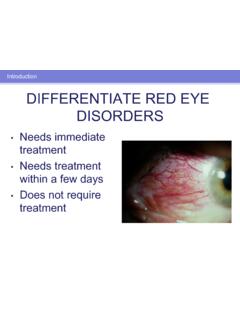
DIFFERENTIATE RED EYE DISORDERS
med.virginia.eduDisorders of the Ocular Adnexa . Disorders of the Ocular Adnexa Preseptal cellulitis . Disorders of the Ocular Adnexa Orbital cellulitis ... • Elevate IOP (steroid-induced glaucoma)

psychotic disorders handout - Brown University
www.brown.edusubstance-induced movement disorders, such as extrapyramidal symptoms and tardive dyskinesia. Slide 5 Appearance • Behavioral Problems • Social functioning • Other – Ex. Neuro soft signs Disorders of behavior may involve deterioration of social functioning-- social
Potassium Disorders: Hypokalemia and Hyperkalemia
www.aafp.orgSep 15, 2015 · disorders can lead to life-threatening cardiac conduction disturbances and neuromuscular dysfunction. ... of its widespread use.11,12 Diuretic-induced hypokalemia is dose-dependent and tends to be ...

Medication Induced Hypokalemia - Edson College of …
nursingandhealth.asu.eduMedication-Induced Hypokalemia: A Common Problem Barry D. Weiss, MD, College of Medicine, University of Arizona Hypokalemia is one of the most common electrolyte disorders seen in both outpatient practice and inpatient care. It is common in older adults, and increasing age is associated with a marked increase in the incidence of