Transcription of BRINGING ATTENDANCE HOME - Home - …
1 BRINGING ATTENDANCE HOMEE ngaging Parents in Preventing Chronic Absence June 8, 2015version Even though I went to college, I didn t know that missing 18 days or just two days a month even in kindergarten could put my son behind academically, said Olga Nunez, the mother of three children. As a result, my kid was missing kindergarten and it was because of me! Thankfully, Nunez learned the facts about chronic absence from classes at the Parent Institute for Quality Education and her son was able to catch up. Now that I know, I make sure that the two younger ones don t miss so many days. This can happen to anyone, and it s a message we have to deliver to parents. Every year, as many as million students nationwide are chronically absent, meaning they miss 10 percent or more of the school year for any reason, excused or unexcused. That level of absenteeism predicts poor academic performance as early as preschool and is a warning sign that a high school student will drop out.
2 New research suggests that chronic absence predicts whether a student will finish college. The discipline and determination to get to school every day builds a habit that helps a student persist and succeed in college. The good news is that chronic absence can be reduced when schools work with families and communities to debunk common myths about ATTENDANCE , build a culture of going to school or preschool every day and address barriers to getting to class. Parents and families are essential partners in promoting good ATTENDANCE because they, ultimately, have the bottom-line responsibility for making sure their children get to school every day. When children are young, they are especially dependent upon adults or older siblings to help them get to school or preschool. Just as parents should focus on how their children are performing academically, they have a responsibility to set expectations for good ATTENDANCE and to monitor their children s absences, so that missed days don t add up to academic trouble.
3 3To carry out this responsibility, however, parents need to be equipped with the right information so they are not unwittingly falling into traps created by common and pervasive myths about ATTENDANCE . For example, many of us view good ATTENDANCE as a matter of complying with rules. We don t recognize that good ATTENDANCE is really a matter of providing children more and better opportunities to learn. We think that missing school is a problem only if a child was skipping school without permission. We don t see that too many absences, even if they are excused, can hinder learning. In fact, just two or three absence a month can add up to too much lost time in the classroom. While some absences, especially those due to illness, may be unavoidable, it is important to get children to school as often as possible. Another myth is that ATTENDANCE matters mostly for older students in middle or high school . We don t recognize the adverse impact that poor ATTENDANCE can have on learning as early as preschool or the importance of building a habit of good ATTENDANCE from the beginning.
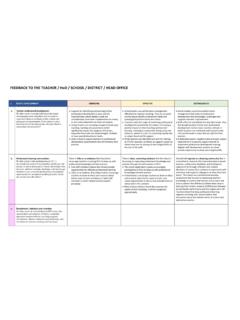
4 Too few families or community members are aware of these realities. Beyond their role in delivering children to school , families play an essential role in identifying, in any particular school or community, what the barriers are to ATTENDANCE , as well as what would motivate students to go to school . Consider this framework for analyzing the factors contributing to chronic absence. It shows how the insights of families combined with local data and the perspectives of educators and service providers can help determine what needs to change to ensure all students are present and engaged in learning at school or preschool. Parents are also key advocates for change when chronic absence is affecting too many students at their child s school . If high levels of chronic absence reflect systemic challenges such as an unsafe school climate, high teacher turnover or absenteeism, or a lack of engaging instruction parents should hold the school and district accountable for addressing these issues.
5 If chronic absence is related to community challenges, such as the lack of a safe path to school or limited access to health resources, parents can play a role in developing solutions and advocating for community resources. At every level, parent and family engagement is a key component of effective, comprehensive approaches to reducing chronic absence. All of us schools, preschools, community agencies and parents themselves can make a difference by engaging and helping families to nurture a habit of regular ATTENDANCE so they can help their children realize their hopes and dreams. What Parents Can Do Make getting students to school on time every day a top priority. Alert schools and community agencies to barriers that keep kids from attending class. Ask for and monitor data on chronic absence. Demand action to address systemic barriers that may be causing large numbers of students to miss too much school . 4 WHY THIS TOOLKIT? ATTENDANCE Works is a national initiative aimed at advancing student success by reducing chronic absence, defined as the percentage of students missing 10 percent or more of the school year.
6 We promote tracking chronic absence data for each student beginning in kindergarten, or ideally earlier, and partnering with families and community agencies to intervene when poor ATTENDANCE is a problem for students or year, one in 10 kindergarten and 1st grade students misses 10 percent or more of school , nearly a month of class over the course of the school year. By middle and high school , the rates of chronic absence are far higher. Starting as early as preschool, however, too many absences can affect academic achievement, especially for low-income students unable to make up for lost time, research shows. Early chronic absence can leave children unable to read well by the end of 3rd grade, exacerbating the achievement gap. And it can set a pattern of poor ATTENDANCE and academic failure for older students, fueling the dropout rate. By middle school , chronic absence is a proven early warning sign of high school dropout. For additional research on the adverse impact of chronic absence, visit the Research page on the ATTENDANCE Works Works has created this toolkit to support parent engagement as part of a comprehensive approach to reducing chronic absence.
7 You can see a graphic display of the key elements to reduce chronic absence on the next page or, to read about them in greater detail, visit the What Works page on the ATTENDANCE Works website. 5 This toolkit aligns with Frameworks on Family and Community Engagement developed by the Department of Education. The ideas, activities and materials are aimed at encouraging schools and preschools to partner with families to improve student achievement. They are based upon the premise that improving ATTENDANCE requires that we respect and honor families knowledge and potential to make a contribution to their children s education. We know that we cannot improve ATTENDANCE unless we create processes that draw upon the hopes and dreams of parents for a better future for their children, as well as those parents insights into what is needed to help their children get to school . We also know that sustaining progress will be difficult unless districts and communities deliberately build systems that support family Should Use This Toolkit?
8 This toolkit is intended to help the staff or leadership of any entity that works with parents, including schools, community-based organizations, parent organizations and faith-based institutions. Its goal is to equip these staff and leaders with the tools to help parents understand why ATTENDANCE matters and how they can help ensure their children s success in school by supporting ATTENDANCE . Key Elements for Reducing Chronic Absence in a SchoolBased upon related research and our work with schools and districts over the last several years, ATTENDANCE Works has identified the following key elements of a comprehensive approach to reducing chronic absence. The first set exists at the school level. In our experience, schools that have these elements in place over the course of an entire academic year see measurable LevelDistrict and Community LevelFor the work to be sustained and taken to scale, districts and communities must support the work with these essential IS IN THIS TOOLKIT?
9 This toolkit contains:1. Research showing a positive relationship between parent involvement and ATTENDANCE as well as the results of new studies examining parents attitudes about school absences and their implications for messaging and action. 2. Key Principles for engaging parents on ATTENDANCE . 3. Materials and Videos to share with parents about the importance of good ATTENDANCE . 4. A Set of Interactive Exercises to spark awareness, conversation and action with groups of parents about the consequences of poor ATTENDANCE on their children s futures. Ideally these activities would be embedded into existing school activities or leadership programs for parents. (Note: The exercises create opportunities for starting a dialogue and forging positive relationships with parents that written materials, alone, do not.)The materials and exercises in this toolkit are a starting point. More tools are being created every day as people in communities across the country see the urgent need to engage parents as partners in creating a better future for all children.
10 For example, this toolkit does not focus on personalized early outreach, an important part of parent engagement that we hope to address in greater depth later. Our initial focus is on engaging groups of RESEARCH: THE IMPACT OF PARENT INVOLVEMENTR esearch1 shows parent involvement has a positive impact on school ATTENDANCE . In addition, Joyce Epstein and Steven Sheldon from Johns Hopkins University2 found that certain parent engagement practices contribute to improving daily ATTENDANCE and decreasing chronic absence. Schools have better ATTENDANCE when they: Orient parents on school policies and expectations for student ATTENDANCE and on-time arrival. Provide parents with a school contact person. Communicate often (as needed) to provide all families with information on ATTENDANCE . Reward students for excellent ATTENDANCE . (This is not the same as perfect ATTENDANCE . ATTENDANCE Works suggests rewarding students for improved ATTENDANCE as well.)