Transcription of BSBLDR402 Lead effective workplace relationships
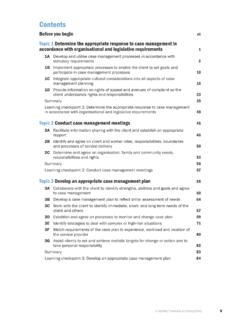
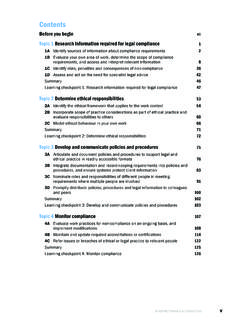
1 Aspire Training & ConsultingvContentsBefore you begin viiTopic 1: Collect, analyse and communicate information and ideas 11A Collect, analyse and share information to improve work performance 21B Communicate ideas and information within a diverse workforce 231C Implement consultation processes within your team 361D Seek out internal and external contributions to concept development 441E Implement processes to ensure that issues raised are resolved promptly 47 Summary52 Learning checkpoint 1: Collect, analyse and communicate information and ideas 53 Topic 2: Develop trust and confidence as a leader 552A Treat all internal and external contacts with integrity, respect and empathy 562B Use the organisation s social, ethical and business standards to develop and maintain effective relationships 672C Gain and maintain the trust and confidence of colleagues , customers and suppliers 722D Adjust interpersonal styles and methods to meet organisation s social and cultural environment 782E Lead and encourage other members of the work team to follow organisational examples 83 Summary88 Learning checkpoint 2: Develop trust and confidence as a leader 89 Topic 3: Develop and maintain networks and relationships 913A Use networks to identify and build relationships 923B Use networks and other work relationships to provide identifiable benefits for the team and organisation 95 Summar y109 Learning checkpoint 3.
2 Develop and maintain networks and relationships 1108 Aspire Training & ConsultingBSBLDR402 Lead effective workplace continuedPrivacyPrivacy Act 1988If your organisation collects information about customers or clients, its operations come under the auspices of this Act. The Act deems personal information about individuals to be sensitive, such as information about: criminal record health membership of a professional or trade association membership of a trade union political affiliation or opinion racial or ethnic origin religious affiliation or belief sexual orientation or information about a person could be used by others to discriminate against them or to identify them. Your organisation should inform you of your responsibilities regarding your customers privacy. It should also inform you of its responsibilities with regard to your privacy. It is always advisable to consider any information provided to you about any individual generally have a right to see and correct, if necessary, files of personal information kept about them by organisations.
3 Individuals are usually only denied access to files about them if their own or another person s safety is at risk, or if there are other legalities and territory anti-discrimination legislationAnti-discrimination legislation varies between states and territories. The agencies that deal with anti-discrimination legislation in Australian states and territories are provided Capital TerritoryHuman Rights CommissionNew South WalesAnti-Discrimination Board of New South WalesNorthern TerritoryNorthern Territory Anti-Discrimination CommissionQueenslandAnti-Discrimination Commission QueenslandSouth AustraliaEqual Opportunity CommissionTasmaniaOffice of the Anti-Discrimination CommissionerVictoriaVictorian Equal Opportunity and Human Rights CommissionWestern AustraliaEqual Opportunity Commission16 Aspire Training & ConsultingBSBLDR402 Lead effective workplace relationshipsIdentify external information sourcesSome ideas for identifying external information sources are outlined of information Managers need to keep themselves informed of externalissues and developments that affect decision-making and work performance.
4 Information you may need to source externally includes: industry-related data and market intelligence legislative and regulatory changes that impact onorganisational policy and procedures work health and safety requirements developments in equipment and technology news items, feature articles and general information relevantto the organisation s of information Sources of external information include: government departments and agencies industry or professional associations, unions and employerbodies public libraries literature available from customers, suppliers, competitors andother organisations directories your contact network the the internet to source external informationDownloading up-to-date material directly from the internet is often the most efficient way of carrying out research. However, internet research can sometimes eat up hours of time with minimal results. Stick to your research aims and move on when a website doesn t meet your research needs.
5 Bookmark useful websites or add them to your favourites folder so you can refer back to them quickly if the need arises. You can use the internet in a variety of ways, including: seeking information about businesses, government agencies, guidelines,regulations, people and trends within particular fields20 Aspire Training & ConsultingBSBLDR402 Lead effective workplace relationshipsConfidentiality, timing and distributionBe aware of confidentiality or privacy issues for both staff and external customers when reviewing or handling information. Some information needs to be viewed as commercially or politically sensitive. The ability to treat certain matters with discretion is one of the traits of a successful manager. You may be entrusted with confidential or highly sensitive information. There is more information about confidentiality and distribution of information standardsRefer to your workplace policies and procedures if you are unsure about how to handle particular information, or ask your supervisor.
6 You must comply with all Commonwealth, state or territory privacy legislation that governs the use of personal and client read more about privacy standards, visit the Office of the Australian Information Commissioner at: informationYou need to make judgments about when to release certain information, taking into account its possible impact on employee morale and productivity, and the potential for leaks to the external marketplace. Timing may also have implications for how you decide to distribute the communicationSome managers decide not to share information and ideas with their colleagues ; or information may be released on a need-to-know basis. Once considered a shrewd approach, keeping information secret is not consistent with current management thinking, which supports open communication, transparency, accountability and staff informationThe way you disseminate information depends on the type of information. For example, a change of government policy that does not affect staff members individually may simply require a memo, notice or announcement at a staff meeting.
7 Alternatively, you may need to organise an information or training session to inform team members of a new health and safety Aspire Training & ConsultingBSBLDR402 Lead effective workplace relationshipsVerbal individualExamples: face-to-face contact; telephone conversationAdvantages: Clear message Direct and instant Provides opportunity for interactionDisadvantages: Inconsistency of message across similarexchanges Message may be misunderstood ifcommunication skills are poor Time-consumingVerbal groupExamples: meeting; discussion groupAdvantages: Sends consistent message Provides opportunity for questioning andsharing Provides chance for agreed approachDisadvantages: Time-consuming Can be hard to organise Different personality types can dominate orwithdrawWritten electronicExamples: emails; intranet postingAdvantages: Quick and efficient Sends consistent message Visually effectiveDisadvantages: Cannot be sure message is read Message may be misinterpreted34 Aspire Training & ConsultingBSBLDR402 Lead effective workplace continuedBe wary of patronising a person by extending sympathy or assuming their disability is a major the confidentiality status of the disability, taking into account the person s privacy rights and any safety concerns.
8 Always check first with the person languageUsing non-discriminatory and inclusive language in workplace communication means that what you say includes everyone regardless of their gender, status, race or ability. For example, parental leave describes entitlements to both maternity and paternity language leaves people out. This discriminatory language is often subtle; for example, assuming a manager of a business is male rather than female by always addressing letters to Sir when the receiver s gender is are some tips for avoiding discriminatory for avoiding discriminatory languageRevise wording to avoid gender reference; for example, Staff members should sign time sheets rather than The staff member should sign his time sheet .Try not to use broad categories. Terms such as the blind and Asians exclude the possibility of differences within these not place undue emphasis on differences; for example, avoid phrasing like male nurse or We recruited four engineers, including one Hungarian.
9 Avoid expressions that treat people unevenly, such as men and girls use men and women .Never use language that denigrates or stereotypes people. Discriminatory pranks or comments are not acceptable, even in jest. Aspire Training & Consulting39To p i c 1 Collect, analyse and communicate information and ideasShare professional developmentAsk employees to share their professional development, conference information or research findings with the team and let employees know their contributions are throughAlways follow through on ideas from your team and let them know the outcome of any contribution they have made. Make sure your team knows you take their contributions seriously and encourage them to use their initiative. This can be as simple as saying, I m really glad you brought that up or asking, What do others think about this? Staff meetingsMeetings provide an ideal forum for two-way communication of information and ideas.
10 But meetings can also be frustrating, unproductive and a waste of time. Meetings need to be well run if they are to fulfil the goals of effective two-way are some tips for productive staff time and purposeDetermine a time and purpose for the meeting. Ask yourself Why are we meeting? and What do I want to achieve? If the goal is non-specific, such as sharing general information, reporting on progress or generating ideas, you should set clear the meeting timeLimit the meeting time and don t let discussion stray too far from the set topics. The meeting chairperson should guide the agenda and only give as much time to each item as is an agendaEven for informal meetings, a simple agenda is essential to set out an order of reporting or discussion, and to keep everyone focused on why they are there. If there are papers to be discussed, circulate them in advance. Allow for general business and informal contributions, but don t let the meeting be too.