Transcription of BSBLED501 Develop a workplace learning environment
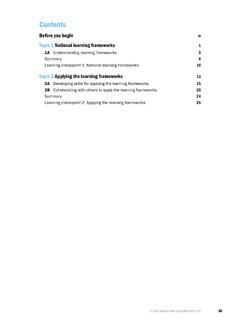
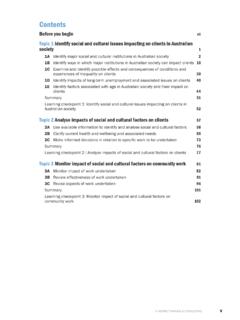
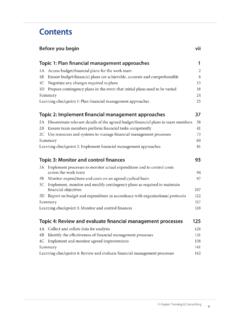
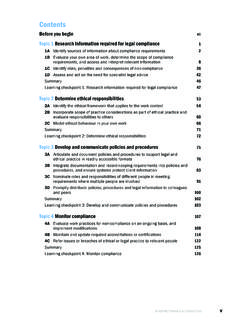
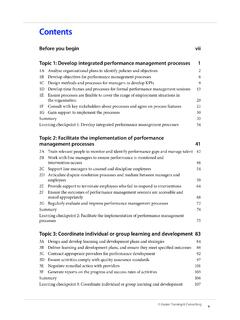
1 Contents Before you begin vii Topic 1: Create learning opportunities 1. 1A Identify potential formal and informal learning opportunities 2. 1B Identify learning needs of individuals in relation to the needs of the team and the organisation 12. 1C Develop and implement learning plans 18. 1D Develop strategies to ensure that learning plans reflect the diversity of needs 25. 1E Ensure organisational procedures maximise individual and team participation in learning opportunities 30. 1F Ensure effective liaison with training and development specialists 34.
2 Summary 37. learning checkpoint 1: Create learning opportunities 38. Topic 2: Facilitate and promote learning 45. 2A Develop strategies to ensure that workplace learning opportunities are used 46. 2B Implement organisational procedures to ensure workplace learning opportunities contribute to the development of knowledge, skills and attitudes 51. 2C Implement policies and procedures to encourage team members to assess their own learning and development needs 55. 2D Share the benefits of learning with others in the team and organisation 60. 2E Acknowledge workplace achievement by timely and appropriate recognition 62.
3 Summary 65. learning checkpoint 2: Facilitate and promote learning 66. Topic 3: Monitor and improve learning effectiveness 73. 3A Use strategies to ensure that team and individual learning performance is monitored and supports WHS issues 74. 3B Use feedback from individuals and teams to identify and introduce improvements 80. 3C Make adjustments and negotiate with training and development specialists 85. 3D Use processes to ensure that records and reports of competency are documented and stored correctly 88. Summary 92. learning checkpoint 3: Monitor and improve learning effectiveness 93.
4 Aspire Training & Consulting v BSBLED501 . Develop a workplace learning environment 1A Identify potential formal and informal learning opportunities The range of learning opportunities that organisations offer to employees generally depends on the size and nature of their business. All organisations acknowledge that, whatever training is provided, it must contribute to the organisation's strategic goals through alignment with the operational plan. However, in addition to meeting the organisation's needs, learning opportunities need to satisfy a number of other criteria.
5 When identifying potential learning and development programs, use this list to ensure they cover these essential elements. Does the learning program: cater for individual employee needs and aspirations? have support at all levels of the organisation? support membership and involvement with professional networks? contribute to change and improved work practices? provide encouragement for participation in workplace learning , value a positive workplace culture and overcome barriers to learning ? provide an efficient feedback system dedicated to analysing and evaluating learning ?
6 Offer cost-effective training? learning culture To maintain a competitive position in its industry, an organisation needs to perform in an effective and efficient manner. Essential to this is having informed, enthusiastic and creative employees who continue to Develop their knowledge, skills and attitudes so they remain proactive staff members who can adapt to change, and continue to contribute to the organisation. To help them do this, the organisation should create a culture that values employee learning by providing regular workplace monitoring and feedback, formal performance appraisals, support programs and planned professional development programs.
7 Formal learning opportunities Formal learning opportunities can take a variety of forms, but predominantly they are structured learning opportunities that can take place inside or outside the workplace . Often a structured learning activity leads to a formal qualification in accordance with the Australian Qualification Framework (AQF) or a documented outcome delivered by a Registered Training Organisation (RTO). Aspire Training & Consulting 2. BSBLED501 . Develop a workplace learning environment Informal learning opportunities Informal learning and training can occur on a regular basis where guidance, information and/.
8 Or instruction are provided to an employee as they perform their regular daily duties. Informal learning is dependent on the willingness of people to accept the guidance and instruction provided by those with greater knowledge of organisational policies and procedures, broader experience and more highly developed skills. It is the learning culture within an organisation, or department or team, that determines the success of informal learning . You can assist a staff member to be more effective in the execution of their duties through: providing advice or responding to a question (increasing knowledge).
9 Demonstrating techniques (improving skills). addressing shortcomings in their approach (adjusting attitudes and providing a safer work environment ). Benefits of undertaking learning opportunities The key benefit for an organisation in providing relevant learning opportunities is increasing productivity through improved effectiveness and efficiencies. For staff, there should be a sense of accomplishment, a positive attitude towards work and increased confidence. Some of the benefits of undertaking learning opportunities can be seen here. Improved staff Reduced staff Reduction in morale and turnover non-attendance motivation rates Reduced workplace health and safety Fewer complaints incidents, as from clients employees carry out their tasks more safely in accordance with instructions Aspire Training & Consulting 6.
10 BSBLED501 . Develop a workplace learning environment continued Prior learning Staff working on the front desk at a hotel have gained significant knowledge and skills relating to the hospitality and tourism business, but do not hold formal qualifications. Michelle, the customer service manager, contracts an RTO to determine a process of recognising their current knowledge and skills and the option for providing any further training required in order for them to obtain an appropriate qualification. Briefly looking at their roles, the RTO considers the business services training package and the tourism, hospitality and events training package.