Transcription of BSBMGT517 Manage operational plans
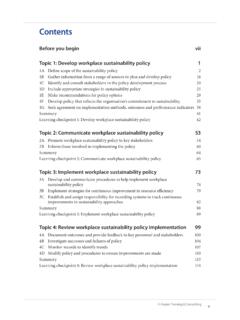
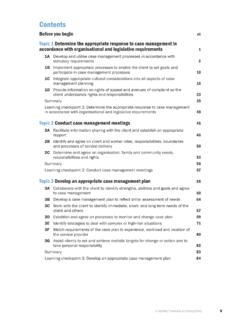
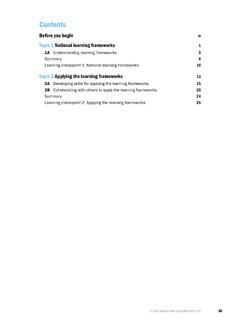
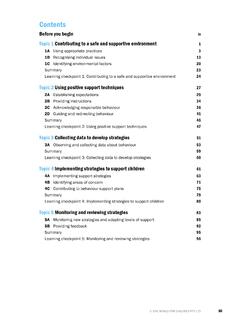
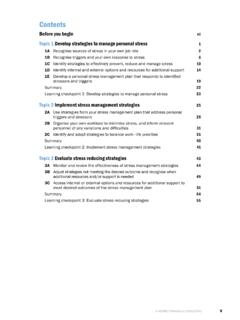
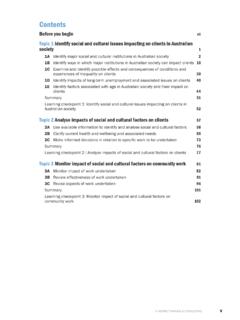
1 Contents Before you begin vii Topic 1: Develop operational plan 1. 1A Understand and document resource requirements and develop plan in consultation with relevant people 2. 1B Develop and/or implement consultation processes as an integral part of the operational planning process 10. 1C Ensure the operational plan includes key performance indicators 15. 1D Develop and implement contingency plans for the operational plan 18. 1E Support proposals for resource requirements with a variety of information sources 25. 1F Obtain approval for the plan and explain the plan to work teams 28. Summary 30. Learning checkpoint 1: Develop operational plan 31. Topic 2: Plan and Manage resource acquisition 41. 2A Develop and implement strategies for employee recruitment and induction 42. 2B Ensure physical resources and services are acquired appropriately 48. 2C Recognise and incorporate requirements for intellectual property rights and responsibilities 55.
2 Summary 58. Learning checkpoint 2: Plan and Manage resource acquisition 59. Topic 3: Monitor and review operational performance 67. 3A Develop, monitor and review performance systems and processes 68. 3B Use financial information to monitor and review profit and productivity performance 73. 3C Identify under-performance, recommend solutions and rectify the situation 77. 3D Ensure mentoring and coaching are provided to support the effective, economical and safe use of resources 82. 3E Negotiate recommendations for variations to operational plans 88. 3F Ensure procedures and records associated with performance documentation are managed appropriately 91. Summary 95. Learning checkpoint 3: Monitor and review operational performance 96. Aspire Training & Consulting v BSBMGT517 . Manage operational plan Alignment planning model This approach ensures strong alignment between the organisation's mission and its resources.
3 This model is useful for fine-tuning strategies or for investigating why strategies are not working. Steps of the process include the following: 1. A planning group outlines the organisation's mission, programs, resources and support requirements. 2. Identify what strategies and programs are working well and what needs improvement. 3. Determine what improvements need to be implemented. 4. Include the improvements as strategies in the strategic plan. Scenario planning This approach ensures planners truly undertake strategic thinking and is useful in identifying strategic issues and goals. General steps include the following: 1. Examine external forces and predict related changes which might influence the organisation. 2. For each change discuss different possible future scenarios for the organisation: this should include best- and worse-case scenarios as these can be a strong source of motivation for organisational change.
4 3. Identify potential strategies to use for each of the possible future scenarios. 4. Look for common strategies that must be addressed to respond to possible external changes. 5. Select the most likely scenarios to affect the organisation, and identify the most reasonable strategies to adopt. Self-organising planning This method of planning requires continual reference to common values. General steps include the following: 1. As a group, clarify and articulate the organisation's cultural values. 2. Articulate a group vision for the organisation. 3. On an ongoing basis, establish a dialogue about what processes are needed to arrive at the vision and what the group is going to do about those processes. 4. Continually reinforce that this type of planning never really reaches an end point: the group needs to continually conduct its own values clarification through reflection and to use this as a basis for process updates.
5 Aspire Training & Consulting 4. BSBMGT517 . Manage operational plan Current equipment Client base Question to ask: Question to ask: Is current equipment functional? Is the client base increasing or Source of information or relevant changing? documentation: Source of information or relevant Maintenance schedules and documentation: records Targeted markets Availability and prices on Special promotion details replacement or new equipment including delivery lead times Dependencies Financial resources Question to ask: Question to ask: What dependencies do I have and What financial resources are who is dependent on us? available? Source of information or relevant Source of information or relevant documentation: documentation: Capabilities of other areas to Previous expenditure records supply and expected expenditure Demands of other areas Corporate budget allocation and Structure of the organisation projected income and list of contacts Consultation The development and management of operational plans requires you to consult with a wide range of people within your organisation.
6 Depending on your level of authority and role in your organisation, you may also need to engage with external entities such as contractors, customers or clients, suppliers, communities and government officials. An important part of communicating clearly is having the interpersonal skills to relate to a range of people with different cultural backgrounds, ethnic origins and social attributes, and those with special needs relating to physical or mental disabilities. If you or your organisation has substantial business dealings with people of particular cultures, you may need to organise cultural awareness training to ensure clear and effective communication between stakeholders. The people you may need to consult with: Employees, employee representatives or unions Colleagues and/or managers at the same level or above Senior managers and/or your supervisor People with specialist responsibilities such as occupational health and safety committees, or training and development teams Aspire Training & Consulting 6.
7 BSBMGT517 . Manage operational plan Example: manager of a small business develops an operational plan and identifies essential resources Happy Valley Boutique Beer is a small beer brewing company. It maintains a small local market with tasting and sales direct to the public and supplying its range of products to restaurants and select caf s in the area. Shamus is the operations manager and the issues he has to consider for his operational plan include the following points: The styles of beer required and the quantities for current and expected orders given stock on hand and in production at present The quantity of input materials required such as barley, wheat, hops, yeast, water, printed labels for the bottles and bottle tops The human resources and skills in terms of number required, availability, rosters and the quality control process The packaging in terms of small bottles, large bottles, kegettes'.
8 (small five-litre decorated kegs for the tourist trade) and draught kegs The delivery of the product to customers Among other things, Shamus needs to know what orders are expected (the demand), the current stock on hand, details of promotional campaigns or seasonal issues (wildflower tourist season or annual surf carnival), production capability, storage capacity, and lead time for delivery of input materials. Shamus ensures he consults with the people involved in all these skill and production areas as he develops the operational plan. Practice task 1. You are required to develop a draft operational plan. Using your workplace, a simulated workplace or a workplace to which you have been given access, identify an operational issue or problem and list some outcomes that you believe would address the problem. Research, analyse and document the resources required to implement your proposed outcomes.
9 You will need to consult with the relevant personnel, colleagues and specialist resource managers as required. Provide details of the documentation obtained, research and analysis undertaken and who you consulted using this table. continued . Aspire Training & Consulting 8. Topic 1. Develop operational plan Methods of disseminating information Information can be communicated to team members via email and other formal or informal written forms (such as memos or notices) or using the phone. Information can also be presented visually and verbally via presentations at meetings or demonstrations, such as operating new equipment one-to-one or in small groups. You may also need to advise and communicate changes and outcomes outlined in operational plans to customers and clients. Methods of communication can include: advertising or informing through the press, radio or television direct phone communication or personal communication meetings of shareholders.
10 Example: a manager consults with a range of stakeholders to implement change in the workplace A fruit juice processing company based in Victoria uses caustic soda to clean all its extraction equipment. Workers make the caustic soda themselves in an open tank by adding caustic soda granules to cold water and heating it up. As a result of a WHS investigation and consideration of the costs, the manager, Doug, has decided to outsource production of the caustic soda and has included this as part of the operational plan. The decision means that procedures will change and certain equipment, such as the open vat for making caustic soda and the personal protective equipment used, will also change. Doug consults with specialists to v1415. investigate supply options for the caustic soda. He also consults with all the staff in the processing and extraction area because this change will affect the procedures they currently use and will require their cooperation during the changeover.