Transcription of BUSINESS INCOME MADE SIMPLE
1 1. BUSINESS INCOME MADE SIMPLE . BUSINESS INCOME (BI) insurance is the most complicated and misunderstood insurance product. As a result, seventy-five percent of businesses suffering major property damage are out of BUSINESS within three years because they did not have a tested contingency plan or the proper financing to see them through the period of recovery. Each year businesses and insurance companies are losing millions of dollars and litigation becomes an ugly factor. There are three areas of concern: since businesses are in denial, the underwriter is not receiving the proper premium for the total exposure; agents and brokers are losing INCOME and being sued because the insured did not read their policy; and the insured is not getting paid what they expected.
2 Agents, underwriters, and insureds need to do their part to produce a policy that is properly valued and accurately protects the organization's real exposure. Since adequate protection is the goal, thorough preparation is key. At the same time, everyone is confused and irritated by the required BUSINESS INCOME worksheet. Underwriters do not receive one, agents get caught in the middle and sometimes must complete one, and insureds complain the worksheet is cumbersome and does not fit their BUSINESS . The result: no BI worksheet in file. We want to resolve these problems by identifying the most common problem areas in the policy and provide solutions to consider. Let us begin with the semantics. While the two terms, BUSINESS INCOME and BUSINESS interruption are often used interchangeably, they really mean different things.
3 BUSINESS interruption is what happens to a BUSINESS (fire) while BUSINESS INCOME is the insurance coverage organizations buy to replace their lost INCOME and pay their additional expenses during their period of recovery. Insurance Contract: Commercial Property and BUSINESS INCOME First of all, there must be direct physical damage to the described property which impairs operations and causes a loss of INCOME . The period of restoration (recovery) is the claim payment period and stops when INCOME reaches its expected level. However, some polices say that the period of restoration ceases when you are able to resume operations (turn on your machines or pick up the telephone). This latter type of policy wording does not factor into the recovery period the time it takes to reach projected sales.
4 BUSINESS INCOME coverage pays for actual lost BUSINESS INCOME (lost FUTURE sales during the recovery period). However, many of the insurance company accountants deny there is ever lost future sales because they say businesses will make it up. WRONG! However, the BUSINESS must be able to substantiate their loss using sales forecasts with historical accuracy, specific lost contracts, expected sales, etc. You must be very careful to differentiate between deferred sales and lost sales. Also, there is a clause in the policy that limits the amount of loss payable for multi-year sales contracts that are cancelled within the recovery period. For example, if you have a three year contract with Ford Motor and a fire interrupts your BUSINESS , 2.
5 When Ford Motor cancels the contract, you may only claim the amount of INCOME lost during the recovery period (one of three years). This really catches a lot of businesses by surprise and costs them millions of dollars. It is important to emphasize to insurance buyers that they should carefully read the entire insurance policy to determine rights, duties, and what is, and is not covered. This places the responsibility on the insured and forces them to determine their own proper risk management. Let us review the ISO BUSINESS INCOME (AND EXTRA EXPENSE) COVERAGE FORM. Rents may be included, excluded, or by itself. This coverage protects INCOME from a third party who has an arm's length relationship with the insured.
6 For example, the jewelry counter or shoe department in a department store is owned by another company and they lease space from the department store and pay a percentage of their sales as rent. If the department store burns down, the store loses this rental INCOME . Rents are an area of confusion because quite a few organizations have separate entities for their operations and for their realty ownership. For example, the president owns the real estate and the operating company pays him rent through his realty company. This is simply two pockets of the same suit and not considered rent protection as long as both entities are named insureds on the policy. The BUSINESS INCOME policy pays the rental expense as a continuing expense of the operating company, so it does not have to be added as additional INCOME .
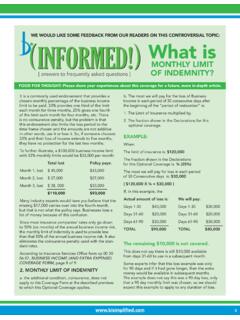
7 BUSINESS INCOME is defined in the policy to be net profit or loss, and continuing normal operating expenses including payroll. For example: sales minus cost of sales = gross margin or gross profit (and is approximately the 100% amount). Net sales: $10,000,000. Cost of sales: - 7,000000. Gross profit: $3,000,000 approximate annual BUSINESS INCOME amount As a rule of thumb, combined BI and extra expenses should be approximately: Manufacturers: 100% of their gross profit Wholesalers: 50% of their gross margin Retailers: 30% of their gross margin Service: 15% of their revenues Do not use this to determine insurance limits, but this will help prioritize your accounts so you are able to spend time on those needing the most attention.
8 Ordinary Payroll causes a lot of problems for everybody. Businesses think it is direct labor, cash labor, warehouse, or temporary help, so they exclude this coverage from their policy. However, it is defined in the policy to be everybody below the department manager level. 3. When this is explained to the insured, their usual comment is that they cannot afford to lose those people and want them included. At the same time, if they do lay off their employees after a disaster, their unemployment tax rate increases, they have less qualified people in the job pool when they recover, and they have lost their reputation in the community. After working with several companies following Hurricane Katrina, the BUSINESS owners discovered that after they had rebuilt their facilities and contacted their employees to come back to work, very few of the employees returned because they had found other jobs.
9 Consequently, these businesses folded because they had no experienced employees to produce their product. Law and Order: Remember to endorse "building ordinance" and increased cost of construction because while waiting for the property to be repaired, you could be losing a significant amount of sales. Common Areas: If there is no physical damage to the premises, there is no BUSINESS INCOME coverage. There have been several high rise office buildings damaged by fire, hurricanes, tornadoes, etc., but because a specific suite was not damaged, their claim was denied even though there was no access to it. The ISO policy includes common areas as part of the premises definition, but many policies currently in the market do not.
10 It should be part of the premises description so that a tenant's premises include all internal access routes (hallways, stairs, elevators, etc.). Deductible: Most BUSINESS INCOME policies have a twenty-four to seventy-two hour deductible for lost INCOME with no deductible for extra expenses. Some policies define it to be normal BUSINESS hours which means a company working nine to five with a seventy-two hour deductible would subtract nine days from their claim. Extra Expenses: Do not confuse expediting expenses with extra expenses even though some policies mistakenly call expediting expenses extra expenses . The difference is that extra expenses pays ALL the expenses above normal operating expenses incurred to recover from a disaster.