Transcription of Cardiorespiratory Endurance - human-kinetics
1 152 Fitness for Lifewww8 Cardiorespiratory EnduranceIn This ChapterLESSON Endurance FactsSELF-ASSESSMENTStep Test and One-Mile Run TestLESSON Cardiorespiratory EnduranceTAKING CHARGESelf-ConfidenceSELF-MANAGEMENTS kills for Building Self-ConfidenceTAKING ACTIONT arget Heart Rate WorkoutsStudent Web Endurance 153 Lesson Endurance FactsLesson ObjectivesAfter reading this lesson, you should be able to1. describe the health and wellness benefits of Cardiorespiratory Endurance ;2. explain how physical activity benefits the cardiovascular, respiratory, and muscle systems;3. describe some methods for assessing your Cardiorespiratory Endurance ; and4. determine how much Cardiorespiratory Endurance is Vocabularyaerobic capacity, artery, Cardiorespiratory Endurance , cardiovascular system, cholesterol, fibrin, graded exercise test, high-density lipoprotein (HDL), lipoprotein, low-density lipoprotein (LDL), maximal oxygen uptake, respiratory system, veinwww1Do you have good Cardiorespiratory Endurance ?
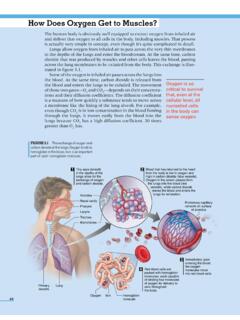
2 Do you do enough regular vigorous physical activ-ity to build good Cardiorespiratory Endurance ? Of the 11 parts of fitness, Cardiorespiratory Endurance is the most important because it gives you many health and wellness benefits, including a chance for a longer life. In addition, the activity that you do to improve your Cardiorespiratory Endurance helps you look your best. As shown in figure , Cardiorespiratory Endurance requires fitness of your heart, lungs, blood, blood vessels, and muscles. In this lesson, you ll learn how proper physical activity improves your Cardiorespiratory Endurance . You ll also learn how to assess your Cardiorespiratory Endurance is the ability to exercise your entire body for a long time without stopping. It requires a strong heart, healthy lungs, and clear blood vessels to supply your large muscles with oxygen. Examples of activities that require good Cardiorespiratory Endurance are distance running, swimming, and cross-country skiing.
3 Cardiorespiratory Endurance is sometimes referred to by other names, including cardiovascular fitness, cardiovascular Endurance , and Cardiorespiratory fitness. The term aerobic capacity is also used to describe good Cardiorespiratory function, but it is not exactly the same as Cardiorespiratory Endurance (see this chapter s Science in Action feature).This book uses the term Cardiorespiratory endur-ance. The first word in the term is cardiorespira-tory because two vital systems are involved. Your Arteries(carryingoxygenatedblood)Veins(c arryingdeoxygenatedblood)Muscle cellsLungsHeartE5266/Corbin/Fig. Cardiorespiratory Endurance requires fitness of many parts of the body, including heart, lungs, muscles, and blood system is made up of your heart, blood vessels, and blood. Your respiratory system is made up of your lungs and the air passages that 154 Fitness for Lifebring air, including oxygen, to your lungs from outside of your body.
4 In your lungs, oxygen enters your blood, and carbon dioxide is eliminated. Your cardiovascular and respiratory systems work together to bring your muscle cells and other body cells the materials they need and to rid the cells of waste. Together, the two systems help you function both effectively (with the most benefits possible) and efficiently (with the least effort).The second word in the term Cardiorespiratory Endurance refers to the ability to sustain effort. Together, then, these two words cardiorespira-tory and Endurance refer to the ability to sustain effort, which hinges on fitness of the cardiovascular (cardio) and respiratory of Physical Activity and Cardiorespiratory EnduranceDoing regular physical activity can help you look better by controlling your weight, building your muscles, and helping you develop good posture. Regular physical activity also produces changes in your body s organs, such as making your heart muscle stronger and your blood vessels healthier.
5 These changes improve your Cardiorespiratory Endurance and wellness and reduce your risk of hypokinetic diseases, especially heart disease and activity provides benefits for both your cardiovascular and respiratory systems. In this lesson, you ll learn how each part of these systems benefits and how all the parts work together to promote optimal functioning and good FACTIn the early 1900s, medical doctors referred to an enlarged heart as the ath-lete s heart because athletes hearts tend to be large, and enlarged hearts were associated with disease. By midcentury, research showed that the large heart muscle of a trained athlete was a sign of health, not your heart is a muscle, it benefits from exer-cise and activities, such as jogging, swimming, and long-distance hiking. Your heart acts as a pump to deliver blood to cells throughout your body. When you do vigorous physical activity, your muscle cells need more oxygen and produce more waste prod-ucts.
6 Therefore, your heart must pump more blood to supply the additional oxygen and remove the additional waste. If your heart is unable to pump enough blood, your muscles will be less able to contract and will fatigue more heart s capacity to pump blood is crucial when you re doing physical activity, especially for an extended length of time. Your heart has two ways to get more blood to your muscles by beating faster and by sending more blood with each beat (this is called stroke volume).Your resting heart rate is determined by counting the number of heartbeats per minute when you re relatively inactive. A person who does regular physi-cal activity might have a resting heart rate of 55 to 60 beats per minute, whereas a person who does not exercise regularly might have a resting heart rate of 70 or more beats per minute. As a result, a very fit person s heart beats approximately mil-lion fewer times each year than that of the average person.
7 As you can see in figure , a fit person s heart works more efficiently by pumping more blood with fewer active personLess active personE5266/Corbin/fig The heart muscle of a fit, active person pumps more blood per heartbeat than that of a less active Endurance 155 LungsWhen you inhale, air enters the lungs, causing them to expand. In the lungs, oxygen is transferred from the air to the blood for transport to the tissues of the body. When you exhale, air leaves the lungs. The diaphragm (a band of muscular tissue located at the base of your lungs) and abdominal muscles (which help move the diaphragm) work to allow you to breathe in and out (figure ). Fit people can take in more air with each breath than unfit people because they have more efficient respiratory muscles. As shown in figure , a fit person gets more air in the lungs with each breath and therefore can transport the same amount of air to the lungs in fewer breaths.
8 Healthy lungs also have the capac-ity to easily transfer oxygen to the blood. Together healthy lungs and fit respiratory muscles contribute to good Cardiorespiratory your body needs a certain amount of fat, excessive amounts trigger formation of fatty deposits along your artery walls. Cholesterol a waxy, fat-like substance found in meat, dairy products, and egg yolk can be dangerous because high levels can build up in your body without your noticing average lung holds 3 to 5 liters of individualstake shallow breathsand thus need morebreaths to getsufficient individuals take bigger breaths, thusrequiring fewer breathsto get the same amountof oxygen. Cholesterol is carried through your bloodstream by particles called lipoproteins. One kind, low-density lipoprotein (LDL), is often referred to as bad cholesterol because it carries cholesterol that is more likely to stay in your body and contribute to atherosclerosis.
9 An LDL count below 100 is considered optimal for good health. Another kind, high-density lipoprotein (HDL), is often referred to as good cholesterol because it carries excess cholesterol out of your bloodstream and into your liver for elimination from your body. Therefore, HDLs appear to help prevent atherosclerosis. An HDL count above 60 is considered optimal for good addition to being free of fatty deposits, healthy arteries are free from inflammation, which contrib-utes to arterial clogging. Blood tests can pick up markers of physical activity helps you improve your health and resist disease by reducing your LDL (bad cholesterol) and increasing your HDL (good cholesterol). It also helps reduce inflammation in your arteries and can help prevent the formation of blood clots by reducing the amount of fibrin in your blood. Fibrin is a substance involved in making your blood clot, and high amounts of fibrin can contribute to the development of (a) The lungs and diaphragm during inhalation and exhalation; (b) fit people can breathe more efficiently than unfit enters the lungs when yourdiaphragm and other respiratorymuscles contract and createan area of low Fitness for LifeArteriesEach artery carries blood from your heart to another part of your body.
10 The beating of your heart forces blood through your arteries. Therefore, a strong heart and healthy lungs are not very helpful if your arteries are not clear and open. As you now know, fatty deposits on the inner walls of an artery lead to atherosclerosis. An extreme case of atherosclerosis can totally block the blood flow in an artery. The hardened deposits can also allow the formation of blood clots, severely blocking your blood flow. In either case, your heart muscle does not get enough oxygen, and a heart attack physical activity also provides other cardiovascular benefits. Scientists have found that people who exercise regularly develop more branch-ing of the arteries in the heart. Figure shows that the heart muscle has its own arteries (coronary arteries), which supply it with blood and oxygen. People who exercise regularly develop extra coronary arteries. The importance of this richer network of blood vessels can be shown in two examples.