Transcription of CHAPTER ONE: INTRODUCTION - National Park Service
1 CHAPTER ONE: INTRODUCTIONC ongress established Biscayne National park (the park ) in Dade County, Florida, in 1968 topreserve and protect the tropical setting, vegetation, and animal life of Biscayne Bay and theupper Florida Keys. In addition to its natural resources, the park possesses a vast array ofcultural resources: prehistoric sites that provide evidence of aboriginal settlement of theBiscayne Bay region, historic shipwrecks dating from the Spanish exploration of the Americasinto the twentieth century, archeological ruins related to nineteenth and early twentieth centuryhomesteading and pioneer settlements, and the buildings and structures from a private resortcomplex associated with the development of the Miami area as a vacation destination during thefirst half of the twentieth OF BISCAYNE National PARKB iscayne National park comprises approximately 180.
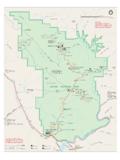
2 000 acres in Dade County, Florida, justsouth of Miami. The park is about 22 miles long, with its northern boundary near Key Biscayneand its southern boundary near Key Largo. The red mangrove forest of the western shore ofBiscayne Bay delineates the western boundary of the park , while the eastern boundary followsthe 60-foot-depth contour, for an approximate width of 14 miles. Biscayne is primarily a marinepark, with 95 percent of its area submerged within either the shallow Biscayne Bay or the moreturbulent waters of the Hawk Channel and the Florida Straits. The park s land area includes4,825 acres of largely undeveloped mangrove shoreline and 4,250 acres scattered across forty-two keys.
3 The only overland access to the park is at the Convoy Point Visitor Center viaSouthwest 328th Street (North Canal Drive).Congress established Biscayne National Monument in 1968 in order to preserve and protectfor the education, inspiration, recreation, and enjoyment of present and future generations a rarecombination of terrestrial, marine, and amphibious life in a tropical setting of great naturalbeauty. The park was expanded in 1974 and again in 1980, at which time it was redesignatedBiscayne National 1U. S. Department of the Interior, National park Service , Resource Management Plan for Biscayne NationalPark (draft), 1991, Biscayne National park : Historic Resource StudyFigure 1.
4 Location of Biscayne National ParkIntroduction 3 SCOPE AND PURPOSE OF HISTORIC RESOURCE STUDYThe Historic Resource Study (HRS) identifies the various historic resources within BiscayneNational park , establishes and documents the historic contexts associated with the park scultural resources, and evaluates the extent to which existing resources represent those provides a thematic framework for the park s cultural resources, outlining historical andanthropological themes that can be more fully developed in future studies and reports. Thecompleted HRS will serve as a tool for future site planning, resource management, and thecontinuing development of interpretive programs at the park .
5 It will complement other culturalresource studies being prepared for the park , such as the Cultural Resource Management Plan,the Archeological Overview and Assessment, and other, more specialized archeological,historical, and ethnographic HRS provides an overview of the prehistory and history of the Biscayne Bay area inChapter Two, Background History, This CHAPTER outlines the geologic and human history ofthe Florida Keys, including the occupation of South Florida by Native American groups andearly settlement of the Biscayne Bay area by American citizens. The CHAPTER refers to all knownand potential cultural resources, primarily archeological sites and structural ruins, within thePark, but it does not attempt to evaluate the significance of these third CHAPTER , Recreational Development of Miami and Biscayne Bay, 1896-1945, focuses on the park s historic architectural resources.
6 The CHAPTER outlines the evolution of theMiami area into a resort community and examines the development of a private resort on BocaChita Key. It also identifies and evaluates, using National Register criteria, the extant historicstructures within the park , all of which are located on Boca Chita Key, and how well theyrepresent the historic context associated with recreational development of the Biscayne historic buildings survive in the park . The subtropical climate, hurricanes, and theaccidental and purposeful actions of humans have all contributed to the destruction of man-madestructures on the keys.
7 The historic resources of Biscayne National park include a complex ofstone and concrete structures built on Boca Chita Key between 1937 and 1940 by MarkHoneywell, founder of Honeywell Industries, as a private resort. The only other historicstructure within the boundary of the park is the Fowey Rocks Lighthouse, which is owned bythe United States Coast Guard and therefore has not been evaluated in this study. A briefdescription of the lighthouse has been included as appendix OF IDENTIFICATION AND EVALUATION METHODSS urvey MethodologyGoals of the historic resource survey of the park are to 1) update the List of ClassifiedStructures (LCS) database for the park for use by management; 2) prepare a Historic ResourceStudy for the park ; 3) complete National Register documentation; and 4) assemble acomprehensive survey of structures in the park built before 1950 and considered eligible for the4 Biscayne National park : Historic Resource StudyNational Register.
8 This information will be used in complying with Sections 106 and 110 of theNational Historic Preservation Act of Cullison examined records at the park and conducted a field survey to determine thepresent condition of the structures in August 1995. Further research in both primary andsecondary materials was conducted at the Southeast Regional Office of the National ParkService, the University of Miami, the Tebeau History Museum and Research Center of theHistorical Association of Southern Florida, and other survey of cultural resources was limited to historic structures owned by the NationalPark Service . As a result, structures built after 1950 and the Fowey Rocks Lighthouse, which isowned by the Coast Guard, were excluded from the survey.
9 Archeological sites, including thoselisted on the National Register within the Offshore Reefs Archeological District, were alsoexcluded from the of Historic ContextsThis study evaluates the historic integrity and assesses the eligibility of the park s historicarchitectural resources within a single historic context, Recreational Development of Miami andBiscayne Bay, 1896-1945. This context is related to several historic themes identified by theNational park Service in its revised thematic framework. The NPS theme Peopling Places isrepresented in the context through the examination of population movement south down theFlorida peninsula around the turn of the century and the settlement of the Biscayne Bay discussion of the wealthy society that migrated every winter to Miami Beach and the FloridaKeys relates to the theme Expressing Cultural Values.
10 The construction of weekend retreatson the keys served to Transform the Environment, another NPS theme explored in the context Recreational Development of Miami and Biscayne Bay, 1896-1945 alsorelates to the statewide historic contexts developed by the Florida State Historic PreservationOffice (SHPO). These contexts divide Florida s history after acquisition by the United Stateschronologically; therefore, the Florida contexts from the turn of the century through the GreatDepression and World War II are directly related to the context contained in the 2. Aerial view of Boca Chita KeyIntroduction 5 HISTORICAL BASE MAP DISCUSSION The historical base map (appendix E) depicts the existing historic resources on Boca Chita Keythat are documented in this study.