Transcription of CHCCCS007 Develop and implement service programs …
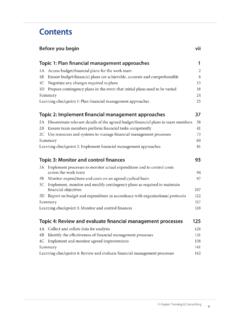
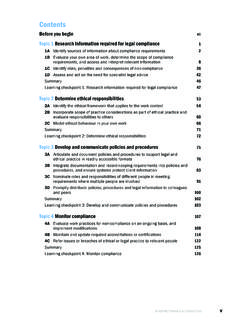
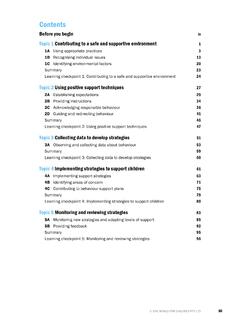
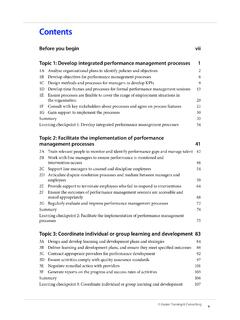
1 ASPIRE TRAINING & CONSULTING vContentsBefore you begin viiTopic 1 Engage consumers in the analysis of service needs 11A Develop a plan for consumer participation 21B Investigate the needs of individuals 61C Recognise processes and communications 111D Interact and consult with people 141E Consult and collaborate with other services and networks 171F Evaluate the broader organisation context 22 Summary 27 Learning checkpoint 1: Engage consumers in the analysis of service needs 28 Topic 2 Develop programs 312A Facilitate input into program development 322B Engage people accessing programs 352C Incorporate consideration of individual differences 382D Integrate internal and external services 412E Determine resource requirements 442F Develop supporting systems and procedures 492G Develop and integrate service evaluation methods 522H Document the program identifying priorities, time lines and responsibilities 55 Summary 58 Learning checkpoint 2: Develop programs 59 Topic 3 implement and monitor programs 633A Communicate roles and responsibilities to relevant stakeholders 643B Facilitate provision of training to support implementation 673C Monitor service delivery 723D Use feedback and interactions in monitoring 763E Identify and address problems 793F Maintain relevant program and service delivery documentation 82 Summary 84 Learning checkpoint 3: implement and monitor programs 85 Topic 4 Evaluate programs 874A Assess the capacity of programs to meet objectives 884B Seek and evaluate feedback 924C Modify programs to meet changing requirements 94 Summary 97 Learning checkpoint 4.
2 Evaluate programs 98 ASPIRE TRAINING & CONSULTING 7 TopiC 1 ENGAGE CONSUMERS IN THE ANALySIS OF service NEEDSXX people receive a service that does not pose a risk of injury or harm to them or their property and their home is safe if services are to be provided thereXXyou consider the person s condition and mobility when assessing their suitability for a needsEach person using a service brings with them a range of individual needs. The following outlines some of the major issues to be mindful of when making assessments for service planning and gives examples of the needs that may be person with a vision impairment has requested information about your service but all the available information is in written are working with a young woman who is homeless. She has brought her grandmother in who she says has agreed for her to stay in her flat. The grandmother does not speak older man has requested that a male worker provide his personal care assistance for father has asked about his children being able to continue their cultural practices while in foster care; they require Halal meals and time to pray each person is able to complete activities of daily living independently without support providing she is allowed additional time.
3 She explains that she prefers to do things herself even if it takes a bit person would like help to access local services, such as the GP, greengrocers and library, as she wishes to remain in a familiar community and older woman you are visiting states she never leaves her flat because she is frightened of all the gangs in the ASPIRE TRAINING & CONSULTINGCHCCCS007 Develop AND implement service PROGRAMSS trategies to remove barriersPhysical and mental disabilitiesXXIntake and assessment procedures that focus on identifying individual needsXXCommunication aids and toolsXXAccessible spacesXXClear signageLanguage and learning barriersXXProvision of interpretersXXUse of plain EnglishFear and mistrustXXProvision of clear informationXXWelcoming environmentsXXOpen and inclusive planningXXGood communicationXXIndependent advocatesTransportXXPublic transport timetablesXXSupported transportCultural XXStaff cultural awareness trainingXXInclusive use of language on signsXXCulturally sensitive display materialsXXWelcoming reception spaceEnvironmentalXXAdequate access to servicesXXGender awareness training for
4 StaffXXOrganisational involvement in local issuesXXReferrals to other support organisationsExampleAddress barriers to participationLiam comes to a community health centre focus group organised to gain feedback from the local community about its group of 10 participants is diverse in terms of age, cultures and gender; however, Liam, who is visually impaired, is the only person there with an identifiable group coordinator has not been told about Liam s disability. This is problematic, as the session depends entirely on people reading information from handouts and contributing to written comments on butcher s coordinator approaches Liam and apologises. He tells her not to worry as it happens all the time. She asks him about how these things have been solved for him in the past and what he would like to do. He tells her that if the others read what is being written down out loud, he should be able to keep picks things up very quickly and proves to be one of the main contributors, identifying ways services can be improved.
5 His input relates mainly to ways the service can attract young coordinator reports on the group at the next team planning session and suggests that requests to participate in focus groups in the future include a question about special needs. ASPIRE TRAINING & CONSULTING 15 TopiC 1 ENGAGE CONSUMERS IN THE ANALySIS OF service NEEDSTwo-way communicationGood communication is essential when interacting with service users. Spend time listening to and getting to know your service users. This is invaluable in terms of being attuned to how the service is meeting needs. Regular informal feedback, such as observations and chats, and making sure staff are accessible and available, helps collect ongoing feedback from people who use the organisation s services. If people feel they know the staff and the staff value their feedback then they are more likely to pass on constructive changing needs Regular, meaningful consumer feedback is one way to ensure the services provided by the organisation or agency stay focused on the people who use the service .
6 There are many methods to obtain service -user feedback to monitor changing needs, as in the example boxesSuggestion boxes can be placed in community services facilities or other services to encourage people to provide feedback. Suggestion boxes may be used by service users and others who access the service , such as family members and friends. Suggestion boxes provide an opportunity for anonymity if this is preferred, which may be the case when a person has complaints or concerns about the quality of processesA complaints process must be established in any organisation delivering community services. The standards that underpin community services organisations stipulate that service users, family members, advocates and carers have the right to complain without losing access to the service or having it reduced. All organisations must have a complaints policy and process that service users can easily follow. They must make sure that users understand what they need to do if they wish to formsMany organisations have feedback forms available for people to record positive and negative comments about the organisation or agency providing a service .
7 Feedback forms can be completed anonymously. However, it is often a good idea to encourage the person to sign their feedback forms. If the organisation knows who is making the comment, they can arrange a meeting with the person and resolve any issues that have can be conducted annually to obtain feedback about specific aspects of service delivery. Surveying a range of stakeholders, including other service providers that your agency works with, can be an effective mechanism to obtain feedback about how well the service is meeting peoples needs. For example, an agency may receive feedback from another agency stating that their referral processes are cumbersome and hard to understand and that this is making it difficult for older people to access the service . ASPIRE TRAINING & CONSULTING 19 TopiC 1 ENGAGE CONSUMERS IN THE ANALySIS OF service NEEDSL anguageInterpreting, translation and language support is often provided through multicultural organisations as well as neighbourhood houses and individual cultural support and Torres Strait Islander people have support networks in every state providing health and cultural support and are a variety of other multicultural and culture-specific groups available, sometimes connected with neighbourhood houses or adult services are usually focused on youth and older people.
8 They are often linked to local government and are involved in advocacy and service often have neighbourhood houses and health centres which, along with local government, provide support to people living in particular are a growing number of organisations working in communities to combat environmental problems and encourage sustainability and better use of natural resources, including service partnershipsManagers and workers in community services organisations need to liaise and work with a range of organisations offering similar or complementary services. Relationships between agencies can range from networking to collaborating to developing partnerships. In recent years both government and philanthropic funders have encouraged organisations to partner together when applying for funding most important aspect of service partnerships is the opportunity to enhance the service you offer people in can be informal arrangements but will usually require memorandums of understanding or contracts if shared resources are ASPIRE TRAINING & CONSULTINGCHCCCS007 Develop AND implement service PROGRAMSL egislative requirementsAlways keep in mind the legislative requirements that all services must adhere to.
9 There are laws and statutory requirements to protect the service provider and the client, as listed legislation:XXPrivacy Act 1988 (Cth)XXDisability Services Act 1986 (Cth)XXDisability Discrimination Act 1992 (Cth)XXAge Discrimination Act 2004 (Cth)XXAged Care Act 1997 (Cth)XXAustralian Human Rights Commission Act 1986 (Cth)XXRacial Discrimination Act 1975 (Cth)XXSex Discrimination Act 1984 (Cth)Legislation relevant to community services workCommunity services workers must understand the legislation that underpins the work they do, as well as the organisation s policies and procedures. They must know which piece of legislation supports particular areas of their practice. Workers also need to know where to go to obtain further information about their responsibilities and the organisation s responsibilities under the legislation. Consider some of the legislation and obligations relevant to community services work and a worker s duty of care, as detailed legislationThe Privacy Act 1988 (Cth) and other state- and territory-based privacy legislation is significant to the community services sector because:XXprivacy and confidentiality are legislative requirementsXXpeople have the legal right to access their own medical records (each state and territory in Australia has laws and regulations regarding these records)XXyou have a duty of care to protect a person s privacy and to ensure that their documentation such as case notes or incident reports (which are legal documents) are collected and archived according to your workplace s policies and procedures, which are guided by of informationThe Freedom of Information Act 1982 (Cth) is significant to the community services sector because.
10 XXfreedom of information gives people the right to access government documentsXXwhen collecting or documenting information, workers should keep in mind that everyone has the legal right to view all that has been written about themXXworkers have a duty of care to provide clear, factual and accurate information. ASPIRE TRAINING & CONSULTING 31 Topic 2In this topic you will learn how to:2A Facilitate input into program development2B Engage people accessing programs2C Incorporate consideration of individual differences2D Integrate internal and external services2e Determine resource requirements2f Develop supporting systems and procedures2g Develop and integrate service evaluation methods2H Document the program identifying priorities, time lines and responsibilitiesDevelop programsCommunity services programs have a better chance of being successful if they are well planned. There is a large body of knowledge available to assist workers to plan effectively when engaging stakeholders, planning resource requirements and applying evaluation methods to organisations usually have a commitment to maintaining key stakeholder engagement and integrating evaluation into their service delivery, they often fail to do the planning work that is needed to make these things a community services worker you are required to use a planned approach to delivering service ASPIRE TRAINING & CONSULTINGCHCCCS007 Develop AND implement service PROGRAMS2A Facilitate input into programdevelopment Program development involves assessing needs and developing service strategies, as well as implementing.