Transcription of CHCECE001 Develop cultural competence, Release 2
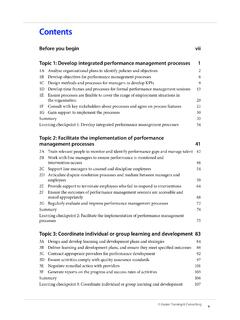
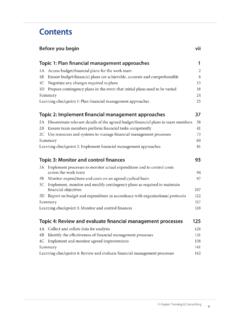
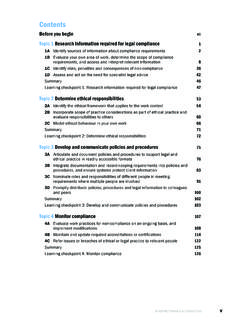
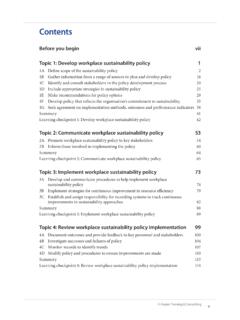
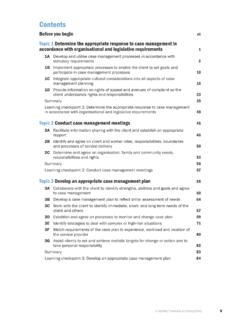
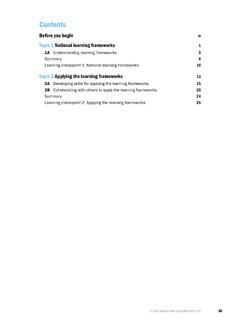
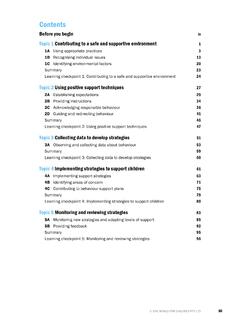
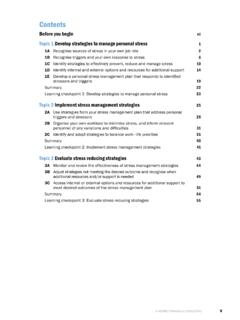
1 ONE WORLD FOR CHILDREN PTY LTD iiiContentsBefore you begin vTopic 1 Reflecting on your own cultural identity and biases 11A Reflect on your cultural heritage 31B Understand cultural competence 7 Summary 12 Learning checkpoint 1: Reflecting on your own cultural identity 13 Topic 2 Identifying and developing cultural competency 152A Developing cultural competency 172B Analysing the service 21 Summary 26 Learning checkpoint 2: Identifying and developing cultural competency 27 Topic 3 Researching Aboriginal and/or Torres Strait Islander communities 293A Indigenous Australian relationships 313B Acknowledging impacts 34 Summary 35 Learning checkpoint 3: Researching Aboriginal and/or Torres Strait Islander communities 36 Topic 4 Supporting individual cultural identities 394A Identifying cultural groups 414B Demonstrating cultural sensitivity 444C Extending cultural knowledge 49 Summary 51 Learning checkpoint 4: Supporting individual cultural identities 52 Topic 5 Supporting children s cross- cultural understanding and relationships 555A Planning inclusive experiences 575B Supporting cross- cultural relationships 60 Summary 65 Learning checkpoint 5: Supporting children s cross- cultural understanding and relationships 66 Topic 6 Implementing inclusive learning experiences 676A Providing diverse experiences 696B Implementing cultural events and celebrations 72 Summary 75 Learning checkpoint 6.
2 Implementing inclusive learning experiences 76viCHCECE001 Develop cultural COMPETENCED efinitionsFamiliarise yourself with the following key terms used in this learner guide. Definitions are fr om unless otherwise spe or Torres Strait Islander person: someone who is of Aboriginal and/or Torres Strait Islander descent, who identifies as an Aboriginal or Torres Strait Islander person and who is accepted as such by the Indigenous community in which they live (www. ).Bias: the inclination or prejudice for or against one per son or group, especially in a way considered heritage: something that is passed down from preceding generations; the legacy of physical artefacts ( cultural property) and intangible attributes of a group or society that are inherited from past generations, maintained in the present and bestowed for the be nefit of future identity: the identity of a group or culture, or of an individual as far as one is influenced by one s belonging to a group or : the ideas, customs and social behaviour of a particular people or : the unjust or prejudicial treatment of different categories of people, especially on the grounds of race, age or : a range of different : the q uality of being fair and : the f act of being who o r what a person or thing : a preconceived opinion that is not based on reason or actual : the belief that all members of each race possess characteristics, abilities or qualities specific to that race, especially as to distin guish it as inferior or superior to another race or.
3 A widely held, but fixed and oversimplified image or idea of a particular person or : the transmission of customs or beliefs from generation to generation , or the fact of being passed on in this : principles or standards of behaviour; one s judgment of what is important in life. ONE WORLD FOR CHILDREN PTY LTD ONE WORLD FOR CHILDREN PTY LTD 3 ToPic 1 REFLECTING ON YOUR OWN cultural IDENTITY AND BIASES1A Reflect on your cultural heritageBefore you reflect on your own cultural heritage, you need to understand what the term culture means. For many, culture is about the country they are from, the language they speak and their physical features, such as or the colour of their skin. However, culture includes much more than this. It is influenced by the set of beliefs, values and traditions that have been instilled since birth through socialisation, and is influenced by family and the wider involves rituals, practices, stories, customs, beliefs and values.
4 It includes how we live our lives, what we believe in and the values we hold dear. It influences goals in life and beliefs about others, and may change slowly over time through experiences that formulate views and understandings. You may not realise your own culture until you are removed from it. This may occur when you are exposed to new experiences or new people who live in different ways to you. Examining your own culture and how it has developed will help you to understand how the culture of others has evolved, and how important beliefs and values change to form new ways of viewing the world. To become a culturally competent educator, it is important to respect and celebrate historyIf you research your own family history, you may identify many traits of your ancestors that are evident in your family s behaviours. For example, you may discover that your ancestors have lived through tragedies or triumphed against the odds.
5 You may discover that your own attitudes are linked with this to this is your own set of life experiences. Who you are today and the values and beliefs you hold have been shaped by these events, your family and your are some examples of how an individual s family background and environment influence their current values and 1 Phoebe was raised in a family that ran its own business. Phoebe and her siblings all worked in the business, where they learnt early about having a strong work ethic. Phoebe was always on time for her shifts and concentrated on her tasks, completing each one before beginning another. Now, as a mother, she promotes the same values and work ethics with her children, ensuring they are punctual and always focused on the job at ONE WORLD FOR CHILDREN PTY LTDCHCECE001 Develop cultural COMPETENCEE xampleAvoiding biased communicationsSomeone is telling a story. The person telling the story labels people by personal information, such as their gender, skin colour, age and health status.
6 All of these factors are irrelevant to the issue being discussed: Two ladies from the morning shift accused the cleaner of not doing his job. Marilyn, the black educator, and Margaret, the cook, accused Mr Engerrand of not cleaning properly. Mr Engerrand is 42 years old and an epileptic, and he says that he has had no complaints before. The same information can be told in an unbiased way: Two staff from the morning shift accused the cleaner of not doing his job. Marilyn, an educator, and Margaret, the cook, accused Mr Engerrand of not cleaning properly. Mr Engerrand says that he has had no complaints before. Frameworks and legislationThe National Quality Framework (NQF), including the National Quality Standard (NQS), Belonging, being and becoming: The early years learning framework (EYLF), My time, our place: Framework for school age care in Australia (MTOP), and your service policies and procedures all support you to work toward developing cultural competence.
7 Your pedagogy (the way you work with children) should demonstrate acceptance of others. This is supported by the principles and practices in the frameworks that emphasise respect for diversity and the need to Develop cultural competence. Because they affect your daily work, these NQF components are available to you in every education and care organisation. You can also find them on the Australian Children s Education & Care Quality Authority (ACECQA) website: addition, anti-discrimination legislation should be represented in your organisational policies and procedures. This legislation includes the following Commonwealth Acts:XXAge Discrimination Act 2004 XXDisability Discrimination Act 1992 XXRacial Discrimination Act 1975 XXSex Discrimination Act 1984 Practice task the following table and rate yourself out of 5 for each skill, where 0 meansyou have not obtained the skill and 5 means you are very 1 2 3 4 5I reflect on my own skills and knowledge 1 2 3 4 5I like to learn about different 1 2 3 4 5I interact with a diverse group of 1 2 3 4 5I attend professional development opportunities aimed at developing my cultural 1 2 3 4 5I model interest and respect for all people.
8 ONE WORLD FOR CHILDREN PTY LTD 13 ToPic 1 REFLECTING ON YOUR OWN cultural IDENTITY AND BIASESL earning checkpoint 1 Reflecting on your own cultural identityPart down at least three significant events in your family background or historythat have influenced your values, beliefs and how at least three aspects of your environment have influenced yourcultural impact might your own background have on interactions and relationshipswith people from other cultures? ONE WORLD FOR CHILDREN PTY LTD 15 Topic 2In this topic you will learn about:2A Developing cultural competency2B Analysing the serviceIdentifying and developing cultural competencyWhen you are sensitive to children s individual differences and aware of the impact their families and communities have on them, you can create an environment that supports children s identities, wellbeing and engagement in child has the right to their own cultural identity, and they should be supported to Develop pride in this.
9 This is a starting point for developing cultural competency. Respectful relationships and environments that support diversity and inclusiveness enable children to gain skills and knowledge that help them to navigate their world in a fair and just ONE WORLD FOR CHILDREN PTY LTDCHCECE001 Develop cultural COMPETENCEThe following table maps this topic to the National Quality Standard and both national learning frameworks. national Quality StandardQuality Area 1: Educational program and practiceQuality Area 2: Children s health and safetyQuality Area 3: Physical environmentQuality Area 4: Staffing arrangements Quality Area 5: Relationships with children Quality Area 6: Collaborative partnerships with families and communitiesQuality Area 7: Governance and leadershipearly years Learning frameworkMy Time, our PlacePrinciples Secure, respectful and reciprocal relationships PartnershipsHigh expectations and equity Respect for diversity Ongoing learning and reflective practicePracticeHolistic approachesHolistic approachesResponsiveness to childrenCollaboration with childrenLearning through playLearning through playIntentional teachingIntentionalityLearning environmentsEnvironments cultural competenceCultural competenceContinuity of learning and transitionsContinuity and transitionsAssessment for learningEvaluation for wellbeing and learningoutcomes Children have a strong sense of identity Children are connected to and contribute to their worldChildren have a strong sense of wellbeingChildren are confident and involved learnersChildren are effective communicators ONE WORLD FOR CHILDREN PTY LTD 31 ToPic 3 RESEARCHING ABORIGINAL AND/OR TORRES STRAIT ISLANDER COMMUNITIES3A Indigenous AustralianrelationshipsArchaeological evidence
10 Suggests that Aboriginal people have lived in Australia for over 60,000 years. Aboriginal culture is one of the oldest cultures in the world. Aboriginal people were traditionally hunter-gathers who lived off the land and had a strong spiritual connection to it. Before the white colonisation of Australia, Aboriginal families lived together in a communal environment with roles and responsibilities shared among the group; for example, men hunted, women were responsible for cooking and child-rearing, and the Elders shared their and Torres Strait Islander peoples inhabited most areas of Australia, speaking more than two hundred languages, and following distinct lifestyles and cultural traditions. Since colonisation, Aboriginal people have been denied their right to live according to their customs and are still experiencing lower health and educational outcomes than non-Indigenous and policiesThe word colonisation means that a new group of people have come and settled an area of land and taken control of the territory or country.