Transcription of CHCMHS004 Work collaboratively with the care network and ...
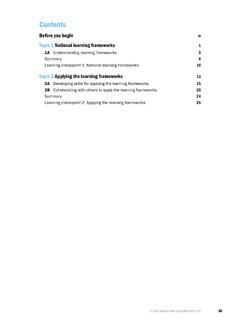
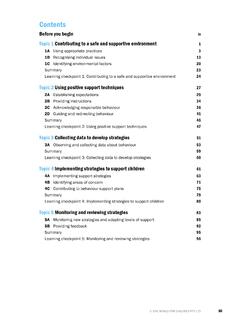
1 ASPIRE TRAINING & CONSULTING vContentsBefore you begin viiTopic 1 Identify and build resilience and capacity in the care network 11A Identify scope and membership of care network and community 21B Clarify roles and importance of care network and determine positive impacts 201C Expand or strengthen care network and increase community participation 291D Assist the person to uphold their rights and build resilience and capacity in their network 33 Summary 46 Learning checkpoint 1: Identify and build resilience and capacity in the care network 47 Topic 2 Develop effective working relationships with other services 572A Establish networks to increase service options 582B Review local services for contribution to the recovery process 622C Clarify individual, team and multidisciplinary roles 672D Establish, negotiate and document partnerships 712E Develop working relationships with local service providers 772F Identify role limits and make referrals to other services 81 Summary 85 Learning checkpoint 2: Develop effective working relationships with other services 86 Topic 3 Review and monitor services provided by other organisations and programs 913A Collaborate to review referrals and services offered 923B Identify gaps or additional services needed 953C Negotiate and advocate to ensure programs meet individuals recovery goals 983D Identify and address difficulties experienced with the services 101 Summary 106 Learning checkpoint 3.
2 Review and monitor services provided by other organisations and programs 1072 ASPIRE TRAINING & CONSULTINGCHCMHS004 WORK collaboratively WITH THE CARE network AND OTHER SERVICES1A Identify scope and membershipof care network and communityMental health workers have a responsibility to develop a good understanding of resources from within their own organisation and from external agencies such as community service organisations. They also have an ethical obligation to ensure that individuals understand the services and supports to be provided. This may include using problem-solving skills to facilitate understanding when there are barriers such as illness symptoms or medication side effects. Workers must also ensure they obtain informed consent from individuals before commencing support activities. By having a good understanding of the individual and the available services, a support worker can identify the scope and membership of the care network and community, and thereby empower the individual to achieve their goals and participate in their community of choice.
3 Care network and community Each individual will require a range of supports that will be met through their care network . For this reason it is important for a care support worker to identify the individual needs and goals of the person so that they can then identify the membership required to meet those needs. The worker might also ask the individual about their, skills, talents, interests and activities, and about people who are meaningful to them, in order to establish the scope of membership in their care network . The support network will have a diverse membership comprising formal and natural supports. The aim of the support network is to help the individual to live an empowered life and provide opportunities to participate fully in their community of choice. The individual s community of choice will often be influenced by their talents and interests. It is therefore important for the support worker to identify activities that the individual finds pleasurable and that they have established skills to participate of a care network may include: XXparentsXXsiblingsXXgrandparentsXXfrien dsXXplayers on a sporting teamXXmembers of a musical group or band XXGPXX care-coordinator XXpsychologist XXallied health team.
4 6 CHCMHS004 WORK collaboratively WITH THE CARE network AND OTHER SERVICESThe recovery model in practice A recovery oriented practice is widely used to support a person living with mental illness, assisting them to identify services and strategies that support empowerment and recovery. There are several key principles underpinning the recovery model in practice. The recovery model: XXfocuses on fostering hope and empowerment in people who experience mental illnessXXsuggests people can recover from mental illness and regain a sense of identity that is not defined by their mental illnessXXdoes not necessarily mean a complete absence of symptoms but an ability to deal with and not be limited by a recovery programIt is essential for you to involve the person in developing and administering their own recovery program. Not only does this involvement give them the opportunity to choose services and strategies that meet their needs, but it also reinforces the person s self-determination and goal as a mental health worker is to work in partnership with the person to develop their sense of self-empowerment and build independence, participation in the community, and the skills and confidence to determine and implement their own factors in developing an individual recovery program include:XXthe person s inputXXeducationXXindividual rightsXXmutual relationshipsXXpersonal promotion and prevention The focus of today s mental health care sector is strongly around health promotion.
5 When applied to mental health, health promotion is the process of enabling people with mental health needs to increase control over, and to improve , their overall health. Mental health promotion tends to involve a range of behavioural, social and environmental support strategies. These strategies may include increasing health literacy, increasing access and availability of mental health services, increasing community and natural support structures, and ensuring that community programs are inclusive of people with mental health needs. ASPIRE TRAINING & CONSULTING16 ASPIRE TRAINING & CONSULTINGCHCMHS004 WORK collaboratively WITH THE CARE network AND OTHER SERVICESS tandards for mental health The following table sets out the 10 standards with which mental health services (MHS) should comply. You can read the National standards for mental health services 2010 on the Australian Government Department of Health website: standards with which mental health services should comply1 Rights and responsibilitiesThe rights and responsibilities of people affected by mental health needs and/or mental illness are upheld by the mental health service (MHS)
6 And are documented, prominently displayed, applied and promoted throughout all phases of activities and environment of the MHS are safe for individuals, carers, families, visitors, staff and the and carer participationIndividuals and carers are actively involved in the development, planning, delivery and evaluation of responsivenessThe MHS delivers services that take into account the cultural and social diversity of individuals with support needs, and meets their needs and those of their carers and community throughout all phases of and preventionThe MHS works in partnership with its community to promote mental health and address prevention of mental health needs and/or mental have the right to comprehensive and integrated mental health care that meets their individual needs and achieves the best possible outcome in terms of their MHS recognises, respects, values and supports the importance of carers to the wellbeing, treatment, and recovery of people with mental , leadership and managementThe MHS is governed, led and managed effectively and efficiently to facilitate the delivery of quality and coordinated MHS collaborates with and develops partnerships within its own organisation and externally with other service providers to facilitate coordinated and integrated services for individuals and of careThe MHS incorporates recovery principles into service delivery, culture and practice providing consumers with access and referral to a range of programs that will support sustainable ASPIRE TRAINING & CONSULTINGCHCMHS004 WORK collaboratively WITH THE CARE network AND OTHER SERVICESE xampleidentify scope and membership of care network and community Ben is 44 years old and has been living with schizophrenia for nearly 25 years.
7 He lives near a community garden, which he has been visiting regularly for three years. Ben s care worker, Annie, recognised that this was ben s community of choice. Annie identified that the teacher and peers of the garden group would be of great support to Ben and helped facilitate the relationship opportunities that would allow them to become a part of Ben s care network . Ben now enjoys the social aspects of the garden, and likes meeting people from a diverse range of backgrounds and from the local community. He is also actively involved in a peer support program targeting people with mental illness. When he is well he assists the teacher. When he is feeling unwell he avoids the garden as he feels embarrassed because his thinking becomes confused and he believes people will avoid him. When he is unwell he often stays in hospital for two weeks, during which time his medication is adjusted. When he feels better he returns to the garden. Practice task 1 Read the case study, then answer the questions that studyMillie is 25 years old.
8 She was diagnosed with depression seven years ago. Initially she was hospitalised for several weeks but has not had to return. She is on daily medication. She lives independently and manages her own day-to-day activities in the house. She works 15 hours per week at a local grocery store but occasionally is too unwell to go to work. Millie has told her manager she has mental health needs. Millie explains to her support worker that her job is very important to her; she feels that it gives her a valuable role in the community and gives her a break from being identified as mentally ill. She expects the support worker to respect the fact that working is contributing to her recovery, even on the occasions when it causes her stress that can exacerbate her is a recovery oriented practice and how can Millie s support worker empowerher by applying this approach? ASPIRE TRAINING & CONSULTING 31 TopiC 1 IDENTIFy AND bUILD RESILIENCE AND CAPACITy IN THE CARE NETWORkExampleexpand or strengthen care network and increase community participation Peter has experienced mood swings for several years and knows they are more extreme than most people have.
9 He puts it down to something in his personality. Over time, he learns to conceal his more serious episodes of depression and tries to manage the highs by going for a long run or drinking excessively. Some of his friends sometimes make comments to him about his manic behaviour but he just laughs it off. Peter finds himself withdrawing from other people. His large group of friends diminishes and he gives up the activities that he is interested in because he feels out of control and unable to commit to finally realises he has a real problem when he can feel himself getting more and more out of control and it scares him. Peter sees a specialist and is diagnosed with bipolar disorder. He is surprised but also relieved. At last he knows what is going on and can get medication to help manage his extreme meets with a support worker, and at their first meeting the worker explains to Peter how it is important to have a care network . Together they map out Peter s interests and abilities and identify ways in which he can strengthen existing relationships and build new ones based around the things that he enjoys.
10 Peter identifies that he feels most alone on Mondays when his housemates are working. Together Peter and his support worker identify that there are many activities that occur on a Monday that Peter can participate. by expanding his care network and participating in his community of choice Peter is better able to manage his mood swings and live a fulfilling life. Practice task 3 Read the case study, then answer the questions that studyJohn is a support worker in a mental health unit in a large city hospital. He is now 62 and has experienced many years of mental illness, and has been in and out of hospital himself. It is only in the five years since he joined a recovery group that he has achieved some stability and balance in his life. He remembers how frightened and confused he was when he was in hospital. Although his friends and family tried to be helpful he often felt judged, under pressure to get well and ashamed of himself. They mostly did not really understand what it was like for him.