Transcription of CHCPRP001 Develop and maintain networks and collaborative ...
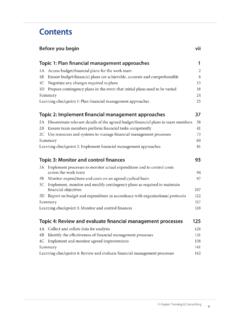
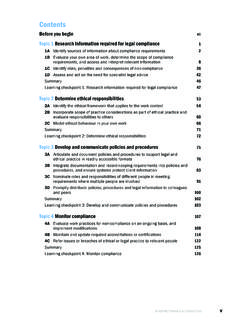
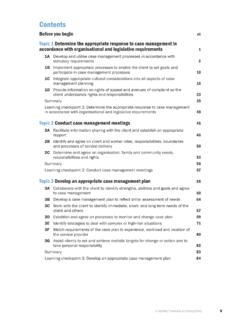
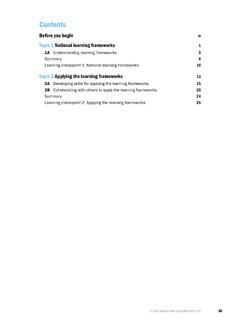
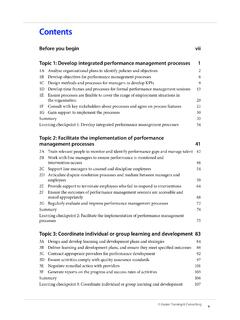
1 ASPIRE TRAINING & CONSULTING vContentsBefore you begin viiTopic 1 Identify networking and collaboration needs and opportunities 11A Evaluate the ways performance may be improved through collaboration 21B Identify and prioritise organisation and individual needs 81C Identify gaps and required action to fill gaps 10 Summary 19 Learning checkpoint 1: Identify networking and collaboration needs and opportunities 20 Topic 2 Develop collaboration strategies 232A Gather and review information about relevant services, organisations and key people 242B Pro-actively initiate relationships with other professionals and organisations 302C Share information and resources to overcome duplication in service delivery 352D maintain currency and accessibility of information 402E Define, document and negotiate collaboration 46 Summary 51 Learning checkpoint 2: Develop collaboration strategies 52 Topic 3 Work collaboratively 553A Identify opportunities that meet client, personal and organisational goals 563B Plan and implement integrated projects and service delivery 603C Liaise with staff from relevant organisations on a formal and informal basis 65 Summary 70 Learning checkpoint 3: Work collaboratively 71 Topic 4 Represent the organisation 734A Promote a positive image of the organisation 744B Communicate the organisation s issues, policies and practices 774C Implement confidentiality measures that protect the client, organisation and network 81 Summary 87 Learning checkpoint 4.
2 Represent the organisation 88 Topic 5 maintain and enhance networks and collaborative partnerships 915A maintain networks and other work relationships 925B Improve and maintain networks and collaborative partnerships 1015C Monitor benefits to worker, organisation and person group 1045D Evaluate strengths and weaknesses of collaborations and recommend actions 110 Summary 113 Learning checkpoint 5: maintain and enhance networks and collaborative partnerships 1144 ASPIRE TRAINING & CONSULTINGCHCPRP001 Develop AND maintain networks AND collaborative PARTNERSHIPSR easons for evaluating performanceTo identify where networking and collaboration can improve performance, evaluate how each support person s service delivery is functioning. Regular review procedures will help identify performance gaps, but your own self-reflection and evaluation is vital. Service needs may change as each person s needs, goals and preferences change resulting in adaptions and adjustments to service delivery.
3 Additionally, regulatory changes, workplace and operational changes, and changing job roles also affect performance. Regular self-assessment of your work performance is crucial to keep improving and expanding your skills. Here are some common questions that you can use to evaluate each person s service delivery performance for collaboration evaluation questions:XXHave the person s needs, goals or preferences changed?XXHave any regulations, legislation or best practice standards changed?XXCan the person s goals be met more efficiently?XXDo I need more information to meet the person s needs?XXCan collaborating with others create greater opportunities for improvements to services?XXHow can I create greater access and equity for the person?XXHow can I use what I ve learnt to improve my organisation s service delivery?XXHow can I provide more flexible services?Principles of networking and collaborationTo work effectively in a collaborative manner, you need to understand the fundamental principles involved.
4 Working collaboratively ensures the best service delivery is based on mutual respect, good communication and a shared understanding of common are some of the basic principles that underpin networking and collaboration as tools in providing support of networking and collaborationAll people are valued members of the community and each person has something of value to contribute; participation is encouraged and collaborators should clearly understand their role, their responsibilities and the goal of the together to reach a common goal involves teamwork, good communication and , suggestions and reviews are encouraged and acted upon; information is shared (where appropriate) and decisions are made all team members and collaborators should work together, individual ideas, opinions and needs are respected and aim is to reach a clearly-defined goal in the most effective way possible; this commitment underlies all collaborative activities.
5 ASPIRE TRAINING & CONSULTING 9 TopiC 1 IDENTIFy NETWORkING AND COLLABORATION NEEDS AND OPPORTUNITIES identify and prioritise needsXXOnce you have identified the areas of professional development that will improve your performance and selected appropriate networks , prioritise these opportunities by date and relevance. Choose opportunities that are relevant, useful, timely and within the service s resource capacity. Exampleidentify and prioritise organisation and individual needs Jacob is Matt s support worker. Matt is starting a TTW (transition to work) programme on Monday and is ringing Jacob for the third time today. Matt experiences anxiety in new and unfamiliar answers his phone at his desk, which is piled full of papers, files and forms. Hi Matt! Good to speak to you again! Jacob smiles as he reaches for Matt s case file. Oh, Jacob! I m sorry, I m sorry. I know I shouldn t call.
6 But I ve forgotten. How will I get home every day? Jacob smiles. It s okay, Matt. Let s go through it again. It s all organised. I ve asked the local care access bus to pick you up and bring you home after class every day. Matt interrupts. But can t you take me? I don t know them! What if they go without me? I hear you Matt. But it s okay. I know Bill, he s the driver and a really nice bloke. I ve spoken to him and he s going to make sure that you get on the bus every day. Remember that we talked about being more independent? Yeah. But I want you to take me! Can t you take me? asks Matt. You can do this, Matt. I tell you what. What about if I come with you on Monday afternoon so that you meet Bill and know exactly where to go? Really? Matt sighs. That d be great, Jacob. He pauses, But what about Tuesday? Jacob has networked with an alternative transport service to assist Matt to travel to and from his TTW programme.
7 Matt would love Jacob to transport him every day, but Jacob s organisation needs him to work with other people at these times. Jacob also knows that Matt s stated goal is to increase his independence and that all possible care has been taken to ensure his safety. Practice task needs to be balanced in order to provide service support? one element that you need to consider when prioritising the needs of theorganisation and the individual s to complete Practice task 2 ASPIRE TRAINING & CONSULTING 13 TopiC 1 IDENTIFy NETWORkING AND COLLABORATION NEEDS AND OPPORTUNITIES religious organisationsReligious organisations provide a range of community services at local, state and national levels. In many states, religious organisations are the biggest providers of services to low income and vulnerable people. Some examples of these organisations include: XXSalvation Army Care Australia Australia Care of individual networks and collaborationsNetworking and collaborations often occur between individuals.
8 Whether networking or collaborating with colleagues, people with support needs, family members, carers, health professionals or other experts, building and maintaining good relationships with individuals is a vital skill. Even when collaborating or networking with larger organisations, you are likely to interact with specific are some of the many work activities that involve networking and collaborating with work activities include: XXmeeting a person with support needs for the first time (for example, forming a collaborative partnership)XXcreating an individual support plan (for example, collaborating with the person and other stakeholders)XXmaking a referral (for example, networking and collaborating with the other service s representative)XXsupervisory meetings (for example, collaborating with your supervisor in providing improved services)XXgroup projects (for example, collaborating and networking with colleagues)XXjob sharing (for example, joint care of specific people or tasks involves collaborating with the person and the colleague)XXinductions or hand-overs (for example, collaborating with a colleague when you start or leave a job).
9 Types of virtual networks and collaborationsIn today s working environments, we have the opportunity to network and collaborate worldwide with virtual, online communities, groups and remote individuals. Collaboration is based on interaction, and your ability to interact with industry experts, colleagues and community members is greatly increased using virtual networks . ASPIRE TRAINING & CONSULTING 17 TopiC 1 IDENTIFy NETWORkING AND COLLABORATION NEEDS AND OPPORTUNITIESD eveloping network relationshipsXXInformal networks Develop as you make friends with colleagues or find individuals in government departments or other organisations who are helpful and a good source of information. These networks act as unofficial channels of information relevant to your informal networks helpXXYour informal networks play an important role in helping you carry out your work effectively. Sometimes, the fastest way to obtain information is to phone a contact for the answer.
10 Other times, you may simply need support from a colleague who is a good listener and understands the work you in informal networksXXSome workers find it useful to set up a small group of colleagues and meet for lunch once a month to discuss work-related matters. Other opportunities to participate in informal networks include using the internet to read blogs and participation in online forums relevant to your gaps in networks and collaborative practiceYou need to regularly monitor, assess and review how well your networking and collaborative activities are working, in terms of supporting people s needs. To identify gaps, you need to use your service s regular reviewing procedures (such as scheduled reviews of individual people s service outcomes) and reflect on each person s services and related collaborations. With the goal of providing the best possible individualised services to each person, ask yourself if and how you could makes changes in your networks and collaborative practices to make greater improvements.