Transcription of Comparison of Requirements - Intertek
1 Comparison of Requirements ISO/TS 16949 vs. AS9100 and ISO 13485 Introduction If your business is starting to diversify into the Medical or Aerospace industries, your existing ISO/TS 16949 certified quality management system (QMS) can help you meet the QMS Requirements that those industries mandate. To help you assess the differences and transition your QMS, Intertek has prepared the following matrix documents comparing the Requirements of ISO/TS 16949 to AS9100 and ISO 13485. By recognizing the similarities and differences between ISO/TS 16949, ISO 13485, and AS9100, you will be able to more effectively: Perform a gap analysis and develop a "road map to compliance" to a new standard Integrate multiple management systems, while avoiding waste and minimizing the impact on your organization Attract new business in the Aerospace and Medical sectors Get your management team on board For more information If you review these documents and have any further questions, please feel free to send an email to Our website also contains up-to-date information: ISO/TS 16949 / Automotive: AS9100 / Aerospace: ISO 13485 / Medical.
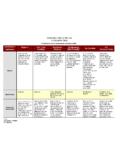
2 Comparison of Requirements ISO/TS 16949:2009 vs. AS9100B & AS9100C Comparison of Requirements ISO/TS 16949:2009 vs. AS9100B:2004 & AS9100C:2009 Requirement ISO/TS 16949:2009 Reference AS9100B:2004 Reference AS9100C:2009 Reference Impact Vs. AS9100 Foreword Technical Specification QMS Requirements for Automotive Standardizes QMS Requirements for Aerospace Revised to ISO 9001:2008 and Industry Requirements None TS 16949 was updated to ISO 9001:2008. (June 15, 2009). Revisions do not change technical content. Introduction General None - TS & AS9100B are exact.
3 AS9100C same information layout is changed Process Approach Defined in the introduction None All 3 documents are exactly the same including Figure 1 Relationship with ISO 9004 Introduction -consideration Introduction -consideration given TS16949 - More detailed on this and the 8 QMS Principles are noted Compatibility with other QMS None None TS16949- Refers to Annex A shows the correspondence between ISO 9001:2008 and ISO 14001:2004 Goal of Document None None None TS16949 Includes Customer Specific Requirements Common approach for automotive Scope 1 1 1 All 3 are the same except; TS16949- Specifies it is for automotive, states applicability Requirements and specifies Support Sites can not obtain stand alone certification Application TS16949 & AS9100B are the same.
4 AS9100C - Specifies it is for Aviation, Space and defense products. Refers to IAQG-developed 9110 for Maintenance, Repair and overhaul. Both AS9100B & C indicate exclusions are limited to Clause 7. TS indicates clause only- where the organization is not design responsible Normative Reference 2 2 2 AS9100C - Has been updated to reference the current version of Fundamentals and Vocabulary: TS16949 & AS9100B reference ISO9000:2000 AS9100C- ISO9000:2005 Terms and Definitions 3 3 3 None - TS16949 & AS9100B reference Supplier Organization Customer TS has automotive related definitions / AS9100C has expanded definitions from B rev.
5 QMS General Requirements 4 4 4 None - All 3 are the same General Requirements Supplemental Note 1 Note 2 Note 3 TS16949 - Includes additional Requirements : For outsourced processes and the responsibility for conformity to customer Requirements . AS9100C - Also includes the TS16949 requirement and additional Notes on Outsourced processes. Note 1 Include mgt. activities, resources, product realization, measurement, analysis and Improvement Note 2 Outsourced ; performed by external party Note 3 Ensure control over outsourced processes Documentation Requirements TS16949 All Requirements included. AS9100B Has Additional Requirements : (f) Quality System Requirements imposed by the applicable regulatory authorities and requirement related to personnel having access to documentation including customers & regulatory authority representatives.
6 AS9100C Removed Requirements (e) and (f). Also removed - including customers and regulatory authority representatives. Comparison of Requirements ISO/TS 16949:2009 vs. AS9100B:2004 & AS9100C:2009 Requirement ISO/TS 16949:2009 Reference AS9100:2004 Reference AS9100C:2009 Reference Impact Vs. AS9100 Quality Manual TS16949 & AS9100C are the same. AS9100B Included additional Requirements related to a clear relationship between the Requirements of the standard and the procedures. Control of Documents TS16949 All Requirements included. AS9100B Includes additional Requirements related to coordinating changes with the customer and/or regulatory authorities.
7 AS9100C- Removes the above requirement. Engineering Specifications None None TS16949 Includes an additional requirement for timely review of Engineering Specifications, and maintaining records - not included in the AS9100B or C Control of Records Record Retention TS16949- Includes 2 additional Notes. Note 1: Disposition includes disposal. Note 2: Records also includes customer specified records. Retention shall satisfy statutory, regulatory and customer Requirements . AS9100B Includes Requirements for a documented procedure for controlling records and the availability for customers and regulatory authorities in accordance with contract or regulatory Requirements .
8 AS9100C Removes the requirement related to availability for customers and regulatory authorities in accordance with contract or regulatory Requirements . Configuration Management None None AS9100B- Includes requirement to establish, document and maintain a configuration management appropriate to the product (Reference ISO 10007) Management Responsibility 5. 5. 5. None - All 3 are the same Process efficiency None None TS16949 Includes Requirements for top management to review the product realization process. Customer Focus AS9100C Includes an additional requirement to ensure product conformity and on-time delivery are measured and that action is take if planned results are not or will not be achieved.
9 Quality Policy None - All 3 are the same Planning Quality Objectives TS16949 Has additional requirement of top Mgt to define objectives & measurements / include in business plan used to deploy Q. Policy. NOTE: Should address customer expectations & be achievable within a defined time period. Quality Management System Planning None - All 3 are the same Responsibility and Authority TS 16949 Includes additional Requirements for Responsibility for Quality. 1) Mgrs with responsibility for quality informed or products / processes not meeting Requirements . 2) Personnel with responsibility for quality having authority to stop production 3) All production shifts having personnel assigned the responsibility for quality.
10 Comparison of Requirements ISO/TS 16949:2009 vs. AS9100B:2004 & AS9100C:2009 Requirement ISO/TS 16949:2009 Reference AS9100:2004 Reference AS9100C:2009 Reference Impact Vs. AS9100 Management Representative AS9100B - Includes additional requirement d) The organizational freedom to resolve matters pertaining to quality. AS9100C Includes additional requirement d) The organizational freedom and unrestricted access to top Management to resolve Quality Management issues and a TS16949 and AS9100C includes the Note: Responsibility can include Liaison with external parties on matters relating to the QMS Customer Representative None None TS16949 Includes additional requirement of top mgt.