Transcription of Course Schedule - Cengage
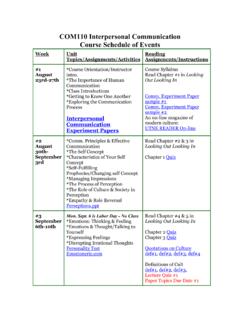
1 looking Out, looking In, 15th Edition, by Adler/Proctor with MindTap 16 Week Course Schedule Suggested Grading Distribution: Use the Grade Categorization tool in the Progress App to drag and drop assignments into these categories and assign these overall grade percentages. (Note: you will want to turn Category Weighting ON to use this tool) 10% Participation 10% MindTap Activities 20% MindTap Quizzes 20% Scholarly Article 20% Final Exam 20% Course Schedule Chapter One: A First Look at Interpersonal Communication Major Assignments: Online Quiz, Communication Basics Activity, Concepts in Play Activity Topics Covered: Why We Communicate, The Process of Communication, Communication Principles and Misconceptions, and What Makes an Effective Communicator? Week Activity What it is Why it matters Week 1 Introduction to the Course A review of the Course description, learning objectives/learning outcomes, major assignments and Course Schedule Students are introduced to the Course purpose, expectations, and Schedule and are given a broad overview of the communicatio n process.
2 Week 1 Reading: Chapter 1 Review A First Look at Interpersonal Communication in looking Out, looking In Students gain knowledge about why we communicate, the process of communicatio n, communication principles and misconception s, and what makes an effective communicator. Week 1 MindTap Chapter 1 Quiz A multiple choice question auto-graded self-test of the material in the chapter Prior to class, students assess their mastery of basic concepts in the chapter. Week 1 MindTap Activity: Communication Basics Identify and think about misconceptions that can occur in communicatio n by looking at a Case Study. Students practice applying chapter principles to real life situations. Week 1 MindTap Concepts in Play Intercultural Communication Competency An interactive activity to help students to recognize behaviors that express the attributes necessary for developing intercultural communicatio n competency.
3 Students learn to identify and understand the challenging concept of intercultural communicatio n. Week 1 Chapter 1: Reflect Students have the opportunity to reflect on learning to be a competent communicator Personal reflection of chapter topics is a recommended tool for integrative learning and meaningful class discussion. Part one: looking In Major Assignments: Online Quizzes, Concepts in Play Activity, MindTap Activities Topics Covered: Mediated Versus Face-To-Face Communication, Benefits and Drawbacks of Social Media, Influences on Mediated Communication, Competence in Social Media, Communication and the Self, Presenting the Self: Communication as Impression Management, Self-Disclosure in Relationships, Alternatives to Self-Disclosure, The Perception Process, Influences on Perception, Common Tendencies in Perception, Perception Checking, and Empathy, Cognitive Complexity, and Communication, What Are Emotions, Influences on Emotional Expression, Guidelines for Expressing Emotions, and Managing Emotions.
4 Week 2 Reading: Chapter 2 An overview of Interpersonal Communication and Social Media in looking Out, looking In Students learn about concepts related to social media including Mediated Versus Face-To-Face Communication, Benefits and Drawbacks of Social Media, Influences on Mediated Communication, and Competence in Social Media. Week 2 MindTap Chapter 2 Quiz A multiple choice question auto-graded self-test of the material in the chapter Prior to class, students assess their mastery of basic concepts in the chapter. Week 2 Chapter 2: Reflect Students have the opportunity to reflect on the effects of mediated communicatio n in their life. Personal reflection of chapter topics is a recommended tool for integrative learning and meaningful class discussion.
5 Week 3 Reading: Chapter 3 Exploring Communication and Identity: Creating and Presenting the Self in looking Out, looking In Students gain knowledge about Communication and the Self, Presenting the Self: Communication as Impression Management, Self-Disclosure in Relationships and Alternatives to Self-Disclosure. Week 3 MindTap Chapter 3 Quiz A multiple choice question auto-graded self-test of the material in the Prior to class, students assess their mastery of basic concepts in the chapter. chapter Week 3 MindTap Activity: Appropriate and Inappropriate Self-Disclosure Students apply concepts of appropriate and inappropriate disclosure to a situation and determine which one is the most ethical. Students learn to make ethical choices related to disclosure and its alternatives.
6 Week 3 Chapter 3: Reflect Students have the opportunity to reflect on how what they ve learned about self-esteem and positive self-evaluation affects them personally. Personal reflection of chapter topics is a recommended tool for integrative learning and meaningful class discussion. Week 4 Reading: Chapter 4 Review Perception: What You See Is What You Get in looking Out, looking In Students gain knowledge about The Perception Process, Influences on Perception, Common Tendencies in Perception, Perception Checking, and Empathy, Cognitive Complexity, and Communication. Week 4 MindTap Chapter 4 Quiz A multiple choice question auto-graded self-test of the material in the chapter Prior to class, students assess their mastery of basic concepts in the chapter.
7 Week 4 MindTap Activity: Perception Checking in Everyday Life An analysis of perception checking and how it can be applied to a student s life Students learn to apply what they ve learned to real life situations. Week 4 MindTap Activity: The Pillow Method in Action An analysis of how to use the Pillow Method. Students learn to apply what they ve learned to real life situations. Week 4 Chapter 4: Reflect Students have the opportunity to reflect on how what they ve learned about the influences on their perceptions. Personal reflection of chapter topics is a recommended tool for integrative learning and meaningful class discussion. Week 5 Reading: Chapter 5 Review Emotions: Feeling, Thinking, and Communicating in looking Out, looking In Students gain knowledge about What Are Emotions, Influences on Emotional Expression, Guidelines for Expressing Emotions, and Managing Emotions.
8 Week 5 MindTap Chapter 5 Quiz A multiple choice question auto-graded self-test of the material in the chapter Prior to class, students assess their mastery of basic concepts in the chapter. Week 5 MindTap Activity: Guidelines for Emotional Expression An activity that analyzes the guidelines for emotional expression. Students learn to apply what they ve learned to real life situations. Week 5 MindTap Activity: Rational Thinking in Action Students can see rational thinking in action and analyze fallacies. Students learn to apply what they ve learned to real life situations. Week 5 Chapter 5: Reflect Students have the opportunity to reflect on emotional intelligence. Personal reflection of chapter topics is a recommended tool for integrative learning and meaningful class discussion.
9 Part Two: looking Out Major Assignments: Online Quizzes, Concepts in Play Activity, MindTap Activities Topics Covered: Language Is Symbolic, Understandings and Misunderstandings, The Impact of Language, Gender and Language, Culture and Language, Characteristics of Nonverbal Communication, Influences on Nonverbal Communication, Types of Nonverbal Communication, Listening Defined, Elements in the Listening Process, The Challenge of Listening, Types of Listening Responses Week 6 Reading: Chapter 6 Review Language: Barrier and Bridge Students gain knowledge about language topics including Language Is Symbolic, Understandings and Misunderstandings, The Impact of Language, Gender and Language, and Culture and Language. Week 6 MindTap Chapter 6 Quiz A multiple choice question auto-graded self-test of the material in the chapter Prior to class, students assess their mastery of basic concepts in the chapter.
10 Week 6 MindTap Activity: I and You Language on the Job A video activity that allows student to see how I and You language is utilized. Students learn to apply what they ve learned to real life situations. Week 6 Chapter 6: Reflect Students have the opportunity to reflect on what they ve learned about applying language in specific situations. Personal reflection of chapter topics is a recommended tool for integrative learning and meaningful class discussion. Week 7 Reading: Chapter 7 Review Nonverbal Communication: Messages beyond Words in looking Out, looking In Students gain knowledge about the Characteristics of Nonverbal Communication, Influences on Nonverbal Communication, and Types of Nonverbal Communication Week 7 MindTap Chapter 7 Quiz A multiple choice question auto-graded self-test of the material in the chapter Prior to class, students assess their mastery of basic concepts in the chapter.