Example: barber
DBOS: A DBMS-oriented Operating System
At Berkeley, one of us was an early user of Unix in 1973. Linux ... All major cloud vendors now offer serverless computing APIs [9] where a user divides their com- ... consistent global view of the OS state in the form of DBMS tables. This makes it easy for …
Tags:
Information
Domain:
Source:
Link to this page:
Documents from same domain
The End of a Myth: Distributed Transactions Can …
www.vldb.orgThe End of a Myth: Distributed Transactions Can Scale Erfan Zamanian Carsten Binnig Tim Harris Tim Kraska Brown University Brown University Oracle Labs Brown University
Froid: Optimization of Imperative Programs in a …
www.vldb.orgFroid: Optimization of Imperative Programs in a Relational Database Karthik Ramachandra Microsoft Gray Systems Lab karam@microsoft.com Kwanghyun Park
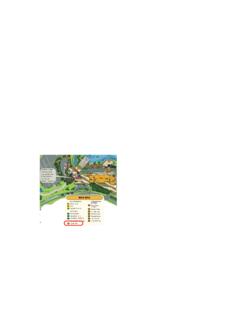
LAGOON PALACE TOWER TOWER OCEAN PALACE MAIN …
www.vldb.orgOCEAN TOWER O11 ¥ LAGOON TOWER PALACE TOWER OCEAN TOWER L11 P4 $ $ RESTAURANTS Kirin Chinese Restaurant ACTIVITIES Wedding Chapel Wedding Gazebo OUTDOOR VENUES Palace Garden Palace Lawn P1 P2 P3 P5 P6 PALACE TOWER P4 Dona & ToniÕs Pizza (1st floor) Concierge (Dining & Activities) 808.886.1234, Ext.54

Gorilla: A Fast, Scalable, In-Memory Time Series Database
www.vldb.orgGorilla is Facebook’s new TSDB that satis es these con-straints. Gorilla functions as a write-through cache of the most recent data entering the monitoring system. We aim to ensure that most queries run within 10’s of milliseconds. The insight in Gorilla’s design is that users of monitor-ing systems do not place much emphasis on ...
Exploring Databases via Reverse Engineering Ranking ...
www.vldb.orgsystem is centered around our PALEO framework for reverse engineering OLAP-style database queries and novel work on mining interesting categorical attributes. 1. INTRODUCTION The concept of rankings is ubiquitous; it exists in nearly all domains. Essentially, rankings allow focusing on a small subset of an exhaustively full list|usually a few ...
Distributed Trajectory Similarity Search - VLDB
www.vldb.orgtrajectory similarity search in a distributed and parallel setting. In light of that, we propose a general framework for supporting trajectory similarity search in a distributed environment. Rather than directly indexing all trajectories, we design an segment-based distributed index structure. This is coupled with an effective prun-
POLARIS: The Distributed SQL Engine in Azure Synapse
www.vldb.orgto data analytics, in conjunction with multi-dimensional business-intelligence (BI) tools such as Power BI and Tableau. The recent explosion in the number and diversity of data sources, together with the interest in machine learning, real-time analytics and other advanced capabilities, has made it necessary to extend traditional
Fast Algorithms for Mining Association Rules
www.vldb.orgPermission to copy without fee all or part of this material is ... of the discovery process. 1.1 Problem Decomposition and Paper Organization The problem of discovering all association rules can be decomposed into two subproblems [4]: ... the identifier of the corresponding transaction.
Related documents

Above the Clouds: A Berkeley View of Cloud Computing
www2.eecs.berkeley.eduFeb 10, 2009 · Above the Clouds: A Berkeley View of Cloud Computing Michael Armbrust, Armando Fox, Rean Griffith, Anthony D. Joseph, Randy Katz, Andy Konwinski, Gunho Lee, David Patterson, Ariel Rabkin, Ion Stoica, and Matei Zaharia (Comments should be addressed to abovetheclouds@cs.berkeley.edu) UC Berkeley Reliable Adaptive Distributed Systems …

Chapter 5.3: Data Security in Cloud Computing
www.cnsr.ictas.vt.edu- \Above the Clouds: A Berkeley View of Cloud Computing" NIST [15] gives the following uno cial de nition of cloud computing: cloud computing is a \pay-per-use model for enabling available, convenient and on-demand network access to a shared pool of con gurable computing re-sources (e.g., networks, servers, storage, applications and services ...

Cloud Programming Simplified: A Berkeley View on ...
www2.eecs.berkeley.eduIn 2009, to help explain the excitement around cloud computing, \The Berkeley View on Cloud Computing" [2] identi ed six potential advantages: 1.The appearance of in nite computing resources on demand. 2.The elimination of an up-front commitment by cloud users. 3.The ability to pay for use of computing resources on a short-term basis as needed.
From Cloud Computing to Sky Computing - ACM SIGOPS
sigops.orgUC Berkeley Abstract We consider the future of cloud computing and ask how we might guide it towards a more coherent service we call sky computing. The barriers are more economic than technical, and we propose reciprocal peering as a key enabling step. ACM Reference Format: Ion Stoica and Scott Shenker. 2021. From Cloud Computing to Sky Computing.

Introduction to Cloud Computing - KTH
www.kth.se•NIST Definition of Cloud Computing "Cloud computing is a model for enabling convenient, on-demand network access to a shared pool of configurable computing resources (e.g., networks, servers, storage, applications, and services) that can be rapidly provisioned and released with minimal management effort or service provider interaction."

Photo Tourism: Exploring Photo Collections in 3D
phototour.cs.washington.educomputing, from the images themselves, the photographers’ loca-tions and orientations, along with a sparse 3D geometric represen-tation of the scene, using a state-of-the-art image-based modeling system. Our system handles large collections of unorganized pho-tographs taken by different cameras in widely different conditions.