Transcription of Depression - TalkPlus
1 INFORMATION AND ADVICE Depression Feeling low is a common feeling for most of us at some points in our lives. It can come out of the blue or after a stressful time such as illness, relationship problems or financial difficulties. At times however, these feelings can become a bigger problem and start to have an impact on our lives. Severe Depression is a serious problem that requires recognition and treatment. Sometimes recognising that we have Depression can be difficult. The statement below is a common experience of someone suffering from Depression : I feel so sad and down, I m tired all the time and don t seem to have the motivation to do things I used to enjoy or the energy to do what I need to do. I don t see people as much as I used to. My concentration isn t good and I don t sleep well.
2 What is the point? Nothing is ever going to change. Other words to describe Depression include: Feeling low or upset Feeling down in the dumps Feeling sad or miserable Feeling guilty Feeling bleak or hopeless Feeling numb or empty When we feel low we often experience a range of symptoms. It is common to have a negative outlook when we are depressed, this can often include dwelling on past events or feeling bad about ourselves. Tiredness and lack of motivation are a common theme. We often notice changes in our sleeping and eating habits, or become tearful. Sometimes we experience thoughts of wanting to take our own lives or running away. What is Depression ? How common is Depression ? Depression is common. Between 8-12% of the UK population experience Depression in any year.
3 Experiencing both anxiety and Depression is the most common mental health problem in Britain, with almost 9% of people meeting criteria for diagnosis. Key Points: - Depression is common. - Depression can be a serious problem. - Feeling sad, miserable, bleak or hopeless can be signs of Depression . Inside this issue: What is Depression ? 1 How common is Depression ? 1 What are the symptoms? 2 What keeps Depression going? 3 What treatments are available? 4 Useful contacts 4 PAGE 2 Depression Symptoms of Depression can be categorised into three main areas. On the previous page we discussed the emotions we can feel when we are depressed. Below are common physical symptoms, thoughts and thinking patterns seen in Depression . What are the symptoms of Depression ? Feeling tired or fatigued Lacking in energy and motivation Increased appetite or not wanting to eat Not getting enough sleep or sleeping more than usual Aching or pain in different parts of your body Trouble concentrating on things Feeling fidgety or restless Thoughts and thinking styles Losing confidence in yourself Having thoughts about death or suicide Expecting the worst or having negative or gloomy thoughts Having thoughts about self hatred Thinking about things in the past Thinking things seem hopeless or pointless.
4 Below are thinking patterns that are common when we are experiencing Depression : Exaggerating the negative Thinking things are worse than they really are , I did not get this recipe right, now I cannot cook anything, there is no point. Overgeneralising Drawing wide-reaching conclusions from one thing , My friend was quite quiet today. She does not like me anymore. Being self critical Blaming ourselves, judging ourselves and beating ourselves up over things , I am a useless or terrible employee/parent/person. Ignoring positives Focussing on the negative side of things and ignoring the positives , Getting a good mark on an exam but feeling bad because of the questions we did not get right. Mindreading Assuming we know what others are thinking , If someone looks at me oddly, There is something wrong with me or that they think I am stupid or weird.
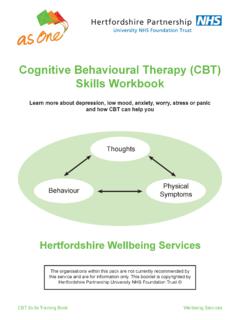
5 Black and white thinking Not seeing the middle ground , Thinking that because I got a speeding ticket I should not drive anymore because I am terrible at it. Physical symptoms PAGE 3 INFORMATION AND ADVICE The image above shows a maintenance cycle of Depression : physical symptoms, thoughts, emotions and our behaviour are all interlinked and can drive and influence each other. We can see this as a vicious cycle . Vicious cycles are easy to get into. If we feel depressed, are thinking negatively and experiencing unpleasant physical symptoms then it is understandable that we will avoid things such as getting household chores completed or paying bills. We may withdraw from pleasurable activities we used to enjoy. Sometimes just getting out of bed in the morning is a struggle. While past events, or current stressors may be common triggers for Depression , as we can see that the different symptoms and consequences of Depression feed in and maintain each other.
6 To break this vicious cycle we need to target one or more of the areas shown above. Vicious cycles are something that can be overcome. The first step is understanding more about Depression , which you are doing by reading this. It is possible to break the cycle by targeting one of the areas listed above. So for example, reducing avoidance, or learning to challenge your thoughts. When we change one area it breaks the cycle and has a positive impact upon the other areas. On the next page we will look at what treatments are available to help stop this vicious cycle of Depression . Emotions: Low Sad Depressed Physical symptoms: Tiredness Trouble concentrating Agitated Behaviour: Avoiding going out Not completing chores Isolating myself from friends Thoughts: Nothing s going to change What is the point?
7 I m useless At TalkPlus we mainly offer Cognitive Behavioural Therapy (CBT). This is an evidence-based treatment, which means it has been proven to help people who suffer with Depression . CBT aims to help people better manage or overcome their Depression by learning skills and ways to cope. There are several steps involved in treating Depression . The first one involves understanding more about it and how it relates to you. This understanding is an important step to take to start tackling Depression as it is much easier to change when we know why we are doing it and how the change can help us. Once you have learnt more about your unique experience of Depression you can start to tackle it by learning ways to manage it better. This is achieved using different treatment approaches.
8 You can discuss these with your therapist The three different approaches are: Behavioural Activation Many people find feeling depressed is maintained by withdrawing from important activities. Behavioural activation is a treatment that many people have found helpful in alleviating Depression by reducing avoidance and gradually re-introducing routine back into their lives. Problem solving Having problems that seem overwhelming can also maintain Depression by leaving everyday problems unresolved. A lot of people have found solving one problem at a time is another way of alleviating Depression . Cognitive restructuring Some people find that Depression is maintained by a bias towards negative thinking. Cognitive restructuring involves learning how to challenge negative thinking ( Nothing is ever going to get better ) and develop a more balanced way of thinking.
9 The above treatments can be explained in much more detail with your therapist. What treatments are available? Mind Info Line: 0300 123 3393 Rethink: 0300 500 0927 Depression Alliance: NHS Information: Royal College of Psychiatrists: : Useful contacts


![ZÀ]}µ o À }v - TalkPlus](/cache/preview/1/7/c/4/4/b/6/6/thumb-17c44b66edfab6bc2dc10c7f4bbf6249.jpg)