Transcription of DOT CHART 17
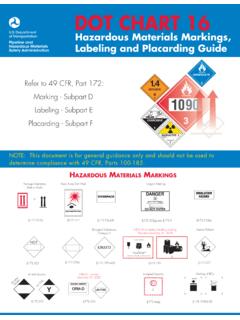
1 DOT CHART 17. Hazardous Materials Markings, Labeling and Placarding Guide Refer to 49 CFR, Part 172: Marking - Subpart D. Labeling - Subpart E. Placarding - Subpart F. NOTE: This document is for general guidance only and should not be used to determine compliance with 49 CFR, Parts 100-185. Hazardous Materials Markings Package Orientation Keep Away from Heat Overpack Mark Fumigant Marking Material Poisonous by Inhalation (Red or Black). or (a) (a)(4) (g) and (a). Elevated Temperature Material UN ID Number Mark Biological Substances, Category B Lithium Battery Handling Mark Marine Pollutant or or (a) (a)(5) Limited Quantity Biohazard Mark Petroleum Sour Crude Oil Excepted Quantity od er M ll oth es nly rO.
2 A. Ai (g). CHART 17 Covers 5 5 1 6/17/2021 2:42:59 PM. Hazardous Materials Warning Labels Actual label size: at least 100 mm ( inches) on all sides CLASS 1 Explosives: CLASS 2 Gases: CLASS 3 Flammable Liquid CLASS 4 Flammable Solid, Spontaneously CLASS 5 Oxidizer, Organic Divisions , , , , , Divisions , , Combustible, and Dangerous When Wet: Peroxide: Divisions Divisions , , and Subsidiary Risk Label (b), , , , , , * Include compatibility group letter. ** Include division number and compatibility group letter. CLASS 6 Poison (Toxic), Poison Inhalation Hazard, Infectious CLASS 7 Radioactive CLASS 8 Corrosive CLASS 9 Miscellaneous Cargo Aircraft Substance: Divisions and Hazardous Material Only or Empty Label EMPTY.
3 , (c), , , , , , , For Regulated Medical Waste (RMW), an Infectious Substance label is not required on an outer packaging if the OSHA Biohazard marking is used as prescribed in 29 CFR. (g). A bulk package of RMW must display a BIOHAZARD marking. CHART 17 Interior Pgs 5 5 1 6/17/2021 2:37:40 PM. Hazardous Materials Warning Placards Actual placard size: at least 250 mm ( inches) on all sides CLASS 4 Flammable Solid, Spontaneously CLASS 1 Explosives CLASS 2 Gases CLASS 3 Flammable Liquid and Combustible Liquid Combustible, and Dangerous When Wet , , * For Divisions , , or , enter division number and For NON-FLAMMABLE GAS, OXYGEN (compressed For FLAMMABLE placard 454 kg (1,001 lbs) or more.)
4 GASOLINE may be used in For FLAMMABLE SOLID and SPONTANEOUSLY compatibility group letter, when required; placard any gas or refrigerated liquid), and FLAMMABLE GAS, place of FLAMMABLE placard displayed on a cargo tank or portable tank transporting COMBUSTIBLE, placard 454 kg (1,001 lbs) or quantity. For Divisions , , and , enter compatibility placard 454 kg (1,001 lbs) or more gross weight. For gasoline by highway. Placard combustible liquid transported in bulk. See (f) more. For DANGEROUSE WHEN WET (Division ), group letter, when required; placard 454 kg (1,001 lbs) or POISON GAS (Division ), placard any quantity.
5 (2) for use of FLAMMABLE placard in place of COMBUSTIBLE. FUEL OIL may be used placard any quantity. more. in place of COMBUSTIBLE on a cargo or portable tank transporting fuel oil not classed as a flammable liquid by highway. CLASS 5 Oxidizer & Organic 6 Poison (Toxic) and Poison Peroxide CLASS CLASS 7 Radioactive CLASS 8 Corrosive CLASS 9 Miscellaneous Dangerous Inhalation Hazard Placard any quantity For CORROSIVE, placard Not required for A freight container, unit load device, transport - packages bearing 454 kg (1,001 lbs) or more. domestic transportation. A vehicle, or rail car which contains non-bulk RADIOACTIVE YELLOW-III bulk packaging packages with two or more categories of labels only.
6 Certain low containing a Class 9 hazardous materials that require different specific activity radioactive material must be marked placards specified in Table 2 (e) may be materials in exclusive use with the appropriate ID placarded with DANGEROUS placards instead of the will not bear the label, but the number displayed on a specific placards required for each of the materials , (f)(10), , radioactive placard is required Class 9 placard, an orange in Table 2. However, when 1,000 kg (2,205 lbs) or for exclusive use shipments of panel, or a white more of one category of material is loaded at one low specific activity material square-on-point display.
7 Loading facility, the placard specified in Table 2 must For OXIDIZER and ORGANIC PEROXIDE (other For POISON (PGl or PGII, other than inhalation and surface contaminated be applied. than TYPE B, temperature controlled), placard 454 hazard) and POISON (PGIII), placard 454 kg objects transported in kg (1,001 lbs) or more. For ORGANIC PEROXIDE (1,001 lbs) or more. For POISON-INHALATION accordance with (e). HAZARD (Division ), inhalation hazard only, placard Table 1 and (a)(6). Limited (Division ), Type B, temperature controlled, placard any quantity. any quantity. Quantity Marking (a)(2). (Vessel transport only).
8 Safety begins with communication! CHART 17 Interior Pgs 5 5 2 6/17/2021 2:37:42 PM. General Guidelines on Use of Warning Labels and Placards LABELS PLACARDS. See 49 CFR, Part 172, Subpart E, for complete labeling regulations. See 49 CFR, Part 172, Subpart F, for complete placarding regulations. The Hazardous Materials Table [ , Col. 6] identifies the proper label(s) for the Each person who offers for transportation or transports any hazardous material subject hazardous material listed. to the Hazardous Materials Regulations must comply with all applicable requirements of Subpart F [ ]. Any person who offers a hazardous material for transportation MUST label the package, if required [ (a)].
9 Placards may be displayed for a hazardous material, even when not required, if the placarding otherwise conforms to the requirements of Subpart F of Part 172. Labels may be affixed to packages when not required by regulations, provided each [ (c)]. label represents a hazard of the material contained in the package [ ]. For other than Class 7 or the DANGEROUS placard, text indicating a hazard ( , For labeling mixed or consolidated packages, see FLAMMABLE ) is not required. Text may be omitted from the OXYGEN placard only if the The appropriate hazard class or division number must be displayed in the lower corner of specific ID number is displayed on the placard [ (b)(3)].
10 A primary and subsidiary hazard label [ (b)]. For a placard corresponding to the primary or subsidiary hazard class of a material, the hazard class or division number must be displayed in the lower corner of the placard For classes 1,2,3,4,5,6, and 8, text indicating a hazard ( , CORROSIVE ) is NOT. [ (b)(4)]. required on a primary or subsidiary label. The label must otherwise conform to Subpart E. of Part 172 [ ]. Except as otherwise provided, any bulk packaging, freight container, unit load device, transport vehicle or rail car containing any quantity of material listed in Table 1 must be Labels must be printed on or affixed to the surface of the package near the proper placarded [ ].