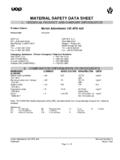
Transcription of DOW CORNING CORPORATION Material Safety Data Sheet …
1 DOW CORNING CORPORATION Material Safety data Sheet Page: 1 of 9 Version: Revision Date: 2008/12/08 DOW CORNING (R) 983 SILICONE GLAZING & CURTAINWALL C/A 1. PRODUCT AND COMPANY IDENTIFICATION MSDS No.: 01882031 SUPPLIER: Dow CORNING Canada Inc. 15-6400 Millcreek Drive, Suite 416 Mississauga, ON, Canada L5N 3E7 Prepared by Product Safety : NEWALTA: Revision Date: (800) 248-2481 (800) 567-7455 2008/12/08 MANUFACTURER: Dow CORNING CORPORATION South Saginaw Road Midland, Michigan 48686 24 Hour Emergency Telephone: (989) 496-5900 WHMIS CLASSIFICATION: Class B, Division 3. Class D, Division 1, Subdivision B. Class D, Division 2, Subdivision A. Class E. Material Usage: Silicone rubber curing agent 2. HAZARDS IDENTIFICATION EMERGENCY OVERVIEW Generic Description: Silicone compound Physical Form: Viscous Liquid Colour: Black Odour: Fishy n-Propyl alcohol is formed upon contact with water or humid air.
2 Provide adequate ventilation to control exposures within guidelines of OSHA PEL (final rule): TWA 200 ppm, STEL 250 ppm. ACGIH TLV: TWA 100 ppm. Ethyl alcohol is formed upon contact with water or humid air. Provide adequate ventilation to control exposures within guidelines of OSHA PEL and ACGIH TLV: TWA 1000 ppm. n-Butyl alcohol is formed on contact with water or humid air. Provide adequate ventilation to control exposures within guidelines of OSHA PEL (final rule): TWA 100 ppm and ACGIH TLV: 20 ppm. ++++++++++++++++++++++++++++++++++++++++ ++++ POTENTIAL HEALTH EFFECTS Acute Effects Eye: May cause irreversible damage and burns to the eyes. Skin: Corrosive. Burns skin upon prolonged contact. DOW CORNING CORPORATION Material Safety data Sheet Page: 2 of 9 Version: Revision Date: 2008/12/08 DOW CORNING (R) 983 SILICONE GLAZING & CURTAINWALL C/A Inhalation: Severely irritating to the respiratory tract.
3 Overexposure by inhalation may cause drowsiness, dizziness, confusion or loss of coordination. Oral: Corrosive. May cause severe and permanent damage to the mouth, throat and stomach. Overexposure by ingestion may cause central nervous system depression which may be characterized by drowsiness, dizziness, confusion, loss of coordination, unconsciousness, and with large quantities even death. Prolonged/Repeated Exposure Effects Skin: Overexposure by skin absorption may injure the following organ(s): Kidneys. Inhalation: Overexposure by inhalation may injure the following organ(s): Kidneys. Nervous system. Lungs. Oral: Overexposure by ingestion may injure the following organ(s): Liver. Kidneys. Signs and Symptoms of Overexposure No known applicable information. Medical Conditions Aggravated by Exposure No known applicable information.
4 The above listed potential effects of overexposure are based on actual data , results of studies performed upon similar compositions, component data and/or expert review of the product. Please refer to Section 11 for the detailed toxicology information. 3. COMPOSITION/INFORMATION ON INGREDIENTS CAS Number Wt % Component Name 682-01-9 - Tetrapropyl orthosilicate 919-30-2 - Gamma-Aminopropyl triethoxysilane 1333-86-4 - Carbon black 77-58-7 - Dibutyltin dilaurate 64-17-5 - Ethyl alcohol The ingredients listed above are controlled products as defined in CPR, am. SOR/88-555. 4. FIRST AID MEASURES Eye: Immediately flush with water for 15 minutes. Get medical attention. DOW CORNING CORPORATION Material Safety data Sheet Page: 3 of 9 Version: Revision Date: 2008/12/08 DOW CORNING (R) 983 SILICONE GLAZING & CURTAINWALL C/A Skin: Remove from skin and immediately flush with water for 15 minutes.
5 Get medical attention. Inhalation: Remove to fresh air. Get immediate medical attention. Oral: Get immediate medical attention. Do not induce vomiting. Notes to Physician: Treat according to person's condition and specifics of exposure. 5. FIRE FIGHTING MEASURES Flash Point: F / C (Pensky-Martens Closed Cup) Autoignition Temperature: Not available. Flammability Limits in Air: Not available. Extinguishing Media: On large fires use dry chemical, foam or water spray. On small fires use carbon dioxide (CO2), dry chemical or water spray. Water can be used to cool fire exposed containers. Fire Fighting Measures: Self-contained breathing apparatus and protective clothing should be worn in fighting large fires involving chemicals. Determine the need to evacuate or isolate the area according to your local emergency plan.
6 Use water spray to keep fire exposed containers cool. Unusual Fire Hazards: Static electricity will accumulate and may ignite vapors. Prevent a possible fire hazard by bonding and grounding or inert gas purge. 6. ACCIDENTAL RELEASE MEASURES Containment/Clean up: Remove possible ignition sources. Determine whether to evacuate or isolate the area according to your local emergency plan. Observe all personal protection equipment recommendations described in Sections 5 and 8. For large spills, provide diking or other appropriate containment to keep Material from spreading. If diked Material can be pumped, store recovered Material in appropriate container. Clean up remaining materials from spill with suitable absorbant. Clean area as appropriate since spilled materials, even in small quantities, may present a slip hazard.
7 Final cleaning may require use of steam, solvents or detergents. Dispose of saturated absorbant or cleaning materials appropriately, since spontaneous heating may occur. Local, provincial, federal laws and regulations may apply to releases and disposal of this Material , as well as those materials and items employed in the cleanup of releases. Note: See section 8 for Personal Protective Equipment for Spills. Call (989) 496-5900, if additional information is required. 7. HANDLING AND STORAGE Use with adequate ventilation. Product evolves n-propyl alcohol when exposed to water or humid air. Provide ventilation during use to control n-propyl alcohol within exposure guidelines or use respiratory protection. Product evolves flammable ethyl alcohol on exposure to water or humid air. Provide ventilation during use to control ethanol within DOW CORNING CORPORATION Material Safety data Sheet Page: 4 of 9 Version: Revision Date: 2008/12/08 DOW CORNING (R) 983 SILICONE GLAZING & CURTAINWALL C/A exposure guidelines or use respiratory protection.
8 Product evolves n-butyl alcohol when exposed to water or humid air. Provide ventilation during use to control n-butyl alcohol within exposure guidelines or use respiratory protection. Do not get in eyes. Do not get on skin. Do not breathe vapor, mist, dust, or fumes. Keep container closed. Do not take internally. Keep container closed and store away from water or moisture. Static electricity will accumulate and may ignite vapors. Prevent a possible fire hazard by bonding and grounding or inert gas purge. Keep container closed and away from heat, sparks, and flame. 8. EXPOSURE CONTROLS / PERSONAL PROTECTION Component Exposure Limits Consult local authorities for acceptable provincial values. CAS Number Component Name Exposure Limits 919-30-2 Gamma-Aminopropyl triethoxysilane See ethyl alcohol comments.
9 LC50: > mg/L - Inhalation Rat ; 4hr vapor LD50: 1,570 mg/kg - Oral Rat LD50: 4,290 mg/kg - Dermal 77-58-7 Dibutyltin dilaurate Observe organic tin compounds limits. OSHA PEL and ACGIH TLV-skin: TWA mg/m3; ACGIH STEL mg/m3. See n-butyl alcohol comments. LD50: 175 mg/kg - Oral Rat 64-17-5 Ethyl alcohol OSHA PEL (final rule) and ACGIH TLV: TWA 1000 ppm. LC50: mg/L - Inhalation Rat ; 4hr vapor LD50: 7,060 mg/kg - Oral Rat 682-01-9 Tetrapropyl orthosilicate See n-propyl alcohol comments. 1333-86-4 Carbon black OSHA PEL and ACGIH TLV: TWA mg/m3. n-Propyl alcohol is formed upon contact with water or humid air. Provide adequate ventilation to control exposures within guidelines of OSHA PEL (final rule): TWA 200 ppm, STEL 250 ppm. ACGIH TLV: TWA 100 ppm. Ethyl alcohol is formed upon contact with water or humid air.
10 Provide adequate ventilation to control exposures within guidelines of OSHA PEL and ACGIH TLV: TWA 1000 ppm. n-Butyl alcohol is formed on contact with water or humid air. Provide adequate ventilation to control exposures within guidelines of OSHA PEL (final rule): TWA 100 ppm and ACGIH TLV: 20 ppm. Engineering Controls Local Ventilation: Recommended. General Ventilation: Recommended. DOW CORNING CORPORATION Material Safety data Sheet Page: 5 of 9 Version: Revision Date: 2008/12/08 DOW CORNING (R) 983 SILICONE GLAZING & CURTAINWALL C/A Personal Protective Equipment for Routine Handling Eyes: Use chemical worker's goggles. Skin: Wash at mealtime and end of shift. Skin contact must be avoided by using impervious protective clothing (gloves, aprons, boots, etc.). Use chemical protective gloves as a minimum and wash skin promptly upon any skin contact.