Transcription of Driving Change - Apple
1 Driving Change2008 Supplier Responsibility Progress Report Driving Change2008 Supplier Responsibility Progress ReportContentsPage 3 Executive SummaryPage 4 ExpectationsPage 5 Audit ProcessAudit MethodologyKey Performance IndicatorsPage 6 Audit ResultsFollow-Up Audits Reveal ProgressComponent Supplier AuditsCore ViolationsAdditional Audit FindingsPage 1 TrainingSupplier TrainingApple Employee TrainingBest Practice GuidelinesPage 14 Moving Forward3 Driving Change2008 Supplier Responsibility Progress ReportExecutive SummaryWe began our supplier responsibility program in 2005 with the creation of the Apple Supplier Code of Conduct and a commitment to ensuring that working conditions are safe and employees are treated with dignity and respect wherever Apple products are made.
2 In 2006, we conducted audits of our first-tier suppliers to ensure compliance with our Code. As a result of these audits and the subsequent corrective actions, conditions have improved at facilities where tens of thousands of people manufacture Apple products. In 2007, our monitoring program focused on two groups of suppliers. First, we reaudited all of the Mac, iPod, and iPhone final assembly suppliers that we audited in 2006. In each case, we found significant improvement in nearly every metric assessed. While there are still areas for improvement, these suppliers have demonstrated strong commitments to the standards in our Code of Conduct and, in some areas, are going beyond compliance.
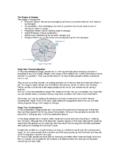
3 Second, we expanded our compliance program to the next layer of the supply chain and audited 34 companies that provide components to our final assembly suppliers. We found some facilities with outstanding overall performance, but we also found others that did not meet our expectations. After every audit, we worked with the supplier s management team on detailed action plans to address each report presents a summary of findings and corrective actions from our 2007 audits, as well as new initiatives designed to drive future improvements. First TierManufacturersCustomerSecond TierSuppliersApple Supplier Code of ConductAppleOur products and components are manufactured by a wide variety of suppliers around the world.
4 The final assembly of most Apple products occurs in Change2008 Supplier Responsibility Progress ReportExpectationsThe Apple Supplier Code of Conduct outlines a comprehensive set of expectations covering labor, human rights, the environment, health and safety, ethics, and management systems. Every supplier s contract with Apple requires compliance with our Code and the upholding of its Supplier Code of Conduct draws upon internationally recognized standards. It is similar to the Electronics Industry Code of Conduct (EICC), but goes beyond the EICC in key areas. For example, Apple s Code recognizes the core conventions of the International Labor Organization (ILO) regarding the rights of workers to freely associate and collectively bargain.
5 Our Code also prohibits medical testing that could be used in discriminatory ways and encourages companies to work with employees to identify and eliminate hazards and minimize the potential for workplace Change2008 Supplier Responsibility Progress ReportAudit ProcessOur compliance program begins with a risk assessment that considers the location of the factory and the type of production processes involved. Suppliers must also complete an extensive self-assessment questionnaire. Based on questionnaire responses and other factors, we select facilities for onsite audits. Audit MethodologyApple employees conduct every audit, with support from third-party experts. Each auditor is thoroughly trained to use our comprehensive checklist, including the appropriate documents to review, interviews to conduct, and the types of inspections needed to assess each item.
6 Even if no violation is found, we evaluate the management system for each element of our Code and identify areas for improvement. After each audit, we conduct a closing meeting with facility management to review preliminary results. At this meeting, the audited facility s most senior manager must provide written acknowledgement of the audit results. When improvements are needed, we require a corrective action plan that addresses not only the specific violation, but also the underlying management system needed to prevent reoccurrence. We track the implementation of each corrective action to closure, with an expectation that all violations will be corrected as quickly as possible, but not later than 90 days after the date of the audit report.
7 Our corrective action strategy is to work together with our suppliers to drive improvements that benefit workers and the environment. However, where violations are numerous or severe, and corrective actions are inadequate, we terminate the business Performance Indicators Audits are an important part of compliance monitoring, but they represent only a snapshot in time. In 2007, Apple required our final assembly suppliers to provide quarterly reports of 23 key performance indicators (KPIs). These KPIs give us a more frequent view of social responsibility performance, including statistics related to employee overtime, training, injuries, living conditions, complaints, turnover, and more.
8 The advantage of this approach is that we can evaluate how a supplier s performance has changed over the previous quarters, and we can compare their results with those of similar suppliers. Notably, these data are a key element in our performance reviews and help us decide whether to award future Change2008 Supplier Responsibility Progress ReportAudit Results Follow-Up Audits Reveal ProgressIn 2007, Apple returned to each of the final assembly facilities we audited in 2006 and conducted follow-up audits to assess progress over the past year. We found broad-based improvements in the working conditions at these facilities. For example, wage deductions for disciplinary purposes, once a common and legally condoned practice, had ceased.
9 Where we previously found confusing pay practices or underpaid employees, management had simplified payment methods and increased employee wages appropriately. We observed extensive improvements in health and safety, such as the covering of electrical cables, the addition of new eyewash facilities, better ventilation, and increased employee training on the use of personal protective equipment. Finally, two percent of the employees interviewed in 2006 reported that discipline at the factory was sometimes too harsh. In 2007, none of the workers interviewed reported these concerns, and many had positive comments about the improvements. 006 007 Audit Compliance ComparisonWe found broad-based improvements in the facilities we reaudited in the results of our follow-up audits showed significant gains, there are still areas for improvement.
10 For example, limits on working hours requires further attention. Management of work hours had improved since the 2006 audits, but some of these suppliers still had levels of overtime that we found too high. We continue to work with management from these suppliers on strategies for reducing working hours. We also reviewed living conditions and found substantial improvements. These suppliers constructed new dormitories with increased personal space, and they added new cafeterias serving a wide variety of meal choices. In addition, recreational options for employees were enhanced, including Internet access, educational seminars, movies, sports leagues, and video game A2006 to 2007 Audit Compliance Comparison78%56%Facility B83%61%Facility C85%57%Facility D82%57%Facility E75%53%200620077 Driving Change2008 Supplier Responsibility Progress ReportComponent Supplier AuditsIn addition to the follow-up audits of our final assembly suppliers, Apple completed onsite audits of 34 second-tier facilities, which manufacture and deliver components to our final assembly partners.