Example: confidence
Example Conclusion Physics 1CL Introduction ONE
Example Conclusion Physics 1CL Fall 2010 Introduction Each week, you will have to write a conclusion on ONE section from the previous week’s lab assigned by your TA. In your conclusion, you should summarize the physics concepts you studied in that section, describe how your results relate to the concepts, and
Tags:
Information
Domain:
Source:
Link to this page:
Documents from same domain
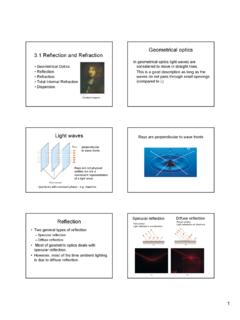
3.1 Reflection and Refraction - University of California ...
courses.physics.ucsd.edu3.1 Reflection and Refraction • Geometrical Optics • Reflection • Refraction • Total Internal Refraction • Dispersion Christian Huygens Geometrical optics In geometrical optics light waves are ... Refraction and Reflection The light beam (3) is refracted at the interface. 4
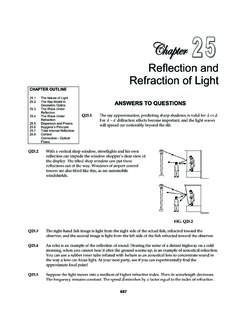
Reflection and Refraction of Light
courses.physics.ucsd.edu688 Reflection and Refraction of Light Q25.6 If a laser beam enters a sugar solution with a concentration gradient (density and index of refraction increasing with depth) then the laser beam will be progressively bent downward (toward the normal) as it passes into regions of greater index of refraction.
Lecture Notes on Classical Mechanics (A Work in Progress)
courses.physics.ucsd.eduLecture Notes on Classical Mechanics (A Work in Progress) Daniel Arovas Department of Physics University of California, San Diego May 8, 2013
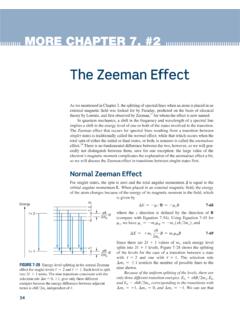
The Zeeman Effect - Physics Courses
courses.physics.ucsd.eduMore Chapter 7 37 spin-orbit effect and decouples L and S so that they precess about B nearly indepen- dently; thus, the projections of L behave as if S 0, and the effect reduces to three lines, each of which is a closely spaced doublet. EXAMPLE 7-5 Magnetic Field of the Sun The magnetic field of the Sun and stars can be determined by measuring the Zeeman-effect splitting of …
Lecture Notes on Condensed Matter Physics (A Work in …
courses.physics.ucsd.eduLecture Notes on Condensed Matter Physics (A Work in Progress) Daniel Arovas Department of Physics University of California, San Diego March 14, 2010
Lecture Notes on Classical Mechanics (A Work in Progress)
courses.physics.ucsd.eduLecture Notes on Classical Mechanics (A Work in Progress) Daniel Arovas Department of Physics University of California, San Diego May 8, 2013
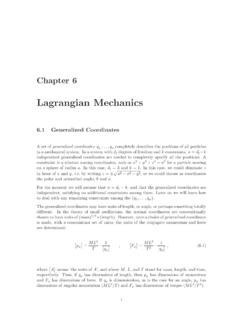
Lagrangian Mechanics - Physics Courses
courses.physics.ucsd.edu2 CHAPTER 6. LAGRANGIAN MECHANICS 6.2 Hamilton’s Principle The equations of motion of classical mechanics are embodied in a variational principle, called Hamilton’s principle. Hamilton’s principle states that the motion of a system is such that the action functional S q(t) = Zt2 t1 dtL(q,q,t˙ ) (6.2) is an extremum, i.e. δS = 0.
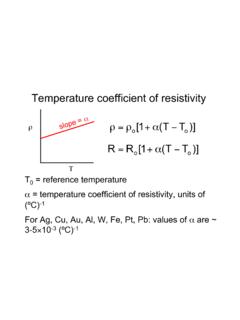
Temperature coefficient of resistivity
courses.physics.ucsd.eduPower Transmission Transmitting electrical power is done much more efficiently at higher voltages due to the desire to minimize (I2R) losses. Consider power transmission to a small community which is 100 mi from the power plant and which consumes power at a rate of 10 MW. In other words, the generating station needs to supply whatever power it ...
Lecture Notes on Superconductivity (A Work in Progress)
courses.physics.ucsd.eduLecture Notes on Superconductivity (A Work in Progress) Daniel Arovas Congjun Wu Department of Physics University of California, San Diego June 23, 2019
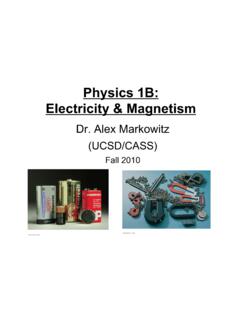
Physics 1B: Electricity & Magnetism
courses.physics.ucsd.eduMedical Devices (Defibrillators) EM Radiation (visible light, radio, TV, cell phones) Ch. 19: Electric Forces & Electric Fields Properties of electric charges & how they interact with each other --on both macroscopic and microscopic scales. Electric Charges & Conservation of Charge
Related documents
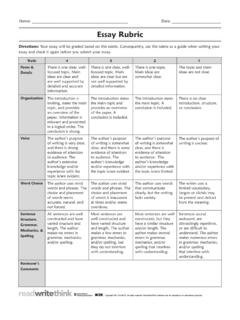
Essay Rubric - ReadWriteThink
www.readwritethink.orgconclusion is strong. The introduction states the main topic and provides an overview of the paper. A conclusion is included. The introduction states the main topic. A conclusion is included. There is no clear introduction, structure, or conclusion. Voice The author’s purpose of writing is very clear, and there is strong evidence of attention

Introduction to LATEX - MIT
web.mit.eduIntroduction to LATEX Introduction to LATEX Writing papers the right way RSI 2015 Sta Research Science Institute Massachusetts Institute of Technology. ... 6 Conclusion. Introduction to LATEX Introduction LATEX is.....a sophisticated document preparation sytem. LATEX has... Stylistic uniformity

INTRODUCTION ADVANTAGES OF INTERNET …
d1n7iqsz6ob2ad.cloudfront.netCONCLUSION. ESSECT INTRODUCTION: Definition: The Internet is a global system of interconnected computer networks that use the standardized Internet Protocol Suite (TCP/IP) to serve billions of users worldwide. It is a network of networks that consists of …

Turing Machines: An Introduction
www.seas.upenn.eduTuring Machines: An Introduction Formally, a Turing machine is a 7-tuple, (Q,Σ,Γ,δ,q0,qaccept,qreject), where Q is the (finite) set of states, Σ is the input alphabet such that Σ does not contain the special blank symbol t, Γ is the tape alphabet is the transition function, q0 ∈ Q is the start state, qaccept ∈ Q is the

Introduction to Measurements & Error Analysis
physics.unc.edu1 Introduction to Measurements & Error Analysis The Uncertainty of Measurements Some numerical statements are exact: Mary has 3 brothers, and 2 + 2 = 4.
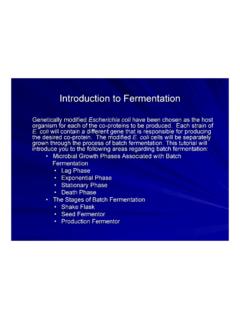
Introduction to Fermentation - NCSU
projects.ncsu.eduIntroduction to Fermentation Genetically modified. Escherichia coli. have been chosen as the host organism for each of the co-proteins to be produced. Each strain of . E. coli. will contain a different gene that is responsible for producing the desired co-protein. The modified . E. coli. cells will be separately grown through the process of ...

Introduction to the Treaty of Waitangi
www.otago.ac.nzIntroduction to the Treaty of Waitangi Office of Māori Development. What do we know about the Treaty of Waitangi? Arrivals to Aotearoa ! 1642 Abel Tasman ! 1769 Captain James Cook ! 1790’s Whalers and Sealers ! 1800’s Aotearoa a stopover, …