Transcription of Exchange Transfusion: Neonatal
1 1 Exchange Transfusion: Neonatal Introduction An Exchange transfusion involves removing aliquots of patient blood and replacing with donor blood in order to remove abnormal blood components and circulating toxins whilst maintaining adequate circulating blood volume. It is primarily performed to remove antibodies and excess bilirubin in isoimmune disease, the incidence of Exchange transfusion is decreasing secondary to the prevention, and improved prenatal management of alloimmune haemolytic disease and improvements in the management of Neonatal hyperbilirubinaemia. Indications 1. Alloimmune haemolytic disease of the newborn Remove circulating bilirubin to reduce levels and prevent kernicterus Replace antibody-coated red cells with antigen-negative red cells Severe hyperbilirubinaemia secondary to alloimmune haemolytic disease of the newborn is the most common reason for Exchange transfusion in the Neonatal intensive care unit. A total serum bilirubin level at or above the Exchange transfusion level should be considered a medical emergency and intensive phototherapy (multiple light) should be commenced immediately.
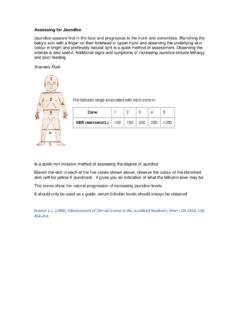
2 The Consultant Neonatologist on service should be contacted without delay. 2. Significant unconjugated hyperbilirubinaemia with risk of kernicterus due to any cause when intensive phototherapy is unsuccessful 3. Severe anaemia (where there is normal or increased circulating blood volume) 4. Antibodies in maternal autoimmune disease 5. Polycythaemia (to reduce haematocrit, usually accomplished with partial Exchange transfusion using normal saline replacement) 6. Severe disturbances of body chemistry 2 The following guidelines for Exchange transfusion levels are based on the American Academy of Pediatric Guidelines and are adapted from the Department of Human Services (Victoria) Neonatal Handbook. GUIDELINES FOR Exchange TRANSFUSION IN INFANTS 35 OR MORE WEEKS OF GESTATION Age (hrs) Infants at higher risk 35-37+6 weeks + risk factors Infants at medium risk 38 weeks + risk factors or 35-37+6 weeks and well Infants at lower risk 38 weeks and well SBR (micromol/L) SBR (micromol/L) SBR (micromol/L) Birth 200 235 270 12 hours 230 255 295 24 hours 255 280 320 48 hours 290 320 375 72 hours 315 360 405 96 hours 320 380 425 5 days 320 380 425 6 days 320 380 425 7 days 320 380 425 GUIDELINES FOR Exchange TRANSFUSION IN LOW BIRTHWEIGHT INFANTS BASED ON AGE Age Wt <1500g Wt 1550-2000g Wt >2000g Hours SBR (micromol/L) SBR (micromol/L) SBR (micromol/L)
3 <24 >170-255 >255 >270-310 24-48 >170-255 >255 >270-310 49-72 >170-255 >270 >290-320 >72 >255 >290 >310-340 Notes levels in the first 24 hours are less certain due to a wide range of clinical circumstances and a range of responses to phototherapy immediate Exchange transfusion is recommended in infants showing signs of acute bilirubin encephalopathy or if total serum bilirubin is 85 micromol/L above these levels risk factors include alloimmune haemolytic disease, G6PD deficiency, asphyxia, significant lethargy, temperature instability, sepsis and acidosis use total serum bilirubin (do not subtract direct acting or conjugated bilirubin ) if total serum bilirubin does not decrease, or continues to rise despite intensive phototherapy treatment this suggests the presence of haemolysis The final decision to perform an Exchange transfusion will be made by the Consultant Neonatologist on service and will be based on the above guidelines as well as the following: Trend of serum bilirubin levels and response to treatment Clinical presentation of infant (signs of bilirubin encephalopathy) Underlying condition Previous treatment at referring hospital if applicable (including in-utero management of underlying condition) 3 Blood Volumes The volume of blood for Exchange is calculated using an estimate of the neonate s circulating blood volume.
4 Term infants 80ml/kg Preterm infants 100ml/kg Double volume Exchange transfusion most commonly used for removal of bilirubin and antibodies 2 x circulating blood volume (for example, for a term infant 2 x 80ml/kg = 160ml/kg) Replaces approximately 85% of the blood volume This will cause an approximate reduction of 50% of the pre- Exchange bilirubin level (but can be expected to rebound 4 hours post transfusion to approximately two thirds of pre- Exchange level) Single volume Exchange transfusion 1 x circulating blood volume (for example, for a term infant 80ml/kg) Replaces approximately 60% of the blood volume Consider when aetiology is not Haemolytic Disease of the Newborn Partial Exchange transfusion for polycythaemia using normal saline Where desired haematocrit following Exchange transfusion is , the volume of Exchange (mls) can be calculated as follows: (actual Hct desired Hct) x infant s blood volume (mls) actual Hct Blood Product Ensure appropriate samples for pre-transfusion testing are sent to the RCH Blood Bank as early as possible.
5 Notify Blood Bank via telephone as soon possible after decision is made to Exchange and Order appropriate volume of blood for Exchange Order FFP for transfusion midway through and at completion of Exchange (10ml/kg per transfusion) Appropriate red cells for Exchange will be provided by RCH Blood Bank. Blood for Exchange transfusion should meet the following criteria: o Have a known haematocrit of o Appropriate group based on infant and maternal blood group and antibodies o Negative for antigens determined by maternal antibodies o Leukocyte depleted o Irradiated and used within 24 hours of irradiation o CMV negative o As fresh as possible (ensure at least less than 5 days old) 4 Complications The most commonly reported adverse events during or soon after Exchange transfusion: Catheter related complications; air emboli; thrombosis; haemorrhage Haemodynamic (related to excess removal of injection of blood): hypo or hypertension, intraventricular haemorrhage (preterm) Hypo or hyperglycaemia Hypocalcaemia, hyperkalaemia, acidaemia Potential complications related to Exchange transfusion.
6 Arrhythmias Bradycardia Neutropenia, dilutional coagulopathy Feed intolerance, necrotizing enterocolitis Septicaemia, blood born infection Hypo or hyperthermia Preparation of the Infant Medical staff should discuss the procedure with the parents/guardian and obtain consent Advise AUM and Consultant Neonatologist on duty as soon as decision to Exchange is made Exclusively allocate at least one doctor and one nurse to care of the infant throughout the procedure When an Exchange transfusion is taking place the Consultant Neonatologist on duty should be present on the unit to provide support and to troubleshoot issues so that the Fellow or Registrar can carry out the procedure without interruption Ensure resuscitation equipment and medications are easily accessible Nurse infant under radiant warmer for accessibility Ensure infant is comfortable and settled sedation and pain relief are not usually required unless the infant is active and likely to compromise line stability or sterile field Ensure full cardio-respiratory monitoring is initiated and document
7 Full set of baseline observations (temperature, respiratory and heart rate, blood pressure and oxygenation) Infant should be nil orally as soon as decision is made to perform Exchange transfusion. Pass oro/nasogastric tube and aspirate stomach contents. Leave tube in-situ and on free drainage for duration of procedure Before commencing Exchange transfusion collect blood samples for required baseline bloods and any specific testing required. Tests may include (but not be limited to) blood cultures, blood gas, serum bilirubin , blood glucose, FBC, UEC, LFT, newborn screening test, haematological, chromosome or metabolic studies Establish vascular access for procedure if not already in-situ (see RCH Clinical Practice Guideline Central Vascular Access Devices Insertion and Management ) depending on whether the procedure will be performed via arterial and venous access or via single venous access Check blood as per RCH Procedure Blood Transfusion 5 Equipment Plastic aprons or protective gowns Protective eye wear Sterile gloves Blood warmer Beigler BW585 Beigler blood warming extension set Blood administration set Water feed set Urine drainage bag Exchange transfusion recording sheet Sterile drape 3-way taps Syringes assorted sizes as required Blood gas syringes Drawing up needles Sleek tape Sodium chloride and Water for Injection ampoules Emergency resuscitation equipment including medications and fluids o Calcium gluconate 10% o Sodium bicarbonate o Glucose 10% o Frusemide (20mg/2ml) Pathology collection tubes as required Alcohol swabs Sterile gauze and Packed red blood cells Fresh frozen plasma (ordered but do not collect from Blood Bank until required)
8 Set-Up Exchange transfusion should be performed slowly over approximately 2 hours to avoid major fluctuations in blood pressure. Anticipate the need for increased oxygen requirement during procedure (administer oxygen via nasal cannula in self ventilating babies if required). Set blood warmer at 41oC. Blood warming extension set should be threaded onto the blood warming coil while it is not primed. Start at the back of the device and wind anti-clockwise towards the front 8 times (that is 80cm between blood warmer and patient). Line must be completely inserted between the grooves of the blood warming coil. Check red cells for use as per RCH Procedure Blood Transfusion . 6 Using aseptic technique: Connect the blood administration set to the blood warming coil and clamp off the lines Insert the administration set spike into the bag of red cells Release the clamp and prime the line/coil with blood. Clamp off the lines and maintain the sterility of the end of the line Attach the water feed set to the urine drainage bag.
9 Secure with a strip of sleek. Do not remove pin from self-closing clamp on the water feed set. Fasten the urine drainage bag below the cot Strict aseptic technique should be maintained throughout procedure. Record baseline observations (infant temperature, heart rate, respiratory rate, blood pressure, oxygen requirement, oxygen saturations, neurological status) prior to commencement of procedure. Technique Two medical officers will perform an Exchange transfusion using the arterial/venous 2 line technique (one of whom is experienced in the procedure). A registered nurse may assist an experienced medical officer if a second medical officer is unavailable. One medical officer may perform an Exchange transfusion using venous 1 line technique. A second medical officer or experienced registered nurse should be available to assist as required. Exchange transfusion via arterial and venous lines (2 persons) Arterial line Without contaminating the ends of the lines, stop the infusion and turn 3-way tap so that all ports are occluded Disconnect intra-arterial line at 3-way tap and reconnect to uppermost port of the same 3-way tap.
10 This will allow the line to monitor intra-arterial blood pressure during the Exchange transfusion Do not restart the infusion Connect a second 3-way tap (primed with sodium chloride) to the remaining port of the first 3-way tap. Connect a 10ml or 20ml syringe to the upper port of the second 3-way tap Attach the water feed set to the remaining port of the 3-way tap. Do not remove pin from self-closing clamp on the water feed set Venous line Without contaminating the ends of the lines, stop the infusion and disconnect line (including PALL filter if in use) Attached a second 3-way tap (primed with sodium chloride) to the venous line Leave 3-way tap nearest to the baby free for medication administration Attach a 10ml or 20ml syringe to the uppermost port of the 3-way tap furthest from the baby Connect the end of the primed blood warming coil line to the 3-way tap furthest from the baby 7 Exchange transfusion via venous lines only (1 person) Without contaminating the ends of the lines, stop the infusion and disconnect line (including PALL filter if in use) Turn the 3-way tap off to the infant Attach two 3-way taps (primed with sodium chloride)