Example: bankruptcy
Fall Risk Assessment and Prevention
Most Common Risk Factors {Falls risk increases with age{Persons with previous falls are at greater risk{Multiple chronic conditions {Some disabilities - leg weakness/balance problems{Changes in thinking/problem solving – dementia, brain injury {Trouble walking, standing, moving around{Eye/vision impairments{Certain medications (i.e. for sleeping, anxiety,
Tags:
Information
Domain:
Source:
Link to this page:
Documents from same domain
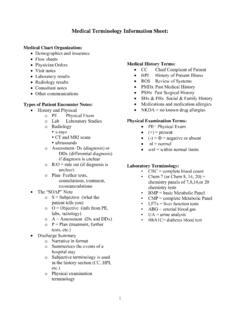
Medical Terminology Information Sheet
mfpweb.nursing.uic.eduAPC Aspirin - Phenacetin - Caffeine approx. approximately appt. appointment aq. water (aqueous) art. artery as tol as tollerated ASA acetylsalicylic acid (aspirin) AWOL absent without leave Ax axilla b.i.d. (BID) twice a day B/P blood pressure BE barium enema blad bladder BM bowel movement BUN blood urea nitrogen

PERSON CENTERED PLANNING FOR PEOPLE WITH DISABILITIES
mfpweb.nursing.uic.eduCare Principles, The National Disability Leadership Alliance” 14 leading disability organizations -endorsed March 2012. INDIVIDUAL CHOICE ... • Relies on skilled facilitation • Requires systems flexibility and responsiveness to the unique interests and needs of the focus person.

MDS 3.0: Recommended Form - University of Illinois at Chicago
mfpweb.nursing.uic.eduSeems or appears to recall long past. 0. Memory OK Enter Code 1. Memory problem C9. Memory/Recall Ability Check all that the resident was normally able to recall during the last 5 days: Check all that apply. a. Current season b. Location of own room c. Staff names and faces d. That he or she is in a nursing home e. None of the above were ...
Medical Terminology Information Sheet
mfpweb.nursing.uic.eduangio angiogram Ant anterior APC Aspirin - Phenacetin - Caffeine approx. approximately appt. appointment aq. water (aqueous) art. artery as tol as tollerated ASA acetylsalicylic acid (aspirin) AWOL absent without leave Ax axilla b.i.d. (BID) twice a day B/P blood pressure BE barium enema blad bladder BM bowel movement
Related documents
Dynamic Gait Index (DGI)/Functional Gait Assessment (FGA)
www.exercisepd.comScoring focuses on changes in balance or changes in gait patterns during the various walking tasks. A shortened DGI was developed based on Rasch analysis of level of item difficulty for 123 persons with diagnosed balance or vestibular problems. It contains 4 items: horizontal head turns, vertical head turns, gait
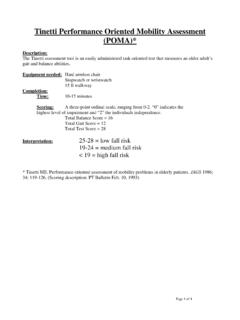
Tinetti Performance Oriented Mobility Assessment (POMA)*
www.leadingagemn.orgPerformance-oriented assessment of mobility problems in elderly patients. JAGS 1986; 34: 119-126. (Scoring description: PT Bulletin Feb. 10, 1993) Page 2 of 4 ... Heels close while walking =1 GAIT SCORE TOTAL GAIT SCORE TOTAL /12 /12 /12 /12 ASSISTIVE DEVICE TOTAL SCORE (BALANCE + GAIT) TOTAL SCORE (BALANCE + GAIT) FALL RISK ...
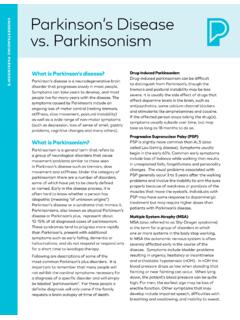
Parkinson’s Disease vs. Parkinsonism
www.parkinson.orgmore problems with gait than tremor and have more problems in the lower body. The disorder progresses very slowly in comparison to other types of parkinsonism. People might report an abrupt onset of symptoms or step-wise deterioration (symptoms get worse then plateau for a while). Symptoms in vascular parkinsonism may or may not respond to ...
TINETTI ASSESSMENT TOOL: Description
www.whca.orgTINETTI ASSESSMENT TOOL: GAIT RESIDENT NAME: Initial Instructions: Subject stands with examiner, walks down the hallway or across the room, first at “usual” pace, then back at “rapid but safe” pace. Use usual walking aid. TASK DESCRIPTION OF BALANCE Possible Score Date Score Date Score Date
REHABILITATION OF PARAPLEGIA
applications.emro.who.intbraces used for gait training. There are a variety of orthosis, but for paraplegic patient a knee ankle foot orthosis (KAFO) is widely recommended. They also help in walking re-education of paraplegics when used with functional electrical stimulation 18,21 . Orthosis help in increasing balance or remove pressure from

Function in Sitting Test (FIST) - POGOe
pogoe.orgbalance tests involving standing or gait tasks may benefit from testing with the FIST. Patients who experience problems because they are too low functioning for some tests and their progress isn’t adequately reflected with an increased score (i.e., floor effect) on other balance measures may be appropriate for testing with the FIST.
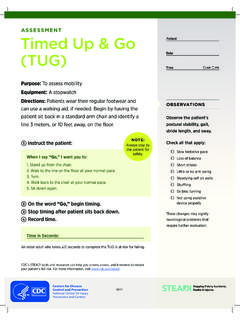
ASSESSMENT Timed Up & Go (TUG)
www.cdc.govcan use a walking aid, if needed. Begin by having the patient sit back in a standard arm chair and identify a line 3 meters, or 10 feet away, on the floor. 2 On the word “Go,” begin timing. 3 Stop timing after patient sits back down. 4 Record time. Observe the patient’s postural stability, gait, stride length, and sway. Check all that apply:
Deep Brain Stimulation - Parkinson's Foundation
www.parkinson.orgcognitive problems. Patients with an existing pallidotomy who require a second surgery will usually have DBS on the opposite side of the brain. Subthalamotomy has been gaining popularity because it can provide the same types of benefits as pallidotomy, and many medical groups have performed the surgery safely on both sides of the brain.