Example: marketing
Feeding Issues in Advance Dementia Statement
Title: Feeding Issues in Advance Dementia Statement Author: Alzheimer's Association Subject: Approved statement by the Alzheimer's Association. Created Date
Tags:
Information
Domain:
Source:
Link to this page:
Documents from same domain
Korsakoff Syndrome - Alzheimer's Disease & Dementia Help
alz.orgAbout dementia Dementia is a general term for a decline in mental ability severe enough to interfere with daily life. Dementia is not a single disease; it’s the umbrella term for an individual’s changes in memory, thinking or reasoning. There are many possible causes of dementia, including Alzheimer’s. Disorders grouped under the general term
Understanding Alzheimer's and Dementia - alz.org
alz.orgTHE IMPACT OF ALZHEIMER’S AND DEMENTIA Currently, an estimated 50 million people worldwide are living with dementia, including more than 5 million Americans.
BASICS OF ALZHEIMER’S DISEASE
alz.org» Parkinson’s disease dementia is an impairment in thinking and reasoning that many people with Parkinson’s disease eventually develop. As brain changes gradually spread, they often begin to affect . 3 mental functions, including memory and the ability to pay attention, make sound
10 WARNING SIGNS OF ALZHEIMER’S - Alzheimer's Association
alz.orgOR SOLVING PROBLEMS Some people living with dementia may experience changes in their ability to develop and follow a plan or work with numbers. They may have trouble following a familiar recipe or keeping track of monthly bills. They may have difficulty concentrating and take much longer to do things than they did before.

FDA-Approved Treatments for Alzheimer's
alz.orgAlzheimer’s affects more than just memory and thinking. A person’s quality of life may be impacted by a variety of behavioral and psychological symptoms that accompany dementia, such as sleep disturbances, agitation, hallucinations and delusions. Some medications focus on treating these non-cognitive symptoms for a
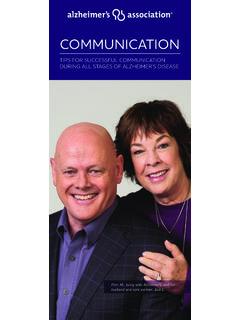
Communication and Alzheimer's Disease
alz.org» Approach the person from the front and identify yourself. » Encourage nonverbal communication. If you don’t understand what the person is trying to ... of dementia through the promotion of brain health. Our vision is a world without Alzheimer’s disease ...
Communication and Alzheimer's Disease
alz.orgThe Alzheimer’s Association is the leading voluntary health organization in Alzheimer’s care, support and research. Our mission is to eliminate Alzheimer’s disease through
2018 ALZHEIMER’S DISEASE FACTS AND FIGURES
alz.orgAlzheimer’s Association. 2018 Alzheimer’s Disease Facts and Figures. Alzheimers Dement 2018;14(3):367-429. About this report 2018 Alzheimer’s Disease Facts and Figures is a statistical resource for U.S. data related to Alzheimer’s disease,

Behaviors - Alzheimer's Association
alz.orgtheir causes. 1. Examine the behavior ... Turn the action or behavior into an activity If the person is rubbing a hand across the table, provide a cloth and ask for help with dusting. 8 Stay calm and be patient Reassure the person with a calm voice and gentle touch. Provide an answer
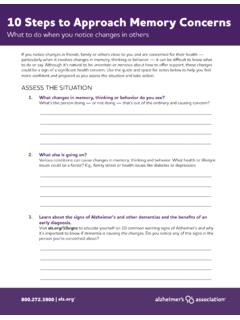
10 Steps to Approach Memory Concerns
alz.orgparticularly when it involves changes in memory, thinking or behavior — it can be difficult to know what to do or say. Although it’s natural to be uncertain or nervous about how to offer support, these changes could be a sign of a significant health concern. Use the guide and space for notes below to help you feel
Related documents

ESPEN guidelines on nutrition in dementia Volkert 2015
www.espen.info1. Development of guidelines on nutrition in dementia The European Society for Clinical Nutrition and Metabolism (ESPEN) launched a process of developing guidelines on nutrition care for patients with dementia. The group included physicians, nutritionists and dietitians with a …

Palliative Care Guidelines In Dementia - NHS England
www.england.nhs.ukClinically Assisted Nutrition and Hydration in People with Dementia.....59 12. Treating Infection in End Stage ... Dementia is one of the main causes of disability later in life, ahead of cancer, cardiovascular disease and stroke and 30% of people aged 65 or over will die with dementia (Dixon et al, 2015). ...
RISK REDUCTION OF COGNITIVE DECLINE AND DEMENTIA
apps.who.inta public health approach. As many of the risk factors for dementia are shared with those of non-communicable diseases, the key recommendations can be effectively integrated into programmes for tobacco cessation, cardiovascular disease risk reduction and nutrition.
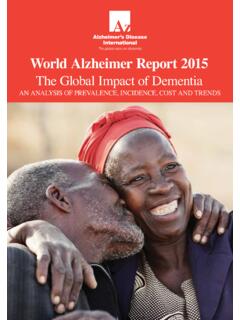
World Alzheimer Report 2015
www.alzint.org2014, and Nutrition and dementia), the World Health Organization (Dementia: a public health priority, 2012) and other relevant intergovernmental organisations. The World Alzheimer Report 2015 was independently researched and authored by Prof Martin Prince, Prof Anders Wimo, Dr Maëlenn Guerchet, Gemma-Claire Ali, Dr Yu-
Caring for a person with Dimentia - Queensland Health
www.health.qld.gov.auDementia is the term used to describe the symptoms of a large group of illnesses that cause a progressive decline in a person’s functioning. It is a broad term used ... u Monitor compliance with medication and general physical health (including nutrition, weight, blood pressure, etc).

The role of nurses in dementia care - NHS Senate Yorkshire
www.yhscn.nhs.uk34 10/5/2016 The role of nurses in dementia care Dementia specific qualification Nationally and internationally nurses are taking over important tasks in dementia care…requirement for a specific qualification for nurses to assure a need-oriented care for people with dementia is recognised Dreier et al., 2016, p315
PowerPoint Presentation - ALZHEIMER’S DISEASE
mcb.berkeley.edu• Dementia is common in older adults but is NOT an inherent part of aging • AD is the most common type of dementia, followed by vascular dementia and dementia with Lewy bodies • Evaluation includes history with informant, physical & functional assessment, focused labs, & possibly brain imaging

Pain Assessment in Advanced Dementia Scale (PAINAD)
dementiapathways.ie1 Pain Assessment in Advanced Dementia Scale (PAINAD) Instructions: Observe the patient for five minutes before scoring his or her behaviors. Score the behaviors according to the following chart. Definitions of each item are provided on the following page.
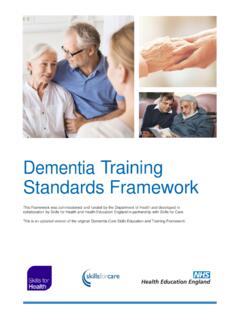
Dementia Training Standards Framework - Skills for Health
www.skillsforhealth.org.ukThis Dementia Training Standards Framework is an extraordinarily useful resource which details the essential skills and knowledge necessary across the health and social care spectrum. Three tiers are described: 1 - awareness, which everyone should have; 2 - basic skills which are