Transcription of FINANCIAL RECORD RETENTION CSU 2017
1 FINANCIAL RECORD RETENTION CSU 2017 This PDI will focuses on: What is a RECORD ? Who sets the rules? Life Cycle of Records RETENTION : How long records should be kept on file? Who is responsible for retaining the documents? How do you store the documents? How do you dispose of the RECORD when no longer needed? What exactly is RECORD ?The law defines a state recordas: ..any written, photographic, machine-readable, or other recorded information created or received by or on behalf of a state documents activities in the conduct of the state business or use of public resources.
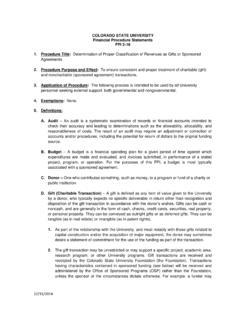
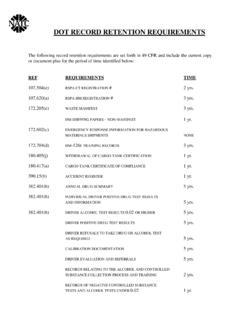
2 A written or digital recorded information created or received by or on behalf of CSU that documents activities in the conduct of CSU schedules are designed to meet the requirements of: Federal Statues, laws, regulations, and legal decisions State Laws CSU regulations and policiesRECORD RETENTION ORIGINAL SOURCEP urpose of this PolicyPer CSU Policy Library the Colorado State Archives & Public Records Act governs the RETENTION , archiving and destruction of University documents. To comply with the State Archives and Public Records Act, it is necessary that all documents pertainingto the business of the University -paper and electronic beretained, archived or destroyed, as NO.
3 7 FINANCIAL RECORDSF inancial RECORD RETENTION requirements is set by the Colorado Department of Personnel & Administration s State Archives Records Management Manual LIFE CYCLE OF RECORDS Creation When information and records are produced Usage When documents are used by those who need them in conduct of business Storage When physical records become inactive such as at the end of fiscal year, they can be removed from the main office space and transferred to the storage Disposition When records reach the end of their RETENTION and have no further value then they can be safely destroyedRetention of Kuali Documents Common Kuali Documents:Travel Reimbursement Vouchers and Records -3 years in the originating department.
4 Department has the original receipts so, this will be retained by the Vouchers As the department has the original receipts for DV, they are responsible for retaining these request Accounts Payable Department retain all the invoices for payment request, both electronic and physical Card Receipts Retained by the institution for 3 years. The original credit card receipt maintained for the period stipulated by State credit card agreement, normally 6 months. A copy of the receipt may be kept for the remaining period. The initiator of a KFS document is responsible for attaching an electronic version of the original invoice or any other related documentation in PDF format before the document is routed.
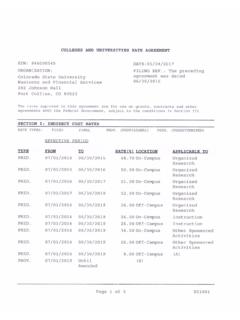
5 Kuali FINANCIAL System (KFS) was implemented in 2010. Documents created in Kuali can be accessed anytime. Therefore, departments are discouraged from printing paper copies of KFS documents. Example RECORD RETENTION DocumentWHAT ARE AREAS THAT YOU NEED HELP IN REGARDING RECORD RETENTION ? What items are you most concerned about? What are gray areas? What would you like to see in the RECORD RETENTION policy? What would be most beneficial to you?HOW DO YOU STORE THE DOCUMENTSThis depends on the nature of the transaction. Online documents Kuali system will retain all the documents created in Kuali.
6 No need to print out the Kuali documents. Paper Documents When the source documentation for a transaction is paper, the originating department is responsible for its RETENTION . Disposal of the documentsDocuments that contain sensitive information like social security numbers, credit card numbers, bank statements must be disposed properly. You can either shred the sensitive document yourself or contact Department of Central Receiving for Shredding Services. They can also schedule a pickup service by contacting them. RESOURCESC ampus Services web site: records not listed on the records RETENTION schedule please contact Campus ServicesShredding Services: State RECORD RETENTION Guidelines for FINANCIAL Related