Transcription of FRC000000 - rch.org.au
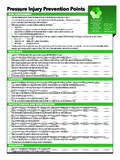
1 Page 1 of 2 * FRC000000 * pressure injury prevention plan Risk Assessment Score Date Referrals Occupational Therapy (advice on appropriate pressure relieving devices) Physiotherapy (assistance/advice on transferring and repositioning) Orthotics (correct fitting of braces/splints/collars) Stomal Therapy (if pressure injury stage 2 or greater present) Prevent friction and shearing forces Lower bed head prior to repositioning Application of a barrier dressing Dressing Used Anatomical location Use slide sheets to move patient Observe patient closely for signs of friction particularly if the child is agitated Reducing Moisture Application of barrier cream Cream Used Anatomical location Use of absorbent sheets (such as Kylie s)
2 Investigate cause of incontinence Commence bowel training program for spinal cord injury Relieving pressure Suspend heels off the bed using pillows or gel pads Skin Inspection Level of Risk (Glamorgan) Frequency of Skin Inspection Strategy Implemented (tick) 10+ At Risk Inspect skin at least twice a day 15+ High Risk Inspect skin with each repositioning 20+ Very High Risk Inspect skin hourly Inspect; Sacrum Heels Elbows Shoulders Toes Around tubes Back of Head especially in infants less than 36 months of age Circulatory observations for children with plaster casts, orthosis and bandages note signs of irritation Nutrition Level of Risk (Glamorgan) Nutritional Interventions Strategy Implemented (tick)
3 10+ At Risk Offer frequent fluids and diet to maintain adequate nutrition and hydration 15+ High Risk Refer to a dietician for a nutritional assessment and appropriate dietary recommendation 20+ Very High Risk Refer to a dietician for a nutritional assessment and appropriate dietary recommendation pressure injury prevention plan TRIAL Form required for patients identified At Risk to Very High Risk on the Glamorgan Risk Assessment Tick box for management strategies relevant to individual patient Patient name UR: Page 2 of 2 Positioning and Repositioning Level of Risk (Glamorgan) Positioning and Repositioning Strategy Implemented (tick) 10+ At Risk Assist patient to move & reposition equipment and devices 2 hourly 15+ High Risk Reposition child/ equipment/ devices at least 2 hourly Bed head elevation not to exceed 30 degrees 20+ Very High Risk Reposition child/ equipment/ devices at least every 2 hours Raise bed head for short periods only <30 degrees elevation Reposition.
4 Tubing catheters face masks probes electrode Check the positioning of heels and other bony prominences If required to sit with bed head elevated, use aids such as pillows that support the upper body Level of Risk (Glamorgan) Equipment Option pressure Relieving devices Strategy Implemented (tick) 10+ At Risk Constant Low pressure Support Foam MacMed Mattress Cot & Bed Sizes Gel Pads available in a variety of sizes Alternating pressure AlphaXcell (overlay) Bed size up to 140kg 15+ High Risk Low Air Loss KCI Therakair (mattress replacement) Bed Size up to 135kg KCI First Step Plus (overlay) Cot Size up to 25kg Breeze (mattress replacement) Bed Size up to140kg Alternating pressure NODEC-AirStream A (ASA) (overlay) Bed Size up to178kg Soft settings for patients <50 k Coziny (overlay) Isolet size -Coziny 200; Cot size - Coziny 300.
5 25kg 20+ Very High Risk Low Air Loss Caritel Neo (mattress replacement) For neonates 500g plus Caritel Juve (Mattress replacement) Cot Size Caritel Optimal (Mattress replacement) Bed Size Up to 300kg Therapulse II (Full Bed System) Bed Size up to 135kg Breeze with pulsation (mattress replacement) Bed Size up to 140kg Alternating pressure & Low Air Loss System Nimbus Range (mattress replacement) Cot size - up to 25kg Bed size Other preventative measures Individual variations Family/carer specific requests Registered Nurse Name Signature Preventio n plan discussed wit h parent/carer.
6 pressure in ju ry factsheet receiv ed Parent Name Signature Date