Transcription of Frequently Asked Questions (FAQs) About Summer …
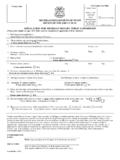
1 Frequently Asked Questions (FAQs) About Summer Tax Deferment1. Can I defer payment of my Summer property tax? An owner of eligible property may file a completed Summer property tax deferment form with his or her city or township treasurer before September 15, or before the date your Summer taxes are due, which ever is later. A valid deferment permits Summer property taxes to be paid on or before February 14 without any additional penalty and interest. Taxpayers may defer their Summer property tax if they meet the following criteria. Payment may be deferred until February 15 (payment must be received on or before February 14 in order to avoid penalties and interest) for principal residence property owned by a taxpayer who: Has a total gross household income of $40,000 or less for the preceding tax year, and Is totally and permanently disabled, blind, paraplegic, hemiplegic, quadriplegic, or Is an eligible serviceperson, eligible veteran, or eligible widow or widower, or Is at least age 622.
2 What type of property is eligible for property tax deferment? Residential real property that is the principal residence of the taxpayer seeking deferment of Summer taxes Agricultural real property, if the gross receipts of the agricultural or horticultural operations in the previous year, or the average gross receipts of the operations from the previous three years, are not less than the total household income of the owner in the previous year or the combined household incomes in the previous year of the individual members of a limited liability company or partners in a partnership that owns the agricultural real property.
3 A limited liability company or partnership may claim the deferment under this section only if the individual members of the limited liability company or partnership qualified for the deferment under this section before the individual members formed the limited liability company or Who defines the terms disabled, blind, paraplegic, hemiplegic, quadriplegic; or an eligible serviceperson, eligible veteran, or eligible widow or widower?The terms are defined in the Income Tax Act of 1967, P. A. 281 of 1967. The definitions are as follows: Blind: A person with a permanent impairment of both eyes of the following status: central visual acuity of 20/200 or less in the better eye with corrective glasses, or central visual acuity of more than 20/200 if there is a field defect in which the peripheral field has contracted to such an extent that the widest diameter of visual field subtends an angular distance of no greater than 20 degrees in the better eye.
4 Eligible serviceperson, eligible veteran, and eligible widow or widower: A serviceperson, veteran, or widow or widower whose income (outside of compensation paid by the veterans administration or the armed forces of the United States for service-incurred disabilities), as defined in this act, is not more than $7,500 per year and who meets the requirements of the following schedule:WarPersonService in WarDisability %Indian, Civil, Spanish-American, MexicanVeteran or veteran s widow(er)3 months, or 1 day with discharge for service-connected disabilityNo requirementWorld War I, World War II, KoreanWidow(er) of non disabled or non pensioned veteran3 months, or 1 day with discharge for service-connected disabilityNo requirementAll wars or presidential executive order or presidential proclamation Pensioned veteran or veteran s widow(er)AnyNo requirementAll wars or presidential executiveorder or presidential proclamationVeteran with service-connected disability or veteran s widow(er)
5 Any10 100 All wars or presidential executive order or presidential proclamationWidow(er) of veteran dying in serviceAnyNo requirementCurrent serviceServiceperson or serviceperson s widow(er)AnyNo requirement Paraplegic, hemiplegic, or quadriplegic: An individual, or either 1 of 2 persons filing a joint tax return under this act, who is a paraplegic, hemiplegic, or quadriplegic at the end of the tax Department of Treasury4659 (Rev. 03-12)4. What is included in total household income for the purposes of Summer property tax deferment? Household Income is the total income (taxable and nontaxable) of both spouses or of a single person maintaining a household and other sources of income for all individuals living in the household.
6 It is your Adjusted Gross Income (AGI) plus all income exempt or excluded from your AGI. Total household income includes wages, salaries, tips; net income from a business, rent, or farm; Social Security less the amount deducted for Medicare premiums; SSI (Supplemental Security Income), DHS (Department of Human Services), and FIP (Family Independence Program) benefits; child support; alimony; unemployment, workers and veterans disability compensation; pension benefits; interest income; gifts and winnings in excess of $300, and other sources of income. Total household income includes gains realized on the sale of your residence regardless of your age or whether or not these gains are exempt from federal income tax.
7 Household income does NOT include: Federal economic stimulus payments (rebates) issued by the Internal Revenue Service. Payments received by participants in the foster grandparent or senior companion program. Energy assistance grants. Government payments to a third party ( , a doctor) Note: If payment is made from money withheld from your benefit, the payment is part of household income. (For example, the DHS may pay your rent directly to the landlord.) Money received from a governmental unit to repair or improve your homestead. Surplus food or food stamps. State and city income tax refunds and homestead property tax credits.
8 Chore service payments (these payments are income to the provider of the service). The first $300 from gambling, bingo, lottery, awards, or prizes. The first $300 in gifts, cash, or expenses paid on your behalf by a family member or friend. Amounts deducted from Social Security or Railroad Retirement benefits for Medicare premiums. Life, health, and accident insurance premiums paid by your employer. However, if you pay medical insurance or Health Maintenance Organization (HMO) premiums for you or your family, you may deduct the cost from household income. Loan proceeds. Inheritance from a spouse.
9 Life insurance benefits from a spouse. Payments from a longterm care policy made to a nursing home or other care Can I get a Summer tax deferment for all properties that I own? You can defer the Summer taxes on only your principal residence. You are required to pay the Summer taxes for all other properties that you own in a timely manner. All property classified agricultural under your ownership and contributing to the household income can be Where do I file a Summer property tax deferment form? As the property owner, you must file your deferment form with your local treasurer. You should keep a copy for your Who reviews and approves the tax deferment this Summer ?
10 Your local treasurer will review the submitted tax deferment forms for completeness. If, as the property owner, you are requesting a Summer tax deferment, you will be responsible for determining that you qualify for the deferment. If the deferment form contains any misleading or false statements, as the property owner, you may be subject to penalties and late payments on the taxes Can a corporation, LLC, or partnership defer Summer taxes? A limited liability company may claim the deferment under this section if the individual members of the limited liability company qualified for the deferment under this section before the individual members formed the limited liability company, and the gross receipts of the agricultural or horticultural operations in the previous year, or the average gross receipts of the operations from the previous three years, are not less than the combined household incomes in the previous year of the individual members of a limited liability company that owns the agricultural real 9.